
Home & Garden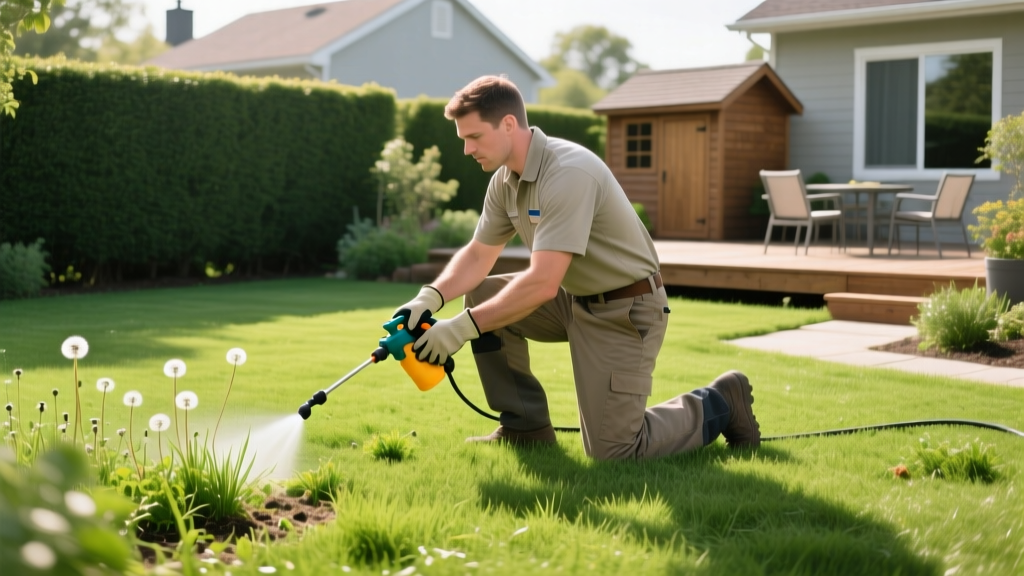
2026 Weeding Services Cost Guide: Spot Treatment vs Full Yard
Hiring professional weeding services is no longer a one-size-fits-all proposition. In 2026, the most cost-effective and environmentally responsible turf management strategies rely heavily on targeted spot-treatments rather than indiscriminate blanket spraying. While a full-yard blanket application averages $120 to $280 per visit depending on lot size, targeted spot-treatment weeding services typically range from $85 to $150 per visit. Understanding when to deploy each method—and how professionals calibrate their equipment for specific weed species—is critical for homeowners looking to maximize their landscaping budget.
The Economics of Targeted vs. Blanket Weeding Services
The decision to hire weeding services for a spot-treatment versus a blanket application hinges on the 15% canopy threshold rule. According to turfgrass management principles outlined by the University of Minnesota Extension, if weed coverage exceeds 15% of the total turf canopy, a blanket application is mathematically more efficient in terms of labor and chemical distribution. However, if weed coverage is below 15%, spot-treatment is the superior choice.
Quick Cost Breakdown (2026 Averages):
- Spot-Treatment Minimum Trip Charge: $75 - $125 (Covers up to 1,500 sq ft of targeted spraying)
- Blanket Application (Standard Lot, 1/4 Acre): $120 - $180
- Blanket Application (Large Lot, 1/2 Acre): $190 - $280
- Surfactant & Dye Adder: $15 - $30 per visit
Spot-treatment reduces the total volume of active ingredients introduced to your soil ecosystem by up to 80%, preserving beneficial soil microbes and reducing the risk of herbicide runoff into local watersheds.
Professional Spot-Treatment Equipment and Calibration
Professional weeding services do not use the same pump-sprayers available at retail hardware stores. For precise spot-treatments, technicians utilize 2-gallon stainless steel backpack sprayers, such as the Solo 475 or Chapin 61800, equipped with adjustable cone nozzles or flat-fan nozzles like the TeeJet 8002VS.
The Calibration Standard
To prevent turf burn and chemical waste, reputable services calibrate their spot-treatment rigs to deliver exactly 1.5 to 2.0 gallons per acre (GPA) at 40 PSI. This precise pressure ensures the herbicide droplet size remains in the 200 to 300-micron range, minimizing drift onto desirable ornamental plants while ensuring complete foliar coverage on the target weed. When a technician treats a mature crabgrass plant, they apply the solution until the leaves are uniformly wet but not dripping, a technique that requires specific training and high-end flow-control valves.
How Services Formulate Herbicides for Specific Weed Species
Different weed species possess unique biological defenses that require specific chemical modes of action. A premium weeding service will customize the tank mix based on the exact species identified during their initial turf audit.
Nutsedge: The Tuber Problem
Yellow and purple nutsedge reproduce via underground tubers (nutlets) that can survive in the soil for up to three years. Standard broadleaf herbicides merely burn the top growth, causing the plant to send up multiple new shoots. Professionals target nutsedge with halosulfuron-methyl (commonly sold as SedgeHammer) or sulfentrazone (Dismiss). These active ingredients are absorbed through the foliage and translocated down to the tubers, halting cell division. Crucially, these chemicals require a non-ionic surfactant (NIS) at a 0.25% v/v rate to penetrate the waxy cuticle of the nutsedge leaf.
Crabgrass: The Summer Annual Invader
Post-emergent crabgrass control requires quinclorac (Drive XLR8). Unlike nutsedge treatments, quinclorac performs best when paired with a methylated seed oil (MSO) rather than a standard NIS. The MSO acts as a penetrating agent, dissolving the thick, hairy cuticle of mature crabgrass. Weeding services must apply this treatment when the crabgrass is in the 1-to-3 tiller stage; if the plant has matured past the 5-tiller stage, a second application 21 days later is almost always required.
Wild Violet and Ground Ivy: The Perennial Broadleaves
These creeping perennials are notoriously resistant to basic 2,4-D formulations. Professional services utilize multi-ester blends like SpeedZone (containing 2,4-D, triclopyr, dicamba, and carfentrazone). The inclusion of carfentrazone provides a rapid burn effect, while the systemic components travel through the stolon network to eradicate the root system. The NC State Turfgrass Science program notes that applying these ester-based formulations during cooler spring or fall temperatures (between 60°F and 75°F) drastically improves translocation and kill rates compared to high-heat summer applications.
Weed Species and Professional Treatment Protocols
| Target Weed Species | Professional Active Ingredient | Required Adjuvant | Expected Control Timeframe |
|---|---|---|---|
| Yellow/Purple Nutsedge | Halosulfuron-methyl / Sulfentrazone | Non-Ionic Surfactant (NIS) | 14 - 21 Days |
| Smooth/Large Crabgrass | Quinclorac | Methylated Seed Oil (MSO) | 7 - 14 Days |
| Wild Violet / Ground Ivy | Triclopyr + Carfentrazone blend | None (Ester formulation) | 10 - 18 Days |
| Dallisgrass | MSMA (Restricted Use) or Fluazifop | Crop Oil Concentrate (COC) | 21 - 28 Days (Multiple apps) |
Decision Matrix: DIY Spot-Treatment vs. Hiring Weeding Services
Determining whether to tackle a weed outbreak yourself or hire professional weeding services requires evaluating the weed type, your turf species, and the required chemical handling.
When to DIY Spot-Treatment
- Weed Type: Common broadleaves like dandelions or plantain.
- Area Size: Less than 50 isolated weeds across the entire property.
- Equipment: A standard 1-gallon pump sprayer is sufficient.
- Chemicals: Consumer-ready RTU (Ready-to-Use) bottles containing 2,4-D and dicamba.
- Cost: $15 - $25 for materials.
When to Hire Weeding Services
- Weed Type: Nutsedge, Dallisgrass, or mature crabgrass.
- Area Size: Scattered outbreaks exceeding 100 plants, or weeds embedded in flower beds.
- Equipment: Requires calibrated backpack sprayers and precise nozzle selection.
- Chemicals: Requires professional-grade surfactants, MSOs, or restricted-use herbicides.
- Cost: $85 - $150 (Includes warranty and re-treatment guarantees).
What to Demand in a 2026 Weeding Services Contract
When signing an annual lawn care agreement, vague language regarding weed control can lead to unnecessary chemical exposure and inflated invoices. Insist on the following specific clauses in your contract:
- The Canopy Threshold Clause: The contract must state that if weed coverage is visually assessed at less than 10-15%, the technician will default to spot-treatment rather than a blanket application, with a corresponding prorated discount on the chemical fee.
- Adjuvant Inclusion: Ensure the contract explicitly states that appropriate surfactants (NIS, MSO, or COC) are included in the base price. Some budget services charge a $25 'additive fee' per visit for the surfactants required to make the herbicide actually work.
- The 21-Day Re-treatment Warranty: Professional-grade herbicides like halosulfuron-methyl take up to three weeks to show complete necrosis on nutsedge. Your contract must guarantee a free follow-up spot-treatment if target weeds have not achieved 90% control within 21 days of the initial application.
- Flower Bed Hand-Pulling Guarantee: Herbicide drift can devastate ornamental shrubs. The contract should specify that weeds within 12 inches of landscape bed edges will be manually pulled or treated with a shielded glyphosate wick applicator, not sprayed.
Frequently Asked Questions About Targeted Weed Control
Can weeding services spot-treat weeds in the middle of summer heat?
Yes, but with strict limitations. Professional technicians will avoid applying ester-based herbicides when ambient temperatures exceed 85°F, as the chemicals can vaporize and drift, causing severe burn to desirable turf and ornamentals. In high heat, services switch to amine-based formulations or schedule applications for early morning hours before the thermal inversion layer breaks.
Why did the weeding service use a blue dye during the spot-treatment?
The blue dye is a temporary turf colorant (usually containing Brilliant Blue FCF) mixed into the tank at a rate of 1 to 2 ounces per 100 gallons. It serves two critical purposes: it allows the technician to see exactly which weeds have been treated to prevent overlapping and chemical burn, and it provides the homeowner with a visual map of where the active ingredients were applied. The dye typically degrades under UV sunlight within 24 to 48 hours.
Is spot-treatment effective for weeds growing through landscape fabric?
Spot-spraying weeds emerging through landscape fabric is generally ineffective if the weed is a perennial like bindweed or Bermuda grass. The herbicide will kill the top growth, but the fabric blocks the chemical from reaching the deep root network. Professional services recommend manually extracting the root mass through the fabric tear, or carefully applying a targeted, non-selective systemic herbicide directly to the cut stem using a sponge-tipped applicator to avoid degrading the fabric itself.

