
Home & Garden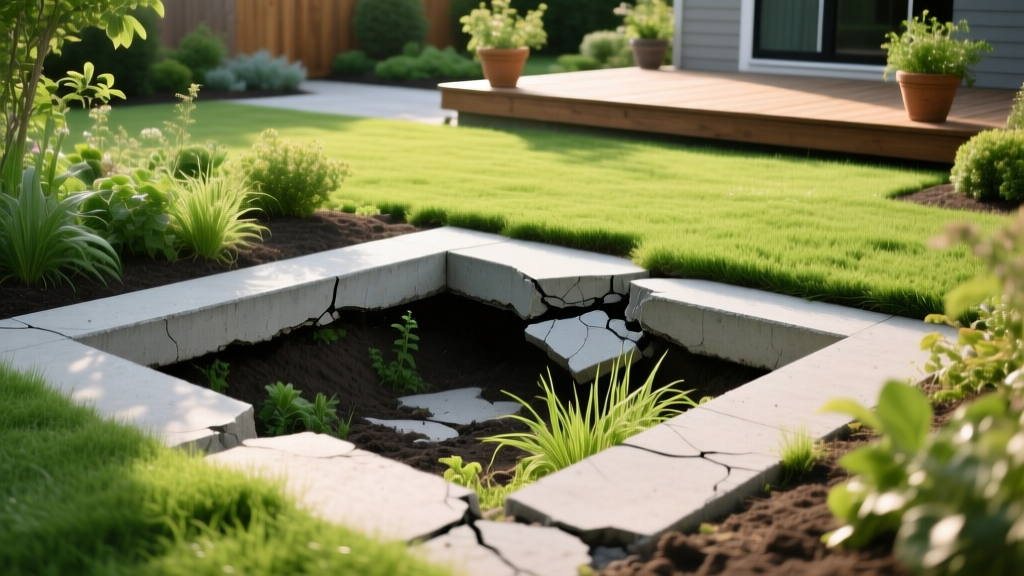
The Weight of 1 Yard of Concrete: Diagnosing Sunken Garden Slabs
The Hidden Mass Beneath Your Garden Hardscape
A cracked or tilting patio is rarely just a surface-level cosmetic issue; it is almost always a structural failure driven by mass and soil mechanics. When homeowners design outdoor living spaces, they frequently underestimate the sheer gravitational load placed on the underlying earth. Understanding the exact weight of 1 yard of concrete is the critical first step in diagnosing why your garden hardscape is sinking, cracking, or pulling away from your home's foundation. Standard concrete is deceptively heavy, and when poured over improperly prepared or highly expansive soils, that mass becomes the primary catalyst for subsidence.
This guide provides a structural diagnosis for failing garden slabs, breaks down the specific load metrics of various concrete mixes, and outlines engineered solutions to stabilize and repair sunken hardscapes without triggering a complete demolition.
The Core Metric: Breaking Down Concrete Mass
Before diagnosing a failure, you must quantify the load. A cubic yard measures 3 feet by 3 feet by 3 feet (27 cubic feet). The mass of this volume changes drastically based on the aggregate used in the mix design. According to data from the National Ready Mixed Concrete Association (NRMCA), the standard weight used for structural calculations is based on normal-weight aggregates like crushed limestone or granite.
| Concrete Mix Type | Weight per Cubic Yard | Weight per Cubic Foot | Common Garden Application |
|---|---|---|---|
| Standard (Normal Weight) | 4,050 lbs | 150 lbs | Patios, driveways, retaining walls |
| Lightweight (Structural) | 2,800 lbs | 104 lbs | Rooftop gardens, elevated decks |
| High-Density (Radiant) | 5,500+ lbs | 200+ lbs | Radiant heating floors, shielding |
The Diagnosis Math: A standard 12x12 foot patio poured at a 4-inch thickness requires roughly 1.78 cubic yards of concrete. Using the standard mix, that single slab exerts 7,209 pounds of dead load on the soil beneath it. If the soil's bearing capacity is exceeded, or if hydrostatic pressure washes away the sub-base, the slab will inevitably sink.
Symptom Diagnosis: Is Your Slab Failing?
Subsidence rarely happens uniformly. By mapping the specific cracking pattern and tilt of your concrete, you can diagnose the exact point of soil failure.
Diagnostic Flowchart: Read Your Cracks
- Symptom: Diagonal cracks radiating from the corners of the slab.
Cause: Differential settlement. The center of the slab is supported, but the edges are sinking due to poor perimeter compaction or water erosion from nearby garden beds. - Symptom: The slab is tilting toward the house foundation, creating a gap.
Cause: Backfill soil near the foundation was not mechanically compacted during home construction. The massive weight of the concrete is compressing the loose backfill. - Symptom: A single corner has dropped 2+ inches, accompanied by mud boils after rain.
Cause: Sub-surface water pipe leak or severe drainage failure washing away the fine soil particles (piping), leaving a void that the concrete mass collapses into.
Soil Load-Bearing Capacity vs. Concrete Mass
The USDA Web Soil Survey classifies soils by their engineering properties, including bearing capacity. The bearing capacity is measured in Pounds per Square Foot (PSF). If your concrete slab's localized weight exceeds the soil's PSF rating, the slab will punch into the ground.
- Expansive Clay: 1,500 to 2,000 PSF. Highly susceptible to moisture changes. Swells when wet, shrinks when dry, causing severe heaving and cracking under heavy concrete loads.
- Sandy Loam: 3,000 PSF. Excellent drainage, but vulnerable to lateral washout if garden irrigation is improperly directed.
- Dense Gravel/Sand: 4,000 to 5,000+ PSF. The ideal subgrade for heavy hardscapes, provided it is mechanically confined.
When diagnosing a sunken slab in a clay-heavy garden, the issue is often not just the dead weight of the concrete, but the cyclic swelling of the clay. The 4,050 lbs per cubic yard acts as a massive anvil; when the clay softens during spring thaws, the anvil sinks.
Solutions: Stabilizing and Lifting Heavy Slabs
Once the soil failure is diagnosed, you must choose a repair method. The most critical mistake homeowners make is choosing a repair technique that adds more weight to already failing soil.
1. Mudjacking (Slabjacking)
This traditional method involves drilling 1.5-inch holes into the sunken concrete and pumping a slurry of topsoil, sand, and cement beneath it to lift the slab. The Problem: The mudjacking slurry weighs roughly 100 to 120 lbs per cubic foot. If your slab sank because the underlying soil couldn't support the initial load, injecting hundreds of pounds of heavy wet mud beneath it often accelerates future subsidence.
2. Polyurethane Geo-Foam (Polyjacking)
Modern structural repair relies on high-density polyurethane foam. Technicians drill 5/8-inch holes and inject a two-part liquid polymer that expands up to 30 times its volume, curing in 15 minutes. The Advantage: The cured foam weighs only 2.5 to 4 lbs per cubic foot. It fills voids, lifts the massive concrete slab with precise hydraulic pressure, and adds virtually zero dead load to the compromised soil. Furthermore, the foam is impervious to water, preventing future washouts.
| Repair Method | Added Sub-Slab Weight | Average Cost (per sq ft) | Cure / Use Time |
|---|---|---|---|
| Polyjacking (Foam) | ~3 lbs / cu ft | $5.00 - $25.00 | 15 Minutes |
| Mudjacking (Slurry) | ~110 lbs / cu ft | $3.00 - $6.00 | 24 - 48 Hours |
| Full Demolition & Repour | N/A (Replaces old load) | $8.00 - $15.00+ | 7 - 14 Days |
Preventative Base Preparation for Future Pours
If the diagnosis requires full demolition and replacement, you must engineer the sub-base to handle the 150 lbs per cubic foot load. The American Concrete Institute (ACI) mandates strict subgrade preparation to prevent differential settlement.
- Excavation: Remove all organic topsoil. Garden soil contains decomposing matter that will compress over time. Excavate to a depth of at least 8 inches below the desired finish grade.
- Geotextile Fabric: Lay a non-woven geotextile separator fabric over the native subgrade. This prevents the aggregate base from migrating down into clay soils while allowing water to drain through.
- Aggregate Selection: Use Class 5 aggregate (3/4-inch minus crushed gravel). The mix of stone sizes locks together tightly when compacted, creating a semi-rigid platform.
- Mechanical Compaction: Do not rely on water or vehicle tires to settle the base. Use a vibratory plate compactor generating a minimum of 3,000 to 5,000 lbs of centrifugal force. Compact the aggregate in strict 2-inch lifts (layers). A 6-inch base requires three separate 2-inch passes.
Pro-Tip for Garden Integration: When pouring heavy concrete near established garden trees, install a 2-inch thick closed-cell expansion joint foam against the root side. Tree roots can exert upward pressures exceeding 2,000 PSF as they thicken, which will easily crack a rigid 4,000 lb slab if no isolation joint is present.
Summary: Respect the Mass
Diagnosing a failing garden hardscape requires looking past the surface cracks and analyzing the physics of the load. The weight of 1 yard of concrete is a massive structural force that demands a properly engineered subgrade. By accurately reading the failure symptoms, understanding your soil's bearing capacity, and selecting low-weight repair technologies like polyjacking, you can salvage your outdoor living space without repeating the structural mistakes of the original pour.