Home & Garden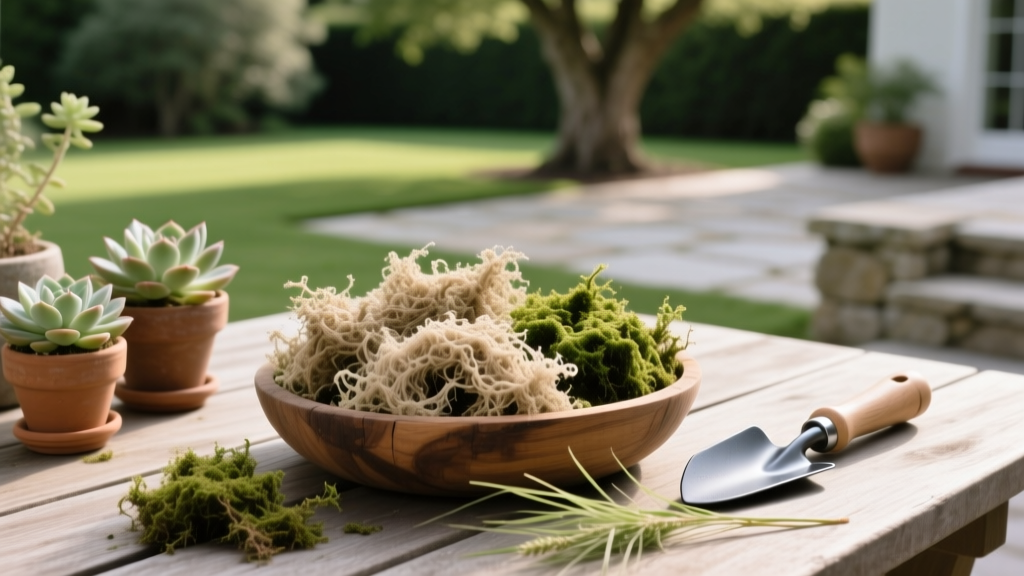
What Is Sphagnum Peat? Uses, Benefits, and Eco-Alternatives
The Botanical Distinction: Live Moss vs. Decomposed Peat
To understand what is sphagnum peat, you must first separate the living plant from the geological product. Sphagnum moss refers to the live, fibrous plant material harvested from the surface of bogs, commonly used for orchid mounting, kokedama, and terrariums. Sphagnum peat moss (often just called peat moss) is the decomposed, waterlogged remains of sphagnum moss and other bog vegetation that have accumulated over thousands of years in anaerobic, highly acidic conditions.
Core Definition: Sphagnum peat is a highly organic, acidic soil amendment with a carbon content of roughly 50-60%. It forms at a rate of less than 1 millimeter per year in northern hemisphere peatlands, primarily across Canada, Russia, and Northern Europe.
The Soil Science: CEC, pH, and Hydrology
Gardeners prize sphagnum peat not as a fertilizer—it contains negligible NPK values—but as a physical and chemical soil conditioner. Its value lies in three measurable metrics:
- Cation Exchange Capacity (CEC): Sphagnum peat boasts a CEC of 100 to 150 meq/100g. This means it acts like a microscopic sponge for nutrients, holding onto calcium, magnesium, and potassium ions and releasing them to plant roots on demand. By comparison, standard garden topsoil averages a CEC of just 15 to 30 meq/100g.
- Hydrology: The cellular structure of decomposed sphagnum allows it to hold 16 to 20 times its dry weight in water, providing a massive moisture buffer in sandy soils and lightweight container mixes.
- pH Level: Unbuffered sphagnum peat is highly acidic, typically ranging from 3.5 to 4.5. This makes it an essential tool for lowering soil pH or formulating ericaceous (acid-loving) potting mixes.
Amendment Comparison Matrix
When formulating custom potting mixes or amending garden beds, choosing between peat and its alternatives requires looking at the raw data. Below is a comparison of the three most common organic amendments used in 2026 horticulture.
| Metric | Sphagnum Peat | Coconut Coir | Pine Bark Fines |
|---|---|---|---|
| Native pH | 3.5 - 4.5 | 5.5 - 6.8 | 4.5 - 5.5 |
| CEC (meq/100g) | 100 - 150 | 40 - 70 | 20 - 30 |
| Water Retention | Very High | High | Low-Moderate |
| Avg. Cost (per cu. ft.) | $3.50 - $5.50 | $4.00 - $6.50 | $2.50 - $4.00 |
| Decomposition Rate | Slow (3-5 years) | Moderate (2-3 years) | Fast (1-2 years) |
Practical Applications and Common Failure Modes
Sphagnum peat is highly effective when used correctly, but misapplication is a leading cause of container garden failure.
Where It Excels
- Seed Starting Mixes: Its naturally low pH and sterility (when harvested from deep bog layers) inhibit damping-off fungus. A standard recipe is 50% peat, 25% perlite, and 25% vermiculite.
- Ericaceous Plantings: Blueberries, azaleas, rhododendrons, and hydrangeas require a soil pH below 5.5 to absorb iron. Incorporating 2 to 3 inches of sphagnum peat into the planting hole provides both acidity and moisture retention.
- Sandy Soil Amendment: Tilling 1 cubic foot of peat per 10 square feet of sandy garden beds permanently increases the soil's water-holding capacity and CEC.
Critical Failure Modes to Avoid
- Using as a Top Dressing: Never spread dry peat moss over an established lawn or garden bed as a mulch. It is highly hydrophobic when dry; water will bead up and run off, and wind will blow it away.
- Unbuffered Vegetable Gardens: Most vegetables prefer a pH of 6.0 to 7.0. Adding raw sphagnum peat to a vegetable patch without simultaneously adding agricultural lime will lock out essential nutrients, resulting in stunted, chlorotic crops.
The 2026 Environmental Landscape and Market Shifts
The question of "what is sphagnum peat" is now heavily tied to global sustainability efforts. Peatlands are the world's most efficient terrestrial carbon sinks, storing twice as much carbon as all the world's forests combined. When harvested, this carbon is exposed to oxygen and released.
"The horticulture industry is undergoing a structural shift. While Canadian peatlands operate under strict government-mandated restoration protocols, the UK and parts of the EU have moved to ban the retail sale of peat-based composts to protect ancient bog ecosystems."
According to the International Peatland Society, responsible management requires a balance between agricultural necessity and carbon preservation. In North America, the Canadian Sphagnum Peat Moss Association (CSPMA) enforces a policy where less than 0.02% of Canadian peatlands are opened for harvesting annually, and restoration is legally required post-harvest. However, the Royal Horticultural Society (RHS) continues to push UK gardeners toward peat-free alternatives like composted bark, wood fiber, and coir, citing the irreplaceable biodiversity of intact bogs.
Market Impact: Due to carbon taxes and logistics, the price of premium Canadian sphagnum peat (such as Premier ProMix or Sun Gro bales) has stabilized around $14 to $22 per 3.8 cubic foot compressed bale in 2026, making it slightly more expensive than expanded coconut coir bricks.
Hydration Protocol: Overcoming Hydrophobicity
The most common mistake gardeners make is mixing dry peat directly into soil. Bone-dry sphagnum peat repels water. To properly integrate it, you must pre-hydrate it using the following protocol:
- Puncture and Expand: Open the compressed bale in a heavy-duty wheelbarrow or mortar tub. The 3.8 cu. ft. bale will expand to roughly 5.5 cu. ft. when fluffed.
- Apply a Surfactant: Add 2 drops of mild liquid dish soap or a dedicated horticultural wetting agent (like yucca extract) to a 2-gallon watering can. This breaks the water's surface tension.
- Gradual Incorporation: Water the peat slowly while turning it with a trowel. Do not flood it.
- The Squeeze Test: Grab a handful of the hydrated peat and squeeze tightly. It should feel like a wrung-out sponge, yielding only a few drops of water. If water streams out, it is too wet; if it crumbles and produces no moisture, it needs more water.
Quick-Reference FAQ
Does sphagnum peat expire?
No. Because it is already decomposed in an anaerobic environment, a sealed bag of peat moss will remain viable indefinitely. If it develops a white, fuzzy mold upon opening, simply expose it to sunlight and air; the mold is a harmless saprophyte feeding on residual sugars.
Can I use sphagnum peat to lower the pH of my established lawn?
It is highly impractical. Because you cannot till peat into an established lawn, it will sit on the surface and shed water. Use elemental sulfur or aluminum sulfate to lower lawn pH instead.