
Home & Garden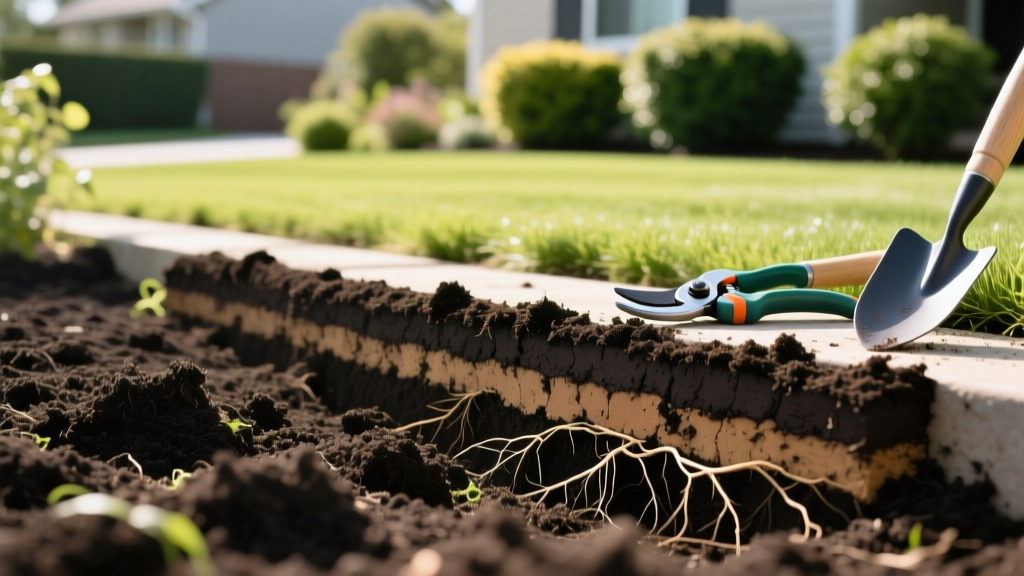
What Is Topsoil? Identifying Soil Layers for Healthier Lawns
Defining the A-Horizon: The Biological Engine of Your Yard
When homeowners ask, "what is topsoil," they are technically inquiring about the A-horizon of the soil profile. Topsoil is the uppermost mineral layer of soil, typically ranging from 2 to 8 inches deep, where biological activity, organic matter decomposition, and root proliferation are most concentrated. Unlike the sterile subsoil beneath it, true topsoil contains a complex matrix of mineral particles (sand, silt, and clay), decomposed organic matter (humus), water, air, and billions of microorganisms per gram.
Understanding this layer is critical for lawn and garden success. The topsoil acts as the primary reservoir for water retention and nutrient exchange. If your turf is struggling with compaction, poor drainage, or nutrient deficiencies, the issue almost always originates in the physical or chemical degradation of this specific horizon.
The Anatomy of Soil: Where Topsoil Fits In
To accurately identify topsoil, you must understand its position within the broader soil profile. According to the USDA Natural Resources Conservation Service, soils are categorized into distinct horizontal layers called horizons:
- O-Horizon (Organic): The surface layer of decomposing leaf litter and organic debris. In lawns, this is the thatch layer.
- A-Horizon (Topsoil): The dark, organic-rich mineral layer where grass roots primarily establish. This is the focal point of our guide.
- E-Horizon (Eluviation): A light-colored layer where clay and minerals have been leached downward (often absent in heavily mixed urban soils).
- B-Horizon (Subsoil): Dense, lighter-colored soil where leached materials accumulate. It has poor drainage and low organic matter.
- C-Horizon (Parent Material): Partially weathered bedrock or glacial till.
- R-Horizon (Bedrock): Solid, unweathered rock.
Expert Insight: In newly constructed residential developments, the A-horizon is frequently stripped away during grading, leaving homeowners to plant lawns directly into the compacted, nutrient-poor B-horizon. Identifying this missing layer is the first step in lawn remediation.
How to Identify True Topsoil in Your Yard
Not all dark dirt is topsoil. To verify the health and depth of your A-horizon, perform these three field tests:
1. The Color and Munsell Test
Healthy topsoil ranges from dark brown to black due to humus content. Soil scientists use the Munsell Soil Color Charts to quantify this. A healthy lawn topsoil typically registers around 10YR 3/2 (very dark grayish brown) to 10YR 2/1 (black). If your soil is pale, yellowish, or reddish within the top 4 inches, it lacks sufficient organic matter and is likely subsoil pushed to the surface.
2. The Ribbon Test for Texture
Topsoil structure dictates drainage and aeration. Take a handful of moist soil and squeeze it into a ball. Slowly push the soil out between your thumb and forefinger to form a "ribbon."
- Loam (Ideal): Breaks apart before reaching 1 inch. Perfect balance of sand, silt, and clay.
- Clay Loam: Forms a ribbon 1 to 2 inches long before breaking. Holds nutrients well but prone to compaction.
- Sandy Loam: Fails to form a ribbon, feels gritty. Drains rapidly but leaches nutrients.
3. The Bulk Density Probe
Use a soil probe or a long screwdriver to test compaction. In healthy topsoil with a bulk density below 1.3 g/cm³, a probe should slide easily to a depth of 6 inches. If you hit severe resistance at 2 inches, your topsoil is compacted, restricting root growth and water infiltration.
Topsoil vs. Garden Soil vs. Potting Mix: A Buyer's Matrix
When purchasing materials to amend your yard, commercial labels are notoriously misleading. The Soil Science Society of America notes that "topsoil" is a geological term, while "garden soil" is a manufactured product. Use this matrix to select the correct material for your project:
| Material Type | Composition & OM Content | Primary Use Case | Drainage Profile | Average Cost (Bulk) |
|---|---|---|---|---|
| Screened Topsoil | Natural A-horizon, sifted to remove debris. OM: 2-5%. | Leveling lawns, filling low spots, establishing new turf. | Moderate; matches native yard soil. | $15 - $30 / cubic yard |
| Garden Soil | Topsoil blended with compost, peat, and fertilizers. OM: 10-20%. | Amending in-ground flower beds and vegetable gardens. | High; too light for turfgrass leveling. | $30 - $45 / cubic yard |
| Potting Mix | Soilless blend of peat moss, perlite, pine bark. OM: 80%+. | Container gardening and raised beds only. | Extremely high; will wash away if used on open lawns. | $60 - $90 / cubic yard |
| Compost Topdressing | Fully decomposed organic matter. OM: 60%+. | Core aeration follow-up, microbial inoculation, turf feeding. | N/A; applied in thin 1/4" layers over existing soil. | $25 - $40 / cubic yard |
The Hidden Chemistry: CEC and Organic Matter Percentages
To truly master lawn care, you must look beyond physical texture and understand the chemical function of topsoil. The defining chemical characteristic of the A-horizon is its Cation Exchange Capacity (CEC).
CEC measures the soil's ability to hold onto positively charged nutrients (cations) like calcium, magnesium, and potassium, preventing them from leaching away during rainfall. It is measured in milliequivalents per 100 grams (meq/100g).
- Sandy Subsoil: CEC of 1-5 meq/100g (nutrients wash away immediately).
- Healthy Clay-Loam Topsoil: CEC of 15-30 meq/100g (acts as a nutrient battery).
- Humus (Organic Matter): CEC of 150-300 meq/100g.
This data reveals why adding organic matter to your topsoil is non-negotiable. According to research from the University of Minnesota Extension, every 1% increase in soil organic matter allows an acre of soil to hold an additional 16,500 gallons of plant-available water. If your soil test reveals an Organic Matter (OM) percentage below 3%, your topsoil is functionally impaired, regardless of its N-P-K fertilizer levels.
Action Plan: Testing and Amending Your Existing Topsoil
Do not blindly buy bulk topsoil to dump on your existing lawn. Follow this targeted remediation protocol to restore your native A-horizon:
Step 1: Baseline Testing
Skip the cheap dye-based DIY kits. Purchase a professional mail-in soil test from your local university cooperative extension or use a digital lab service like SoilKit or MySoil. Request a standard agronomic analysis that specifically includes Organic Matter percentage, CEC, and Buffer pH. Expect to pay $25-$35 for the lab analysis.
Step 2: Alleviate Physical Compaction
If your probe test failed at 2 inches, rent a walk-behind core aerator (approx. $80-$120/day). Pull 3-inch deep plugs at a spacing of 2x2 inches across the entire lawn. This physically fractures the compacted boundary between the A and B horizons.
Step 3: Biological Topdressing
Immediately after aeration, apply a 1/4-inch layer of finely screened, fully cured compost (not raw manure or unaged wood chips). Use a leveling rake or a drag mat to work the compost down into the aeration holes. This inoculates the deep soil profile with microbes and slowly increases the OM percentage of your native topsoil without smothering the existing grass crowns.
Frequently Asked Questions
Can I use topsoil to level deep ruts in my lawn?
Yes, but only if the ruts are less than 1 inch deep. For deeper depressions, fill the bottom 75% with a 50/50 mix of coarse sand and native subsoil to ensure structural stability and drainage, then cap the top 25% with screened topsoil to provide a biological medium for the grass stolons to root into.
Why is my purchased topsoil full of weeds?
Many commercial suppliers sell "as-dug" or unscreened topsoil harvested from agricultural fields. This soil contains dormant weed seeds. Always specify screened, heat-treated, or composted topsoil when ordering bulk deliveries for lawn applications to ensure the seed bank has been neutralized.
How long does it take to build a new topsoil layer from scratch?
Building a functional A-horizon from degraded subsoil through annual compost topdressing, proper mowing (leaving clippings), and deep-rooted turfgrass cultivation takes approximately 3 to 5 years to achieve a measurable 2-inch layer with an OM percentage above 4%.