Home & Garden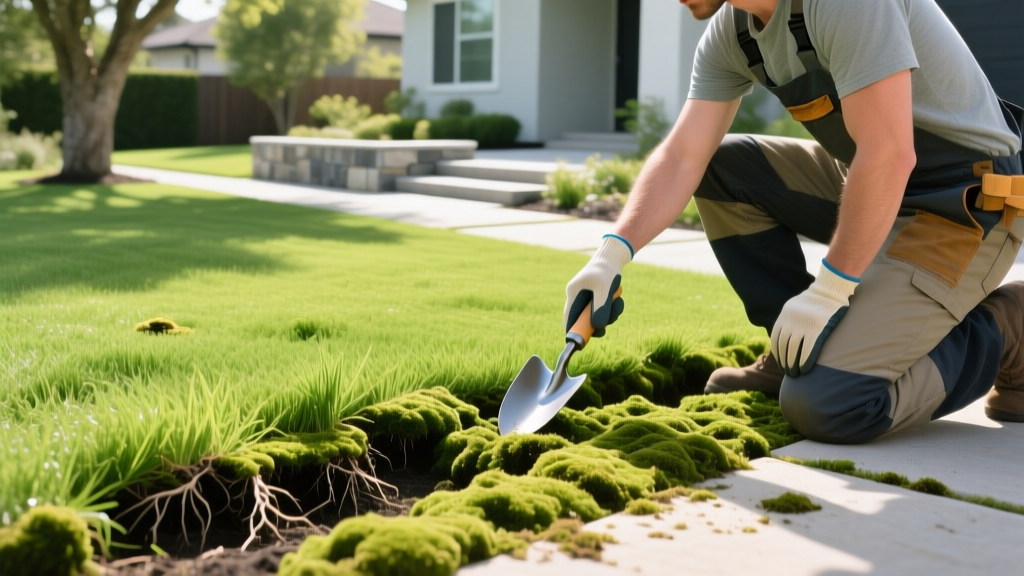
What Kills Moss Permanently: The Truth About Eradication and Long-Term Lawn Recovery
The Hard Truth: No Chemical Kills Moss Permanently
If you are searching for what kills moss permanently, the most honest answer from turfgrass pathologists is that no standalone chemical spray or granular product will eradicate moss forever. Moss is not a weed; it is a symptom of an environment where turfgrass is failing. While chemical moss killers can rapidly desiccate and destroy existing moss colonies, the spores will inevitably return within one to two seasons unless the underlying microclimate is altered.
According to Penn State Extension, moss thrives in conditions that are fundamentally hostile to traditional lawn grasses: high soil acidity, severe compaction, poor drainage, and heavy shade. To achieve permanent eradication, homeowners must deploy a two-pronged strategy: immediate chemical or physical eradication followed by aggressive cultural renovation.
The Biology of Moss: Why It Outcompetes Turfgrass
Understanding moss biology is critical to defeating it. Unlike turfgrass, mosses are non-vascular plants. They lack true roots, relying instead on rhizoids that merely anchor them to the soil surface. Because they absorb water and nutrients directly through their leaf-like structures, moss can survive in highly compacted soils where grass roots suffocate and die.
Expert Insight: Moss requires constant surface moisture to reproduce. If your lawn remains damp for more than 12 hours a day due to poor air circulation or clay-heavy soil, moss will always outcompete fescue, Kentucky bluegrass, or bermudagrass, regardless of how much fertilizer you apply.
Immediate Eradication: Chemical and Physical Moss Killers
Before you can rebuild the lawn, you must kill the existing moss mat. Below is a comparison of the most effective active ingredients available in 2026, including their mechanisms, costs, and specific use cases.
| Active Ingredient | Product Example & Cost | Mechanism & Speed | Drawbacks & Warnings |
|---|---|---|---|
| Ferrous Sulfate (Iron) | Lilly Miller Moss Out for Lawns (~$18 for 10 lbs) | Draws moisture out of moss cells. Turns moss black in 24-48 hours. | Will permanently stain concrete, brick, and stone hardscapes orange/brown. |
| Potassium Salts of Fatty Acids | Safer Brand Moss & Algae Killer (~$22 for 32oz RTU) | Contact desiccant. Destroys cell walls on contact. Results in 2-3 days. | Requires thorough coverage. Less effective on thick, established moss mats over 1 inch deep. |
| Cryptocidal (Soap-based) | Bonide Moss & Algae Killer (~$25 for 32oz) | Dehydrates moss. Safe for use near water features and hardscapes. | Does not provide residual soil activity. Strictly a contact burn-down. |
| Physical Scarification | Heavy-duty steel thatch rake (~$35) | Mechanically tears rhizoids from soil surface. | Labor intensive. Leaves spores behind in soil crevices if not paired with chemical treatment. |
The 'Permanent' Fix: Correcting the 4 Underlying Triggers
Once the moss is blackened and raked out, you must alter the environment. The University of Maryland Extension emphasizes that without correcting soil and environmental parameters, moss spores lying dormant in the topsoil will germinate within weeks. Here are the exact specifications for permanent correction.
1. Soil Acidity (The pH Factor)
Moss aggressively colonizes soils with a pH below 5.5. Turfgrass requires a pH between 6.0 and 7.0 to access essential macronutrients like nitrogen and phosphorus. Action: Conduct a professional soil test (not a cheap DIY dye kit). If pH is below 6.0, apply pelletized calcitic limestone at a rate of 50 lbs per 1,000 square feet to raise the pH by approximately 0.5 points. Re-test in six months.
2. Soil Compaction and Drainage
Clay soils compact easily, eliminating the pore space grass roots need for oxygen. Moss, lacking true roots, thrives on the surface. Action: Perform core aeration in the early fall. Rent a walk-behind core aerator that pulls 3-inch deep plugs with a minimum 0.5-inch diameter. Ensure you achieve 20 to 40 holes per square foot. Leave the plugs on the lawn to break down and top-dress the soil.
3. Canopy Shade and Airflow
Grass requires a minimum of 4 to 6 hours of direct sunlight. If tree canopies are blocking light and trapping humidity, moss will win. Action: Prune lower tree limbs up to 8 feet off the ground and thin the inner canopy by 15-20% to allow dappled sunlight and wind penetration to dry the morning dew faster.
4. Irrigation Mismanagement
Frequent, shallow watering encourages moss. Action: Switch to deep, infrequent watering. Apply 1 to 1.5 inches of water per week in a single or double session, forcing grass roots to grow deep while allowing the surface to dry out between waterings.
Diagnostic Decision Framework: Identify Your Primary Moss Trigger
- IF water pools on the lawn for hours after rain → Fix: Install a French drain or re-grade the soil to a 2% slope away from the home. Aeration alone will not solve severe grading issues.
- IF the area receives less than 3 hours of direct sun and pruning is impossible → Fix: Abandon traditional turf. Plant shade-tolerant groundcovers like Pachysandra, or seed with a 100% Fine Fescue blend (Creeping Red and Chewings Fescue), which tolerates shade and acidic soils far better than Kentucky Bluegrass.
- IF the soil is hard, shiny, and resists a screwdriver test → Fix: Heavy compaction. Core aerate immediately and top-dress with 1/4 inch of compost to introduce organic matter and microbial life.
Step-by-Step Moss Eradication and Lawn Renovation Timeline
Follow this exact 21-day protocol during the early fall or early spring when soil temperatures are between 50°F and 65°F.
- Day 1 (Eradication): Apply Ferrous Sulfate (if no hardscapes are nearby) or Potassium Salt spray to actively growing, moist moss. Do not mow 2 days before or after.
- Day 3 (Removal): The moss should be black or dark brown. Use a heavy thatch rake or a power dethatcher on a low setting to violently tear the dead moss mat out of the soil. Rake up and compost the debris.
- Day 7 (Soil Amendment): Core aerate the bare patches. Apply pelletized lime (if soil test dictates) and a starter fertilizer high in phosphorus (e.g., 10-18-10 NPK ratio) to encourage root development.
- Day 8 (Seeding): Overseed the bare areas with a shade-tolerant turf mix at a rate of 4 to 6 lbs per 1,000 square feet. Rake lightly to ensure seed-to-soil contact.
- Day 9 to 21 (Germination): Water lightly 2 to 3 times a day for 10 minutes to keep the top 1 inch of soil constantly moist (this is the only time shallow watering is permitted). Once grass reaches 3 inches, resume deep, infrequent watering.
Common Mistakes That Guarantee Moss Returns
Warning: Avoid using baking soda (sodium bicarbonate) or bleach to kill moss in lawns. While baking soda will desiccate moss, the massive influx of sodium destroys soil structure, creates hardpan clay, and is highly toxic to turfgrass roots. Bleach will alter the soil microbiome, killing beneficial mycorrhizal fungi required for grass nutrient uptake.
Achieving a moss-free lawn is not about finding a magic chemical; it is about engineering an environment where grass is the apex competitor. By combining targeted contact herbicides with rigorous soil aeration, pH balancing, and canopy management, you permanently remove the ecological niche that moss requires to survive.