
Home & Garden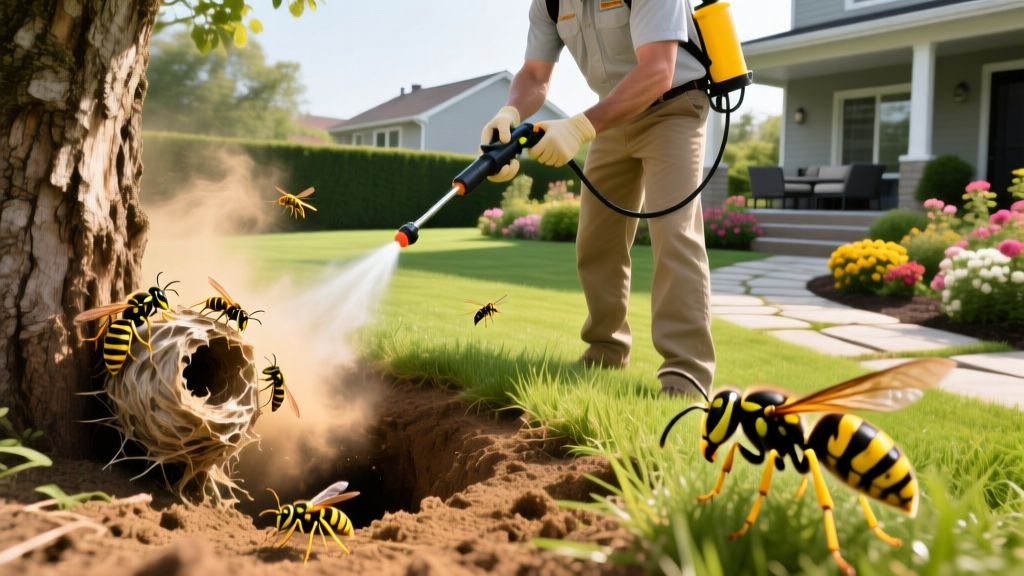
What Kills Yellow Jackets Fast: Expert Nest & Swarm Eradication
When homeowners ask what kills yellow jackets, the answer depends entirely on nest location and the delivery mechanism of the active ingredient. Yellow jackets (Vespula and Dolichovespula species) are highly aggressive, social wasps that defend their colonies with repeated stinging. Eradicating a colony of 1,000 to 5,000 workers requires more than just killing the foragers you see on your patio; it requires delivering a lethal dose to the queen deep inside the nest architecture.
According to the UC Statewide IPM Program, the most effective eradication relies on the "transfer effect"—using slow-acting, residual insecticides that foraging workers track back into the nest and spread to the brood and queen through grooming and trophallaxis (food sharing). Flooding a ground nest with fast-acting contact sprays often triggers a massive, dangerous swarm response, leaving the queen alive and the colony enraged.
The Chemistry of Eradication: Active Ingredients That Work
Not all wasp sprays are created equal. The active ingredient dictates whether you achieve a temporary knockdown or total colony collapse. Pyrethroids are the industry standard for yellow jacket control due to their low mammalian toxicity and high efficacy against hymenopterans.
| Active Ingredient | Common Brand Names | Kill Speed | Transfer Effect | Best Application |
|---|---|---|---|---|
| Deltamethrin | DeltaDust, Suspend SC | Slow (24-48 hrs) | Excellent | Ground nests, wall voids |
| Cypermethrin | Cyper WP, Demon WP | Moderate (12-24 hrs) | Good | Perimeter, large ground nests |
| Tetramethrin | Wasp Freeze, Raid Wasp | Instant (Seconds) | Poor | Aerial nests, emergency knockdown |
| Silica Aerogel | Drione Dust | Slow (Desiccation) | Excellent | Dry ground nests, attics |
Dust vs. Aerosol vs. Foam: Choosing the Right Delivery System
Understanding what kills yellow jackets also means understanding how the chemical reaches the target. The physical form of the insecticide is just as critical as the chemical itself.
1. Insecticide Dust (The Gold Standard for Ground Nests)
Waterproof dusts like DeltaDust (deltamethrin) or Drione (silica aerogel + pyrethrins) are the undisputed best choice for subterranean nests. When puffed into a ground entrance using a bellows hand duster, the dust coats the tunnel walls. As workers enter and exit, the dust clings to their legs and bodies. They carry it deep into the nest, inadvertently dusting the queen and brood. Because it does not flood the nest with liquid, it rarely triggers an immediate defensive swarm.
2. Aerosol Sprays (For Aerial Nests Only)
Aerosols containing tetramethrin shoot a concentrated stream up to 15 feet. They provide instant knockdown, paralyzing the wasps on contact. However, University of Kentucky Entomology warns against using liquid or aerosol sprays on ground nests. The liquid pools at the entrance, killing the first few guards but alerting the rest of the colony. The surviving wasps will often chew new exit holes and swarm the surface.
3. Expanding Foams (For Wall Voids and Eaves)
Foam formulations expand to fill enclosed spaces like wall voids, soffits, and hollow concrete blocks. If yellow jackets have established a nest inside your home's siding, foam ensures the chemical reaches every chamber of the paper nest.
Step-by-Step Ground Nest Treatment Protocol
Ground-nesting yellow jackets often co-opt abandoned rodent burrows or hollow spaces near landscape timbers and sprinkler heads. Follow this exact protocol to eliminate the colony safely.
WARNING: Anaphylaxis and Aggression Risk
Yellow jackets can sting multiple times without dying. If you have a known allergy to hymenopteran venom, do not attempt DIY eradication. Hire a licensed pest control professional. Always have an epinephrine auto-injector (EpiPen) accessible if prescribed, and keep a phone nearby to call emergency services.
- Locate the Nest at Noon: During peak daylight hours, foraging activity is highest. Observe the flight paths from a safe distance (at least 15 feet) to pinpoint the exact entrance holes. Mark the area with a small flag or stone from a distance.
- Wait for Dusk or Dawn: Treat the nest between 9:00 PM and 2:00 AM. At this time, all foragers have returned to the nest, and their metabolism is low due to cooler temperatures, making them sluggish and less likely to swarm.
- Gear Up Properly: Wear a white, light-colored bee suit with a veiled helmet (yellow jackets are attracted to dark colors and aggressive toward dark shapes). Tuck pant legs into socks. Wear nitrile gloves underneath thick leather work gloves.
- Use Red Light: Yellow jackets cannot see red light well. Place a red cellophane filter over your flashlight, or use a red-lens headlamp. Do not shine a white beam directly into the nest hole.
- Apply the Dust: Fill a bellows hand duster halfway with DeltaDust or Drione. Insert the nozzle into the entrance hole and puff 3 to 4 heavy clouds of dust. Do not overfill the hole; you want the dust to coat the tunnel, not plug it.
- Do Not Plug the Hole: Leave the entrance open. The workers must be able to enter and exit to track the dust into the lower chambers. Cover the hole with a clear glass bowl or heavy rock only after 48 hours, once activity has completely ceased.
Why DIY Traps and Natural Remedies Fail (The Hard Truth)
The internet is saturated with ineffective "natural" remedies for yellow jackets. Here is why they fail to eradicate an established colony:
- Soapy Water: While dish soap breaks the surface tension of water and can drown a wasp on contact, pouring soapy water into a ground nest is highly dangerous. It rarely reaches the deep queen chambers before the water pools at the surface, triggering a massive, enraged swarm of thousands of stinging workers.
- Vinegar and Sugar Traps: Hanging bait traps filled with apple cider vinegar and sugar will catch dozens of foragers. However, a mature late-summer nest produces hundreds of new workers daily. Traps only reduce surface nuisance; they do absolutely nothing to kill the queen or collapse the colony.
- Essential Oils (Peppermint/Clove): These act as mild repellents, not insecticides. They will not kill a colony and may simply cause the wasps to relocate their entrance a few feet away in your lawn.
Cost Breakdown: DIY Eradication vs. Professional Extermination
Deciding whether to tackle the nest yourself or hire a pro depends on your budget, risk tolerance, and the nest's location.
| Eradication Method | Average Cost (2026) | Effectiveness | Risk Level |
|---|---|---|---|
| DIY Insecticide Dust (DeltaDust/Drione) | $25 - $45 | High (90%+) | Moderate |
| DIY Aerosol Spray (Wasp Freeze) | $8 - $15 | Low for ground / High for aerial | High (ground) |
| Professional Pest Control (Standard) | $150 - $250 | Guaranteed | None (for homeowner) |
| Professional Extermination (Wall Void/Attic) | $250 - $450+ | Guaranteed | None |
Pro Tip: Prevent Future Ground Nests
Yellow jackets often reuse old rodent burrows. After successfully eradicating a nest and waiting two weeks for the dust to settle, fill the old holes with a mixture of topsoil and crushed gravel. Maintain a dense, healthy turfgrass lawn; yellow jackets prefer to excavate in sparse, dry, and poorly maintained soil.
Frequently Asked Questions
How long does it take for insecticide dust to kill a yellow jacket colony?
Deltamethrin and silica aerogel dusts typically take 48 to 72 hours to fully collapse a colony. You will see a gradual decrease in foraging activity over the first two days as the dust spreads to the queen and brood.
Will bleach kill yellow jackets?
While bleach is toxic to insects on direct contact, pouring bleach into a ground nest is highly discouraged. It contaminates the soil, harms nearby plant roots, and fails to reach the deep nest chambers, resulting in an aggressive surface swarm.
What time of year are yellow jackets most aggressive?
Yellow jackets reach peak aggression in late August through October. During this time, the colony shifts from rearing workers to producing reproductive queens and males. The workers become highly defensive and are strongly attracted to human food sources, particularly sugars and proteins.