
Home & Garden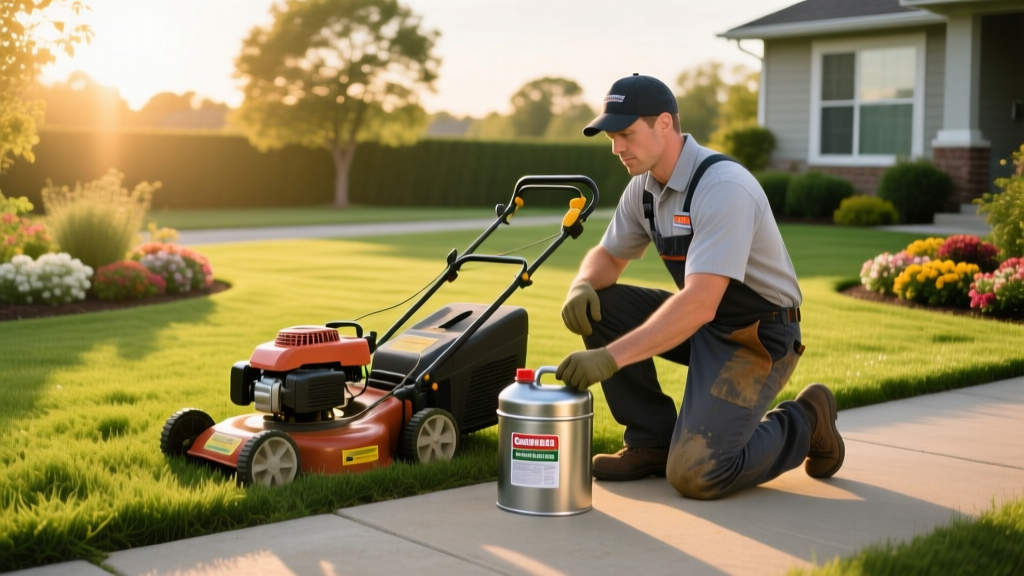
Where to Dispose of Gas: Safe Removal for Lawn Equipment
The Hidden Cost of Stale Fuel in Lawn Equipment
Modern gasoline degrades rapidly. If you store your lawn mower, string trimmer, or generator with untreated fuel in the tank, you are risking catastrophic carburetor failure. Most residential outdoor power equipment uses E10 fuel (10% ethanol). Ethanol is hygroscopic, meaning it absorbs moisture from the air. Within 30 to 60 days, this leads to phase separation, where the ethanol and water sink to the bottom of the tank, leaving the low-octane gasoline on top. When your engine draws from the bottom, it ingests a corrosive water-ethanol mix that destroys the 0.020-inch brass jets inside your carburetor.
When this happens, or when you simply need to winterize your equipment, you are left with a critical question: where to dispose of gas safely and legally. Dumping it in the yard, down a storm drain, or in the household trash is illegal, environmentally devastating, and a severe fire hazard. This guide provides the exact protocols for draining, storing, and disposing of old gasoline from your lawn and garden equipment.
Diagnosing Bad Gas: Fresh vs. Degraded Fuel
Before disposing of fuel, confirm it has actually gone bad. Sometimes, gas that has sat for a month is still viable if it was treated with a stabilizer. Use this diagnostic matrix to evaluate your fuel.
| Characteristic | Fresh Gasoline (Under 30 Days) | Degraded Gasoline (60+ Days / Untreated) |
|---|---|---|
| Color | Clear to pale yellow | Dark amber, cloudy, or opaque |
| Odor | Sharp, chemical petroleum scent | Sour, sweet, or resembling old paint/varnish |
| Viscosity | Thin, highly volatile liquid | Thick, syrupy, leaves sticky residue |
| Water Content | Zero visible separation | Distinct clear water layer at the bottom |
Step-by-Step: Draining Fuel from Lawn Equipment
Never attempt to drain fuel near an open flame, pilot light, or while smoking. Perform this task outdoors on a concrete surface where spills can be managed with absorbent clay, not on grass or soil.
- Disconnect the Spark Plug: Pull the rubber boot off the spark plug. This is a non-negotiable safety step to prevent accidental engine ignition while handling volatile fumes.
- Extract the Fuel: Use a manual hand-pump siphon (such as the Teromak or Koehler hand siphon, typically $12–$18). Never use your mouth to start a siphon. Insert the intake tube to the very bottom of the mower's gas tank.
- Transfer to an Approved Container: Pump the old gas into a DOT-approved, EPA/CARB compliant red HDPE safety can (e.g., Eagle Type II, $35–$45). Standard thin plastic jugs are illegal for gasoline transport and highly prone to static discharge fires.
- Run the Carburetor Dry: Reconnect the spark plug, start the engine, and let it run until it naturally stalls. This burns off the remaining drops of fuel in the carburetor bowl, preventing internal varnish buildup during storage.
Where to Dispose of Gas: Approved Facilities and Methods
Once your fuel is safely contained in a red safety can, you must route it to an approved processing facility. The Environmental Protection Agency (EPA) classifies gasoline as a Household Hazardous Waste (HHW) due to its ignitability and toxicity. Here are your legal disposal options:
1. County Household Hazardous Waste (HHW) Centers
This is the most reliable answer to where to dispose of gas. Nearly every county in the United States operates a permanent HHW collection facility. Disposal is typically free for residents, though you may need to show a utility bill or driver's license to prove residency. Call ahead to confirm their hours, as many HHW centers only operate on specific weekends or by appointment.
2. Community Hazardous Waste Amnesty Days
If your county lacks a permanent facility, they will host bi-annual or quarterly collection events, often advertised as "Hazmat Amnesty Days." These are usually held at municipal fairgrounds or large public works yards. You can drop off up to 15–20 gallons of gasoline per vehicle.
3. What About Auto Parts Stores?
A common misconception is that auto parts retailers (like AutoZone, Advance Auto Parts, or O'Reilly) will accept old gasoline. They will not. While these stores gladly accept used motor oil, they are not licensed by the EPA to store highly volatile, flammable liquids like gasoline. Furthermore, never mix old gas with your used motor oil to "sneak" it into the recycling bin. This contaminates the entire 200-gallon oil reclamation tank, and the store will reject it, potentially reporting you to local environmental authorities.
WARNING: Never pour gasoline down a sink, toilet, or storm drain. Just one gallon of gasoline can contaminate up to 750,000 gallons of drinking water. Municipal water treatment plants are not equipped to process petroleum distillates, and you will be held financially liable for the environmental cleanup under the Clean Water Act.
How to Stabilize Fuel to Prevent Future Waste
The best way to manage gas disposal is to prevent it from going bad in the first place. If you know your equipment will sit for more than 30 days, treat the fuel immediately after purchasing it.
- Use the Right Stabilizer: For standard winter storage (up to 12 months), use STA-BIL Storage (the red formula). For marine environments or extreme humidity, use STA-BIL Marine (the blue formula), which contains extra corrosion inhibitors and water demulsifiers.
- Exact Dosing: The required ratio is 1 ounce of stabilizer per 2.5 gallons of gasoline. Use a dedicated fuel measurer; overdosing will not extend the life further and can alter the combustion properties.
- Mix Before Filling: Add the stabilizer to your red safety can before you fill it at the gas station. The turbulence of the pump will perfectly mix the chemical into the fuel, ensuring every drop that enters your mower is protected.
Frequently Asked Questions About Gas Disposal
Can I mix old gas with new gas in my car?
If the old gas is less than 60 days old and shows no signs of water contamination, you can dilute it by pouring it into your car's gas tank, provided the car's tank is nearly full. The massive volume of fresh fuel in a modern vehicle (12-18 gallons) will easily absorb a half-gallon of slightly stale mower gas without affecting engine performance. However, if the gas smells like varnish or shows visible water separation, do not put it in your car; you risk clogging your vehicle's fuel injectors, which cost $300+ each to replace.
How long does it take for gas to go bad?
Untreated E10 gasoline begins to degrade in as little as 30 days. By 60 days, oxidation creates gum and varnish deposits. If you add a fuel stabilizer at the exact ratio of 1 ounce per 2.5 gallons, the fuel will remain viable for up to 24 months.
Can I burn old gas in a fire pit?
Absolutely not. The National Fire Protection Association (NFPA) strictly warns against using gasoline as an accelerant. Gasoline produces heavy, highly flammable vapors that travel along the ground and can flash back to the container, causing catastrophic explosions and severe burns.

