
Home & Garden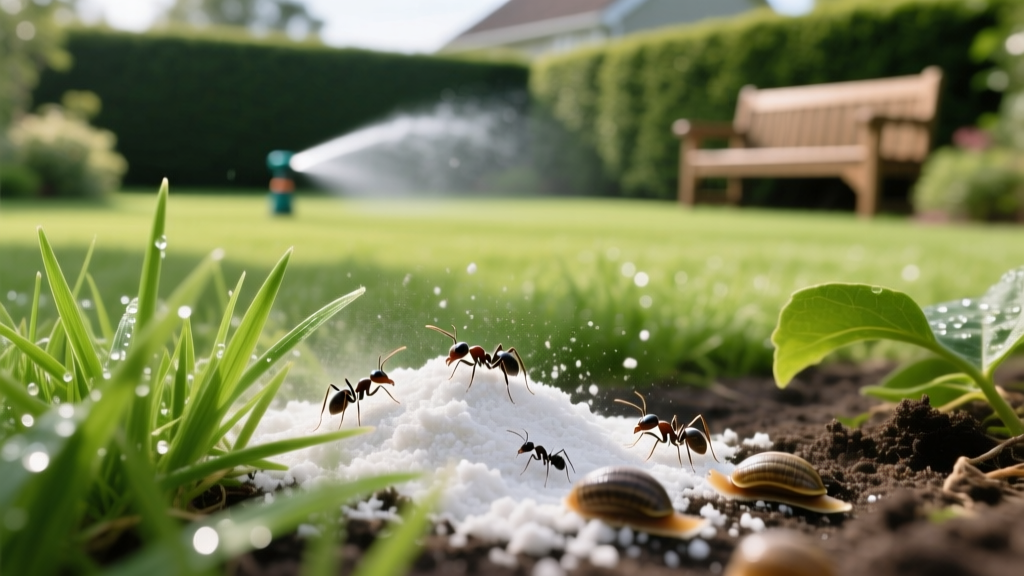
Will Diatomaceous Earth Kill Fleas, Ants, and Slugs?
The Short Answer: Yes, But With Strict Limitations
Will diatomaceous earth kill the pests invading your yard? The short answer is yes, but only if you target the right insects under strictly dry conditions. Diatomaceous earth (DE) is not a universal pesticide, nor is it a stomach poison. It is a mechanical desiccant. When applied correctly, it destroys the waxy outer layer of an insect's exoskeleton, causing them to dehydrate and die. However, its efficacy varies wildly depending on the pest's biology, the ambient moisture, and the particle size of the product you purchase.
Homeowners often waste money applying DE to wet soil or expecting it to eradicate subterranean grubs. To use DE effectively in 2026, you must understand its entomological mechanics, its severe limitations regarding moisture, and the critical safety distinctions between product grades.
The Science: How Diatomaceous Earth Actually Works
Diatomaceous earth is composed of the fossilized remains of diatoms, a type of hard-shelled microalgae. Under a microscope, DE particles look like shards of glass or porous cylinders. According to the National Pesticide Information Center, these microscopic shards interact with insects in two distinct ways:
- Abrasion: The sharp, jagged edges of the silica particles scratch and abrade the insect's epicuticle (the waxy, water-repellent outer layer of their exoskeleton).
- Absorption: The highly porous nature of the diatom shells absorbs the lipids and oils from the insect's cuticle, accelerating moisture loss.
Once the waxy barrier is compromised, the insect rapidly loses water to the surrounding air and dies of desiccation. Because this is a physical mechanism rather than a chemical one, insects cannot develop genetic resistance to DE.
Particle Size Matters: For DE to be effective against garden pests, the particle size must range between 10 and 50 microns. Particles larger than 50 microns allow small insects like fleas to simply walk around the shards. Particles smaller than 10 microns tend to clump together when exposed to ambient humidity, losing their abrasive, free-flowing properties.
Pest Efficacy Matrix: What DE Will and Will Not Kill
Not all garden pests are vulnerable to desiccation. Below is a breakdown of how DE performs against common home and garden invaders.
| Target Pest | Efficacy Rating | Time to Kill | Critical Limitation |
|---|---|---|---|
| Fleas (Adults) | High | 24 - 48 Hours | Ineffective against flea pupae, which are protected by a sticky, debris-coated casing that repels DE dust. |
| Ants (Workers) | Moderate | 48 - 72 Hours | Ants will actively route around visible barriers of DE. It works best when puffed into nest entrances or cracks, not as a perimeter line. |
| Slugs & Snails | Low to Moderate | 3 - 5 Days | Requires a thick 1/2-inch barrier. Easily defeated by morning dew, irrigation, or the slug's heavy mucus production. |
| White Grubs | Zero | N/A | Grubs live underground in high-moisture soil. DE is completely neutralized by soil moisture and cannot reach them. |
| Earthworms | Low (Safe) | N/A | Earthworms secrete a thick protective mucus and live in moist soil, making them largely immune to surface-applied DE. |
The Moisture Problem: Why DE Fails After Rain
The single greatest point of failure for homeowners using diatomaceous earth is moisture. DE relies on its porous, dry structure to absorb lipids and its free-flowing nature to cling to insect legs. When DE gets wet, the microscopic pores fill with water via capillary action.
According to University of Minnesota Extension, wet diatomaceous earth loses its desiccating properties entirely. While it may regain some abrasive qualities after it dries out completely, the drying process often causes the powder to cake, clump, and crack, destroying the uniform dusting required for insects to pick it up on their bodies.
Environmental Defeat Factors
- Morning Dew: In humid climates, heavy morning dew can neutralize a DE application before the sun dries it out, giving pests a daily window of safe passage.
- Overhead Irrigation: Sprinklers will wash DE into the soil, rendering it useless and potentially altering soil drainage in localized spots.
- Wind Drift: Because effective DE must be applied as a fine, barely visible dust, even a 5 MPH breeze can blow the product off your target area and into the air.
Step-by-Step Application Protocol for Maximum Kill Rates
To get a $18 bag of food-grade DE to actually work, you must apply it with precision. Do not simply broadcast it by hand.
- Clear the Area: Rake away wet leaves, mulch, and debris. DE must be applied directly to dry soil, dry concrete, or dry plant stems.
- Wait for Dry Conditions: Check the forecast. Do not apply if rain is expected within 48 hours, and apply in the late afternoon after morning dew has evaporated and the sun is lowering.
- Use a Bulb Duster: Purchase a dedicated bulb duster (such as the Harris Powder Duster, typically around $12). Fill it no more than 1/3 full with DE to allow air space for the dust cloud to form.
- Apply a Micro-Layer: Squeeze the bulb to release a fine, barely visible mist. You are not trying to create a snow-like blanket; you are trying to create an electrostatic-like coating on the surfaces insects walk on. If you can easily see a thick white pile, you have applied too much, and insects will simply walk around it.
- Target Micro-Habitats: Puff the dust into cracks in patios, along the base of dry foundation walls, under the edges of decks, and directly into ant nest entrances.
CRITICAL SAFETY WARNING: Grade Selection and Inhalation
You must only purchase and use Food-Grade Diatomaceous Earth for garden and home use. Food-grade DE contains less than 1% crystalline silica. Never use Filter-Grade (Pool-Grade) DE. Filter-grade DE is heat-treated (calcined), which converts the amorphous silica into crystalline silica. Inhaling crystalline silica causes severe, irreversible lung damage (silicosis) in humans and pets. Even with food-grade DE, the fine particulate matter is a respiratory irritant. Always wear a NIOSH-approved N95 respirator and safety goggles during application.
Frequently Asked Questions
Will diatomaceous earth kill beneficial pollinators like bees?
Yes, DE is non-selective and will kill bees, butterflies, and ladybugs if they come into direct contact with it while it is dry. To protect pollinators, never apply DE to the blooms, flowers, or foliage of flowering plants. Restrict applications to the ground level, foundation perimeters, and non-flowering pest hotspots.
Can I mix diatomaceous earth into my potting soil to prevent fungus gnats?
Mixing DE into potting soil is highly ineffective. The moisture required to keep your potted plants alive will instantly neutralize the desiccating properties of the DE. For fungus gnats, you are better off using a biological control like Bacillus thuringiensis israelensis (Bti) in the form of mosquito dunks, or applying a 1-inch layer of dry horticultural sand to the top of the soil to block egg-laying.
How long does an outdoor application last?
In a perfectly dry, sheltered environment (like under a covered porch or inside a dry shed), DE can remain effective indefinitely. Out in the open garden, wind, rain, and foot traffic will degrade or displace the application within 7 to 14 days. Expect to reapply after any precipitation or heavy wind event.