
Home & Garden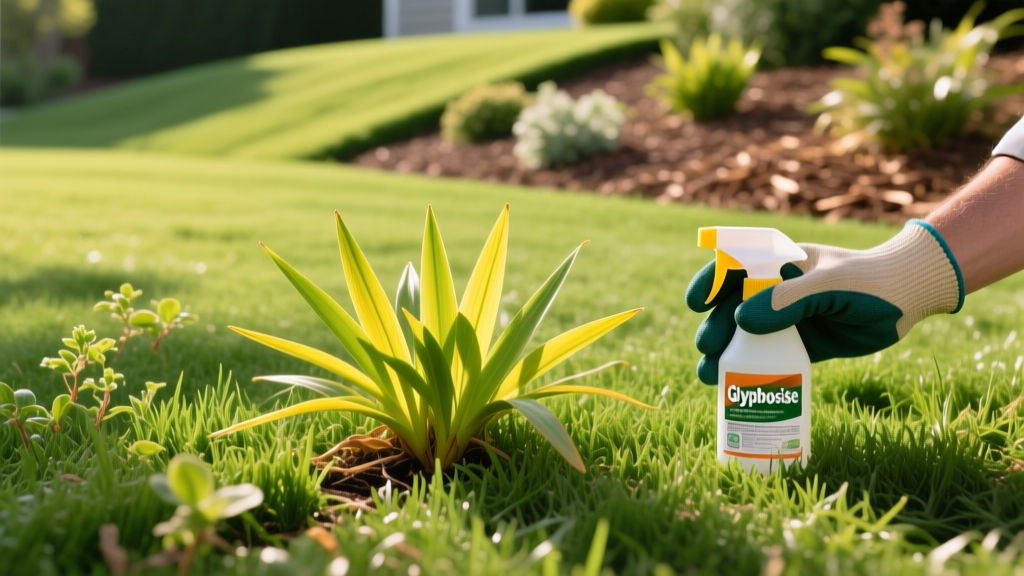
Will Roundup Kill Nutsedge? The Truth About Glyphosate and Tubers
The Short Answer: Does Standard Roundup Kill Nutsedge?
If you are asking, "will Roundup kill nutsedge?", the technical answer is yes, but the practical answer is no. Standard Roundup Weed & Grass Killer (active ingredient: glyphosate) will burn off the visible, above-ground blades of both yellow and purple nutsedge. However, it rarely eradicates the plant's deep underground tuber system (nutlets). Furthermore, because standard glyphosate is a non-selective herbicide, it will simultaneously kill the desirable turfgrass surrounding the sedge, leaving you with dead patches that invite new weed invasions.
⚠️ Herbicide Warning: Never use standard Roundup (glyphosate) on an established lawn unless you are treating isolated weeds in a gravel driveway or preparing for a total lawn renovation. For nutsedge in turf, you must use a selective, post-emergent sedge-specific herbicide.
Identifying the Enemy: Yellow vs. Purple Nutsedge
Before selecting a chemical treatment, you must correctly identify which species of Cyperus has invaded your yard. While both are technically sedges (not true grasses or broadleaf weeds), they respond slightly differently to environmental stress and specific herbicides. Remember the old gardener's rhyme: "Sedges have edges"—roll the stem between your fingers to feel the distinct triangular shape.
| Feature | Yellow Nutsedge (C. esculentus) | Purple Nutsedge (C. rotundus) |
|---|---|---|
| Stem & Leaf Color | Light green to yellowish-green | Dark green with reddish-purple base |
| Seed Head | Golden-brown, straw-like clusters | Dark reddish-brown to purplish-black |
| Tuber (Nutlet) Color | Golden-brown, smooth, round | Dark brown to black, scaly, elongated |
| Growth Habit | Taller, grows faster than turf | Shorter, spreads aggressively via chains |
Why Standard Glyphosate Fails the Tuber Test
To understand why standard Roundup falls short, you must understand the biological survival mechanism of nutsedge. According to the UC Statewide IPM Program, a single purple nutsedge plant can produce up to 99 tubers in just 12 weeks. These tubers are connected by a complex underground rhizome network, often reaching depths of 8 to 14 inches in the soil profile.
The Phloem Translocation Failure
Glyphosate is a systemic herbicide, meaning it relies on the plant's phloem to transport the chemical from the leaves down to the roots and tubers. This is where the failure occurs. If you apply glyphosate when the nutsedge is mature or actively flowering, the plant's internal nutrient flow is directed upward to support seed production, not downward to the roots. The herbicide gets trapped in the upper foliage, killing the top growth while leaving the deep tubers completely unharmed. Within 2 to 3 weeks, the dormant tubers activate, sending up new shoots.
The Physical Extraction Myth
Many homeowners attempt to pull nutsedge by hand. This is highly counterproductive. When you pull the stem, it almost always snaps at the soil line or just above the first tuber. The remaining rhizome chain simply branches out, stimulating dormant tubers to sprout. Pulling one stem often results in three new shoots emerging the following week.
The Right Chemical Arsenal for Nutsedge Eradication
To kill nutsedge without harming your lawn, you need selective post-emergent herbicides formulated specifically for sedges. These chemicals utilize active ingredients that target the ALS (acetolactate synthase) enzyme pathway in sedges while leaving common turfgrasses unharmed.
- Halosulfuron-methyl (e.g., SedgeHammer): The industry gold standard for residential use. It is safe for almost all warm-season and cool-season grasses, including St. Augustine, Bermuda, Zoysia, and Fescue. Pricing averages $25 to $30 for a 13.5-gram packet, which treats up to 1,000 square feet. It works slowly, taking 14 to 21 days to show complete necrosis, which ensures the chemical fully translocates to the tubers.
- Sulfosulfuron (e.g., Certainty): Highly effective against mature purple nutsedge chains. It is primarily labeled for warm-season turfgrasses. Expect to pay around $110 to $125 for a 1.25 oz bottle. Because of the high cost, it is best reserved for severe, multi-year infestations where halosulfuron has failed.
- Pyrimisulfan + Penoxsulam (e.g., Blindside): A newer dual-mode-of-action herbicide (PPO and ALS inhibitors) that excels at controlling nutsedge in high-stress environments. It is particularly useful if your lawn has developed resistance to older ALS-inhibitor chemistries.
Step-by-Step Application Protocol for Maximum Tuber Kill
Even the best sedge killer will fail if applied incorrectly. Follow this precise protocol to ensure the herbicide reaches the deepest tubers, as recommended by Penn State Extension turfgrass specialists.
- Time the Application Correctly: Treat nutsedge when it is young and actively growing, ideally at the 3-to-5 leaf stage before the flower head emerges. This ensures downward phloem flow to the tubers.
- Adjust Your Mower: Do not mow your lawn for 2 days before application and 2 days after. You need maximum leaf surface area to absorb the chemical.
- Mix with a Surfactant: Sedge leaves are coated in a waxy cuticle that repels water. You must add a non-ionic surfactant (NIS) to your tank mix. Use a rate of 0.25% v/v (roughly 1/3 ounce of surfactant per gallon of water). Without this, the herbicide will bead up and roll off the triangular stems.
- Calibrate for Spot Treatment: For SedgeHammer, mix 0.9 grams of product per 1,000 square feet. Use 1 to 2 gallons of water to ensure even coverage without excessive runoff.
- Schedule the Follow-Up: A single application rarely achieves 100% control on established patches. Expect to apply a second treatment 3 to 4 weeks later to catch any late-germinating tubers from the rhizome chain.
💡 Pro Tip for Soil Moisture: Never apply sedge herbicides during a summer drought. When soil is dry, the plant shuts down its metabolic processes to conserve water, halting herbicide translocation. Irrigate your lawn deeply 24 hours before spraying to ensure the nutsedge is actively pulling water (and chemicals) from the soil.
Frequently Asked Questions
Will Roundup for Lawns (the ready-to-use selective spray) kill nutsedge?
Roundup for Lawns contains a mix of MCPA, quinclorac, and dicamba. While quinclorac has some suppressive effect on certain sedges, it is primarily a crabgrass killer. It will stunt nutsedge but rarely provides the complete tuber eradication achieved by dedicated halosulfuron-methyl products.
Can I use horticultural vinegar to burn down nutsedge organically?
High-concentration acetic acid (20% horticultural vinegar) will rapidly desiccate the top growth of nutsedge. However, it is strictly a contact burn herbicide. It possesses zero soil activity and will not penetrate the rhizome network. The tubers will resprout within days, making vinegar a waste of time and money for perennial sedge control.
How long do nutsedge tubers survive in the soil?
If left untreated, purple nutsedge tubers can remain viable in the soil for up to 3 years, while yellow nutsedge tubers typically survive for 1 to 2 years. This is why a multi-year strategy focusing on thick, competitive turfgrass canopy closure is essential to prevent dormant tubers from receiving the sunlight required to germinate.