Home & Garden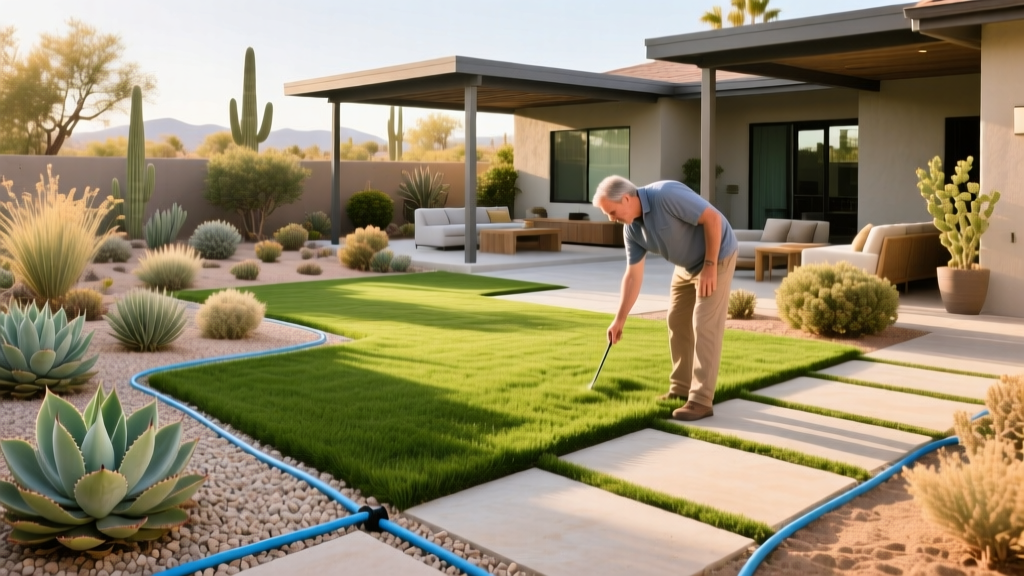
Diagnosing Desert Yard Problems: The Yard House Glendale AZ Solutions
The Unique Challenges of Glendale, AZ Landscapes
Maintaining an outdoor living space in Glendale, Arizona, requires battling extreme environmental variables that simply do not exist in temperate climates. With summer temperatures routinely exceeding 110°F, USDA Hardiness Zone 9b/10a microclimates, and highly alkaline native soils, standard gardening advice often leads to catastrophic plant failure and infrastructure damage. When sourcing materials and seeking localized advice from regional hubs like The Yard House in Glendale, AZ, homeowners must pivot from traditional landscaping to desert-specific engineering.
This diagnostic guide breaks down the three most common failure modes in Glendale yards—caliche soil lockout, hard-water irrigation degradation, and thermal hardscape heaving—and provides exact, actionable solutions using locally available materials.
Symptom 1: Stunted Growth, Yellowing Leaves, and Water Pooling
Diagnosis: The Caliche Hardpan and Alkalinity Lockout
If water pools on your lawn or garden beds for hours after irrigation, and plants like citrus, bougainvillea, or hibiscus exhibit interveinal chlorosis (yellow leaves with green veins), you are dealing with caliche and high soil pH. Glendale's native soil frequently features a caliche layer—a concrete-like matrix of calcium carbonate—located 12 to 24 inches below the surface. Furthermore, the soil pH often sits between 8.0 and 8.5, which chemically locks up essential micronutrients like iron, zinc, and manganese, making them unavailable to plant roots.
Diagnostic Test: Dig a test hole 18 inches deep. Fill it with water. If it drains slower than 1 inch per hour, you have a caliche hardpan restricting percolation and suffocating roots.
The Solution: Mechanical Breaching and Chemical Amendment
Do not attempt to rototill caliche; you will destroy your equipment. Instead, use a pickaxe or a rented pneumatic breaker to fracture the hardpan layer. Once breached, you must alter the soil chemistry.
- Elemental Sulfur Application: Apply 5 to 10 pounds of 90% pure elemental sulfur per 1,000 square feet. Soil bacteria convert this to sulfuric acid over 6 to 12 months, gradually lowering the pH. Incorporate it into the top 6 inches of soil.
- Iron Chelation: For immediate relief of iron chlorosis, do not use standard Fe-EDTA chelates, which break down and become useless above pH 7.0. You must source Fe-EDDHA (specifically the ortho-ortho isomer), which remains stable in Glendale's alkaline soils up to pH 9.0. Apply as a soil drench at a rate of 1 to 2 ounces per 100 gallons of water.
- Organic Matter Integration: Mix 30% premium compost (by volume) with the native soil. Avoid peat moss, which can exacerbate salt accumulation in arid environments.
For localized material sourcing, regional suppliers understand the exact aggregate and compost blends required to bypass big-box store limitations, offering bulk deliveries of sulfur-amended topsoil mixes tailored for the West Valley.
Symptom 2: Drip Line Blowouts, Clogged Emitters, and Dry Zones
Diagnosis: Hard Water Scaling and UV Degradation
Glendale's municipal water supply is notoriously hard, with Total Dissolved Solids (TDS) frequently ranging from 300 to over 500 parts per million (ppm), heavily weighted with calcium and magnesium. When this water is pushed through standard 1/4-inch drip emitters, the pressure drop causes calcium carbonate to precipitate, forming rock-hard scale that blocks water flow. Simultaneously, the intense UV index in the Sonoran Desert degrades cheap polyethylene tubing within 18 to 24 months, leading to micro-cracks and pressure blowouts.
The Solution: Filtration, Pressure Regulation, and UV-Stable Components
According to the Water Use It Wisely desert conservation initiative, optimizing drip efficiency is critical for both plant survival and water conservation in the Valley. To fix and prevent irrigation failures, overhaul your valve manifold with the following specific components:
- 120-Mesh Disc Filter: Install a 120-mesh (130-micron) disc filter immediately after the valve. Unlike screen filters that allow calcium crystals to wedge into the mesh, disc filters can be easily removed, compressed, and flushed clean.
- Pressure Regulation: Drip lines are rated for 15 to 30 PSI. Glendale municipal pressure often spikes to 65-80 PSI at night. Install a brass pressure regulator set to exactly 25 PSI to prevent emitter blowouts.
- UV-Resistant Tubing: Replace standard black poly tubing with UV-stabilized, carbon-black infused polyethylene (such as Netafim Techline CV or Rain Bird Xeri-Tube), which carries a 10-year UV degradation warranty.
| Component | Standard Big-Box Part | Desert-Optimized Upgrade | Lifespan in Glendale, AZ |
|---|---|---|---|
| Filter | 3/4' Screen Filter (60 mesh) | 1' Disc Filter (120 mesh) | 1 year vs. 5+ years |
| Regulator | Plastic 25 PSI preset | Brass adjustable 15-30 PSI | 2 years vs. 10+ years |
| Tubing | Standard 1/2' Poly | UV-Stabilized Carbon-Black | 18 months vs. 10+ years |
| Emitters | Standard 1 GPH Vortex | Pressure-Compensating (PC) | 6 months vs. 5+ years |
Symptom 3: Paver Shifting, Cracking, and Joint Sand Washout
Diagnosis: Thermal Expansion and Improper Base Compaction
Hardscape materials like concrete pavers and travertine absorb massive amounts of solar radiation. Surface temperatures on a Glendale patio can reach 145°F in July. This extreme thermal cycling causes expansion and contraction. If the base aggregate was not properly compacted, or if standard masonry sand was used in the joints instead of high-temperature polymeric sand, the pavers will heave, shift, and allow weed intrusion.
The Solution: Engineered Base Preparation and Thermal-Rated Jointing
When sourcing hardscape materials from local landscape yards, the City of Glendale Water Services and local extension experts emphasize that permeable, well-engineered hardscapes reduce runoff and heat island effects. Follow this exact structural profile for desert hardscapes:
- Excavation: Dig 7.5 inches below the desired finish grade.
- Base Aggregate: Lay down 4 inches of 3/4-inch minus crushed basalt or MG5 aggregate. Compact in 2-inch lifts using a vibratory plate compactor to achieve 95% Proctor density. This prevents the base from shifting during monsoon season soil saturation.
- Bedding Layer: Apply exactly 1 inch of coarse, washed concrete sand. Do not use fine masonry sand, which retains moisture and causes frost heave during rare freezing events.
- Jointing Sand: Sweep in a polymeric sand specifically rated for high-temperature curing (e.g., Gator Dust or Techniseal). Standard polymeric sands require moisture to activate but can fail or wash out if exposed to monsoon downpours before fully curing in 100°F+ heat. High-temp formulations use advanced binders that set reliably in extreme arid heat.
Expert Insight: Never seal travertine or natural stone pavers in Glendale with a film-forming acrylic sealer. The intense UV radiation will yellow the acrylic within one season, and the trapped moisture will cause spalling. Use only penetrating, siloxane-based water repellents if sealing is required.
Sourcing Strategy: Bulk vs. Bagged Materials
One of the most common mistakes homeowners make when tackling these diagnoses is relying on bagged materials from national hardware chains. The economics and quality of desert landscaping demand bulk sourcing.
The 3-Yard Rule: If your project requires more than 3 cubic yards of material (roughly 60 standard bags), bulk delivery from a local Glendale landscape supply yard is not only cheaper but guarantees a higher-quality, locally screened product. Bagged compost often sits in the sun for months, killing beneficial microbes, whereas bulk compost from regional yards is turned regularly and delivered fresh.
Cost Comparison Matrix (Per Cubic Yard Equivalent)
| Material | Bagged Retail Cost | Bulk Local Yard Cost | Quality Difference |
|---|---|---|---|
| Screened Compost | $85 - $110 | $45 - $60 | Bulk is fresher, higher microbial activity |
| Decomposed Granite | $120 - $150 | $55 - $75 | Bulk offers consistent gradation, fewer fines |
| 3/4' Minus Aggregate | $90 - $120 | $35 - $50 | Bulk is locally quarried, better compaction |
Rapid Diagnostic Checklist for Glendale Yards
Before purchasing any materials or hiring contractors, run through this diagnostic checklist to ensure you are treating the root cause, not just the symptom:
- Is water pooling? Test for caliche. Fracture the hardpan and amend with elemental sulfur.
- Are leaves yellowing? Check soil pH. Apply Fe-EDDHA chelated iron, not standard iron sulfate.
- Are emitters clogging? Check TDS levels. Install a 120-mesh disc filter and flush valves at line ends.
- Is tubing cracking? Replace with UV-stabilized carbon-black polyethylene.
- Are pavers shifting? Excavate and rebuild the base with 4 inches of compacted 3/4-inch minus aggregate.
By aligning your diagnostic approach with the specific environmental realities of the Sonoran Desert and leveraging the right local materials, you can build an outdoor living space that withstands the extremes of the Arizona climate.