Home & Garden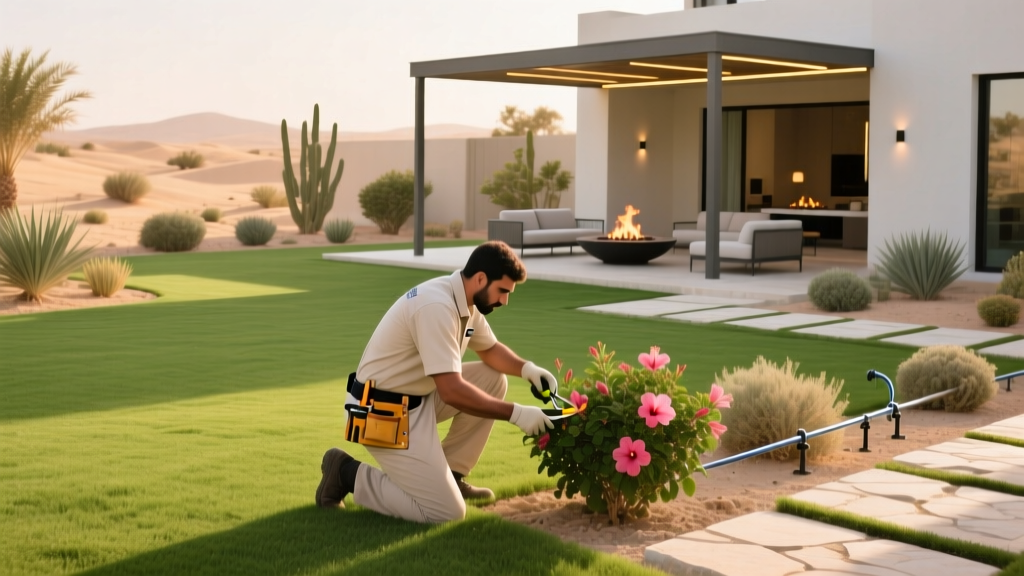
What Is the Industry of yard.sa? Saudi Landscaping Explained
Defining the Digital and Physical Landscape of Saudi Outdoor Living
When market analysts, expats, and local homeowners ask what is the industry of yard.sa, they are referring to the rapidly evolving intersection of digital landscaping services, e-commerce garden supply networks, and the physical outdoor living market within the Kingdom of Saudi Arabia. The '.sa' country code top-level domain (ccTLD) has become synonymous with a localized, tech-driven approach to yard care that is uniquely adapted to one of the most demanding arid climates on Earth.
Unlike temperate regions where lawn care revolves around weekly mowing and seasonal aeration, the Saudi yard care industry is fundamentally an exercise in water conservation, microclimate engineering, and hardscape integration. Driven by the Saudi Green Initiative (SGI) and Vision 2030 urban development goals, the sector has pivoted away from water-intensive turfgrass toward sustainable xeriscaping, smart irrigation technology, and outdoor entertainment spaces that can withstand summer temperatures exceeding 45°C (113°F).
Vision 2030 Impact on Yard Care
The push to plant 10 billion trees across the Kingdom has trickled down to residential landscaping. Municipalities in Riyadh and Jeddah now heavily incentivize native plant palettes, and the yard.sa digital ecosystem has responded with specialized nurseries and design platforms prioritizing drought-tolerant species like Ziziphus spina-christi (Sidr tree) and Washingtonia robusta.
Core Pillars of the Saudi Landscaping Market
The industry operates across three primary verticals, each addressing specific environmental and cultural requirements of Saudi homes:
- Digital Design & Procurement Platforms: Localized apps and .sa domains that connect homeowners with certified agronomists, offering 3D courtyard modeling and direct delivery of bulk substrates, imported topsoil, and mature palm specimens.
- Microclimate Engineering: The installation of high-tension HDPE shade sails, automated misting systems, and windbreaks designed to lower ambient courtyard temperatures by up to 12°C, making outdoor living viable from October through April.
- Precision Water Management: The transition from flood irrigation to subsurface drip systems and weather-based smart controllers, mandated in many new developments by the Ministry of Environment, Water and Agriculture (MEWA).
Climate Constraints: Comparing Yard Surfaces
Choosing the right ground cover is the most critical financial and environmental decision in the Saudi yard care industry. Below is a technical comparison of the three dominant surface strategies utilized by landscaping contractors in the region.
| Surface Type | Water Demand (L/sqm/day) | Installation Cost (SAR/sqm) | Peak Summer Viability | Maintenance Profile |
|---|---|---|---|---|
| Natural Bermuda Grass (Cynodon dactylon) | 8.0 - 12.0 | 45 - 80 | Poor (High scorch risk) | High (Mowing, fertilization, fungal treatments) |
| Premium Synthetic Turf (35mm pile, UV-coated) | 0 (Requires occasional rinsing) | 180 - 320 | Excellent (Requires silica sand infill to reduce heat) | Low (Brushing, debris removal) |
| Xeriscape / Decomposed Granite & Gravel | 0 | 60 - 120 | Excellent | Minimal (Weed control, raking) |
Essential Equipment for Arid Landscaping
The yard.sa industry relies heavily on specialized equipment designed to prevent resource loss. Standard sprinkler systems are largely obsolete in Saudi residential zones due to evaporation rates that can exceed 60% during midday summer hours.
Subsurface Drip Irrigation (SDI)
For planted beds and turf alternatives, contractors utilize SDI systems like the Netafim Techline CV. These lines feature built-in check valves and are buried 5 to 10 centimeters below the soil surface. By delivering water directly to the root zone at a rate of 1.6 liters per hour per emitter, SDI eliminates surface evaporation and wind drift. When installing SDI in the sandy soils typical of the Najd region, emitters must be spaced closer together (15cm to 20cm) to ensure adequate lateral capillary spread, as sandy soils lack the clay content required for wide water dispersion.
Smart Controllers and Flow Sensors
Wi-Fi-enabled controllers, such as the Hunter Pro-HC or Rachio 3 (adapted for local voltage), are now standard in high-end villa landscapes. These devices integrate with local hyper-weather stations to adjust watering schedules based on real-time evapotranspiration (ET) data. Crucially, they must be paired with master valves and flow sensors to instantly shut down the system if a drip line is severed by landscaping tools or root intrusion, preventing catastrophic water loss and exorbitant municipal fines.
Regional Soil Challenges and Amendments
A defining characteristic of the Saudi landscaping industry is the necessity for aggressive soil amendment. In the Eastern Province (Dammam, Khobar, Al Ahsa), the proximity to the Arabian Gulf results in highly saline, alkaline soils with pH levels often exceeding 8.5.
Agronomist Insight: Planting directly into native Eastern Province soil without amendment will result in severe osmotic stress, preventing roots from absorbing water even when the soil is moist. The industry standard protocol requires excavating to a depth of 60cm, installing a gravel drainage layer, and backfilling with a mix of imported sweet soil, peat moss, and agricultural gypsum (calcium sulfate) to displace toxic sodium ions from the soil profile.
Decision Framework: Designing Your Saudi Courtyard
Homeowners navigating the yard.sa market should apply the following decision matrix to align their budget, water access, and lifestyle with the appropriate landscape architecture:
- Assess Water Source & Tariffs: If your property relies on municipal water rather than a private well or Treated Sewage Effluent (TSE) network, prioritize xeriscaping and synthetic turf. MEWA water tariffs for residential outdoor use escalate sharply in higher consumption tiers, making natural grass financially unsustainable for large plots.
- Define Spatial Usage: For central courtyards used for evening gatherings and children's play, invest in premium UV-resistant synthetic turf with a 35mm pile height and a dual-layer thatch. For perimeter borders and utility zones, utilize 20mm washed gravel over a heavy-duty geotextile weed barrier.
- Engineer the Canopy: Do not rely solely on plant shade. Install structural shade pergolas utilizing 95% UV-block high-density polyethylene (HDPE) fabric. Ensure the structure is tensioned to withstand wind loads of up to 120 km/h, which are common during the seasonal Shamal winds.
- Select the Plant Palette: Restrict your botanical choices to proven arid survivors. Use Neem (Azadirachta indica) for fast-growing, dense canopy shade; Bougainvillea for vibrant, low-water vertical color on trellises; and Rhaphis excelsa (Lady Palm) for deep, shaded understory planting where direct sunlight is blocked by architectural overhangs.
Understanding the mechanics of this localized market ensures that outdoor spaces are not only aesthetically aligned with modern Saudi architecture but are also ecologically resilient and financially viable for decades to come.