
Home & Garden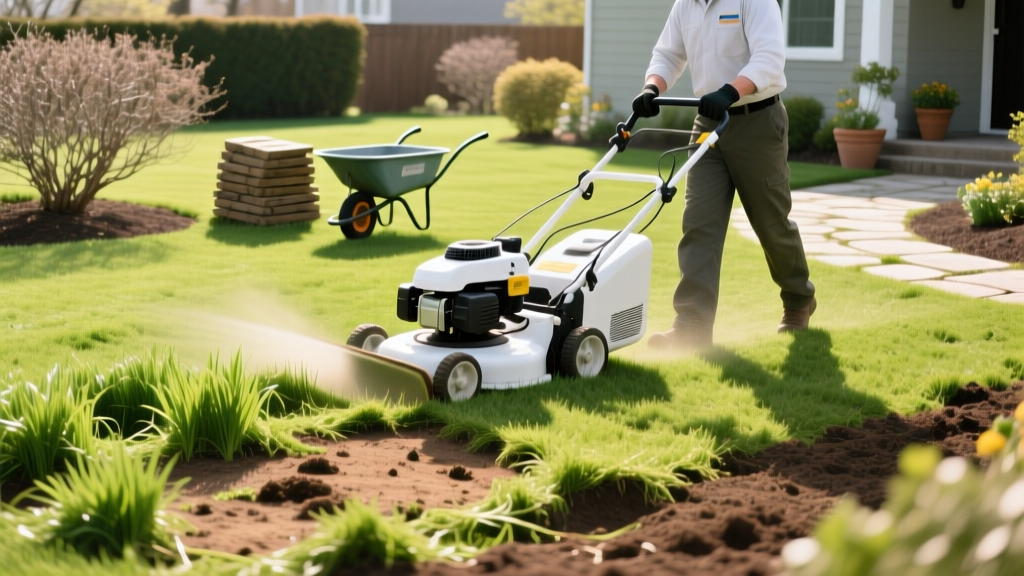
Yard Scalping Guide: How to Prep Warm-Season Lawns for Spring
The Science and Strategy Behind Yard Scalping
Yard scalping is an aggressive, intentional cultural practice that involves mowing dormant warm-season turfgrass down to the soil line, removing the dead brown canopy from the previous winter. Unlike accidental scalping—which is a primary cause of turf stress and weed invasion during the summer—spring yard scalping is a calculated reset button. By stripping away the dead thatch and leaf tissue, you allow solar radiation to penetrate directly into the soil, warming the root zone and stimulating the stolons and rhizomes to break dormancy up to two weeks earlier than unscalped lawns.
CRITICAL WARNING: Cool-Season Grasses
Yard scalping is strictly for warm-season grasses (Bermuda, Zoysia, Centipede, and St. Augustine). If you have a cool-season lawn (Tall Fescue, Kentucky Bluegrass, or Ryegrass), never scalp it. Cutting cool-season grasses below 1.5 inches removes their crown and photosynthetic base, which will permanently kill the turf and invite massive crabgrass infestations.
Timing the Cut: Soil Temperature Thresholds
The most common failure point in yard scalping is relying on the calendar or ambient air temperature. Air temperatures fluctuate wildly in late winter, but soil temperature dictates biological activity. According to turfgrass researchers at NC State Extension TurfFiles, warm-season grasses do not initiate root and stolon growth until the soil profile consistently reaches specific thermal thresholds.
Target Soil Temperatures for Scalping
Bermudagrass: 55°F - 60°F (at 2-inch depth)
Zoysiagrass: 60°F - 65°F (at 2-inch depth)
Centipedegrass: 65°F+ (at 2-inch depth)
Measure at 8:00 AM using a digital soil probe thermometer to get an accurate baseline before the afternoon sun artificially inflates the reading.
Scalping too early, when soil temperatures are still in the 40s, exposes the vulnerable turf crowns to late-season frost events. A sudden freeze after scalping can cause severe crown necrosis, resulting in large, dead patches that will require expensive sod replacement later in the spring.
Equipment Setup: Mower Deck Heights and Blade Prep
Standard rotary mowers (like the Toro Recycler or Honda HRX series) are generally designed for maintenance cuts between 1.5 and 3.0 inches. For yard scalping, you need to drop the deck to its absolute minimum setting, typically between 0.75 and 1.0 inches. If your lawn is highly uneven, a rotary mower at this height will strike the soil, dulling the blade instantly and tracking dirt. For highly manicured lawns or cuts below 0.75 inches, a powered reel mower (such as the McLane 101-5.5GT) is the industry standard.
| Mower Type | Ideal Scalping Height | Best Use Case | Estimated 2026 Cost |
|---|---|---|---|
| Standard Rotary (e.g., Toro 22") | 1.0 - 1.5 inches | Uneven terrain, thick thatch layers | $350 - $500 |
| Premium Rotary (e.g., Honda HRX) | 0.75 - 1.0 inches | Moderately level lawns, aggressive thinning | $600 - $800 |
| Gas Reel Mower (e.g., McLane) | 0.25 - 0.75 inches | Perfectly graded lawns, golf-course finishes | $800 - $1,200 |
Blade Preparation: Before scalping, sharpen your rotary mower blade to a precise 30-degree bevel. Dull blades will shred the dormant stolons rather than slicing them, creating ragged wounds that invite fungal pathogens like Rhizoctonia solani (brown patch) as the grass wakes up and spring moisture increases.
Step-by-Step Yard Scalping Procedure
- Clear the Debris: Rake the lawn thoroughly to remove fallen branches, pine cones, and winter debris. Hitting a hidden branch at a 1-inch deck height will bend your mower spindle or chip the blade.
- Drop the Deck: Lower your mower to the lowest safe setting. For Bermuda, aim for 0.75 to 1.0 inches. For Zoysia, aim for 1.0 to 1.5 inches (Zoysia crowns sit slightly higher and are more susceptible to mechanical damage).
- Attach the Bagger: Never mulch when scalping. The goal is to remove the dead canopy so sunlight hits the soil. If you mulch, you simply chop the dead thatch and redistribute it, creating a sun-blocking mat that defeats the entire purpose of the procedure.
- Mow in Overlapping Passes: Mow in straight lines, overlapping each pass by 2 inches. If the thatch layer is exceptionally thick (over 0.5 inches), make a second pass perpendicular to the first (a cross-cut pattern) to ensure an even reduction.
- Dispose of Clippings: Bag the clippings and add them to your compost pile. A mature Bermuda lawn can yield up to 15 bags of dead material per 5,000 square feet during a heavy scalp.
Post-Scalping Recovery: Fertilizer, Water, and Pre-Emergents
Once the brown canopy is removed, the soil is exposed and the turf is primed for rapid growth. According to turf management guidelines from Texas A&M Aggie Turf, immediate nutritional support is critical to fuel the energy-intensive green-up process.
The Fertilizer Protocol
Apply a quick-release nitrogen source immediately after scalping. Ammonium Sulfate (21-0-0) is the premier choice for early spring warm-season lawns. It provides an immediate nitrogen flush and slightly acidifies the soil, which is beneficial for Centipede and Bermuda grasses.
- Application Rate: 1 lb of actual Nitrogen per 1,000 square feet.
- Product Math: To achieve 1 lb of N using 21-0-0, apply 4.7 lbs of product per 1,000 square feet.
- Cost Expectation: A 50 lb bag of agricultural-grade Ammonium Sulfate typically costs between $25 and $35 in 2026, enough to treat roughly 10,500 square feet.
The Pre-Emergent Dilemma
A frequent question among lawn care enthusiasts is whether yard scalping destroys the spring pre-emergent herbicide barrier (such as Prodiamine or Dithiopyr). It does not. Pre-emergents form a microscopic chemical barrier in the top 0.25 inches of the soil profile. Because scalping only cuts the leaf tissue and stolons above the soil line—and because you are bagging the clippings rather than aerating or dethatching the soil—the chemical barrier remains entirely intact. You can safely apply your pre-emergent in late winter, scalp the yard in early spring, and maintain full crabgrass protection.
Common Yard Scalping Mistakes and Troubleshooting
Mistake #1: Scalping St. Augustine Grass
While St. Augustine is a warm-season grass, it lacks the deep rhizome network of Bermuda or Zoysia. Its growing points (stolons) sit very close to the surface. Scalping St. Augustine below 2.0 inches often severs the stolons entirely, leading to severe thinning and weed invasion. Limit St. Augustine to a 'heavy mowing' (dropping to 2.5 inches) rather than a true scalp.
Mistake #2: Ignoring the Weather Forecast
Do not scalp if a hard freeze (temps below 28°F) is forecasted within the next 72 hours. The dead brown canopy acts as an insulating blanket for the turf crowns. Removing it right before a freeze exposes the plant's vascular system to ice crystal formation, which can cause catastrophic cellular rupture.
Frequently Asked Questions
Q: Will yard scalping damage my sprinkler heads?
A: Yes, if they are not properly adjusted. Before dropping your deck, walk the lawn and ensure all pop-up sprinkler heads are fully retracted and sitting below the soil grade. If any are sitting proud of the soil, adjust them with a shovel and a PVC riser adjustment tool to prevent your mower blade from shattering the plastic nozzles.
Q: How long does it take for the lawn to turn green after scalping?
A: Assuming soil temperatures remain above 60°F and you apply a quick-release nitrogen fertilizer, you will typically see the first green 'fuzz' (new leaf shoots emerging from the stolons) within 10 to 14 days. Full, dense canopy closure usually takes 4 to 6 weeks depending on irrigation and ambient heat.
Q: Should I dethatch or aerate at the same time?
A> No. Yard scalping is already a high-stress mechanical event. Core aeration should be delayed until the lawn is fully green and actively growing (usually late May or June for warm-season grasses). Pulling cores on a freshly scalped, semi-dormant lawn will expose the root zone to excessive moisture loss and weed seeds.

