
Home & Garden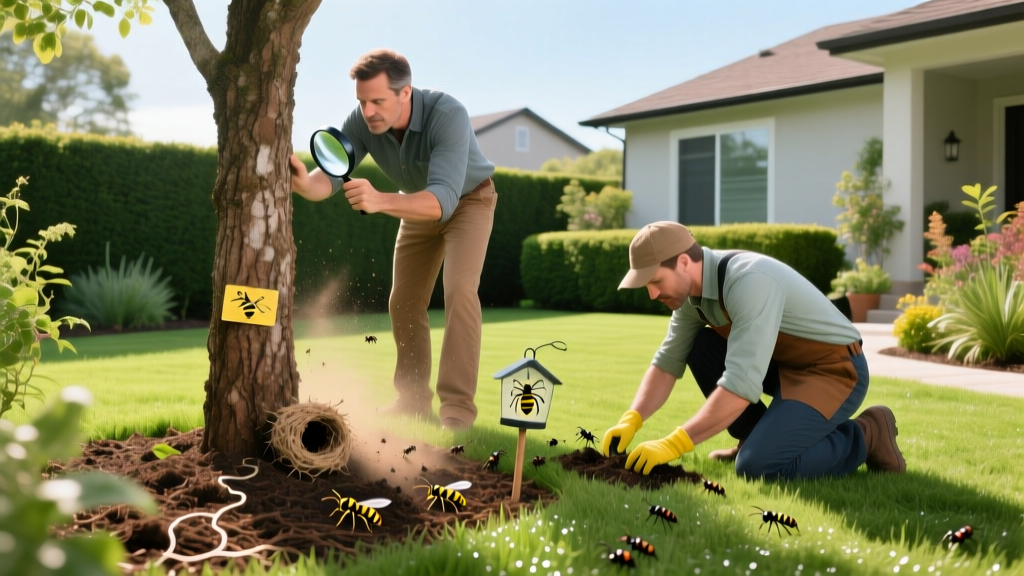
How to Keep Yellow Jackets Away: Yard Diagnosis & Rescue Fixes
Symptom Diagnosis: Identifying the Yellow Jacket Threat
Before deploying any repellents or traps, you must understand the biological driver behind the infestation. Yellow jackets (Vespula and Dolichovespula species) undergo a drastic behavioral shift in late summer and early fall. During spring and early summer, worker wasps hunt protein-rich insects to feed developing larvae. In return, the larvae secrete a sugary, amino-acid-rich liquid that the adults consume. By late August, the colony transitions to producing reproductive queens and males. The larvae stop producing the sugary secretions, leaving adult workers desperate for external carbohydrates.
This biological shift is why yellow jackets suddenly begin swarming outdoor dining areas, trash receptacles, and fallen fruit. To effectively figure out how to keep yellow jackets away, you must first diagnose whether you are dealing with a localized foraging issue or an active, growing nest on your property.
Reading Flight Patterns: Foraging vs. Nesting
Observing the wasps from a safe distance (at least 15 feet) will reveal their intent. Foragers exhibit erratic, wandering flight paths, landing on food sources and lingering. Nesting traffic, however, is highly directional. If you observe a steady, continuous stream of wasps flying in a straight line to and from a specific point—such as a crack in a retaining wall, an eave, or a golf-ball-sized hole in your lawn—you have located a nest.
| Observed Symptom | Probable Cause | Diagnostic Clue & Nest Location |
|---|---|---|
| Swarming trash cans and outdoor dining tables | Carbohydrate foraging | Nest may be up to 1,000 yards away; focus on perimeter deterrence. |
| Heavy, directional traffic entering a ground hole | Subterranean nest (V. germanica) | Ground nests often reuse old rodent burrows; look for bald patches in turf. |
| Wasps emerging from behind vinyl siding or soffits | Structural void nest | Listen for a faint, continuous crackling or rustling sound inside the wall. |
| Hovering aggressively near lawn mower or trimmer | Vibration-triggered defense | Ground nest located directly beneath or adjacent to the cutting path. |
Rescue Fixes: Eradication and Perimeter Defense
Once the diagnosis is complete, apply the appropriate rescue fix. Eradicating the source is always the primary objective, followed by managing rogue foragers that originate from off-property nests.
⚠️ CRITICAL SAFETY WARNING: Never attempt DIY nest eradication if you or anyone in your household has a known allergy to Hymenoptera venom (anaphylaxis). Furthermore, do not treat structural void nests by sealing the entry hole. Trapped colonies will chew through drywall and enter living spaces within 24 to 48 hours. Always treat active void nests with dust and leave the exit open until activity ceases.
Fix 1: Targeted Nest Eradication (Ground and Structural)
Liquid aerosol sprays are highly ineffective and dangerous for ground nests. Spraying liquid into a soil cavity often fails to reach the deep honeycomb and causes the colony to frantically dig secondary exit holes, potentially emerging behind you. Instead, use an insecticidal dust that the workers will track deep into the nest.
- Select the Right Chemistry: Purchase Tempo 1% Dust (Active ingredient: Cyfluthrin). A 10 oz bottle costs approximately $25 and is highly lethal to wasps upon contact and via residual transfer.
- Acquire a Bulb Duster: You need a specialized tool like the JT Eaton Bellows Hand Duster (~$12). This allows you to puff tiny, airborne clouds of dust directly into the nest entrance without clogging the hole.
- Time the Application: Treat the nest strictly between 9:00 PM and 11:00 PM. Wait for a night when temperatures drop below 60°F. At this time, all foragers have returned, and the cold makes the wasps lethargic and less likely to swarm.
- Execute the Treatment: Wear a headlamp with a red-light filter (yellow jackets cannot see red light well). Approach slowly, insert the duster tip into the hole, and puff 3 to 4 clouds of dust. Leave immediately. The colony will collapse within 48 to 72 hours as workers track the dust to the queen.
Fix 2: Strategic Trapping for Foragers
If the nest is located off-property or in a neighbor's yard, you must intercept foragers. According to the UC Agriculture and Natural Resources, traps are most effective when deployed in late summer using specific chemical lures.
"Traps baited with heptyl butyrate are highly specific to yellow jackets and will not attract beneficial honeybees or native pollinators. Placement is critical: hang traps at least 20 feet away from human activity areas to draw foragers away from patios and decks."
The RESCUE! Yellowjacket Trap (~$18) paired with their proprietary heptyl butyrate attractant vials is the industry standard. Hang these traps along the property perimeter, near known food sources like compost bins or fallen fruit trees, but far from where people sit.
The "Fake Nest" Myth: What Actually Works?
A pervasive internet myth suggests that hanging decoy "fake nests" (brown paper lanterns designed to mimic bald-faced hornet nests) will deter yellow jackets due to their territorial nature. Entomological research from institutions like Penn State Extension confirms this is largely ineffective for late-season rescue fixes.
While a solitary spring queen might avoid building a new nest near an established decoy, a mature, aggressive colony of 5,000+ carbohydrate-starved workers in August will completely ignore a fake nest if a food source (like an open soda can) is nearby. Do not rely on decoys as a rescue fix for an active infestation; invest your budget in chemical lures and targeted dusts instead.
Habitat Modification: Starving the Colony
Yellow jackets possess an acute sense of smell and can detect sugar and protein sources from hundreds of yards away. Modifying the immediate habitat removes the attractants that draw off-property foragers into your outdoor living spaces.
Step-by-Step Exclusion Protocol
- Trash Receptacle Management: Standard snap-on lids are insufficient. Upgrade to heavy-duty, gasket-sealed outdoor bins (e.g., Bearicuda bins, ~$120). Wash the interior of bins weekly with a 10% bleach solution to destroy lingering pheromone and scent trails.
- Protein Source Elimination: Pick up fallen fruit daily. If you have a compost pile, ensure it is fully enclosed in a hard-sided tumbler. Open, static compost piles fermenting with fruit scraps act as massive yellow jacket magnets.
- Pet Food Protocols: Dry and wet outdoor pet food is a primary protein and fat attractant. Transition to indoor feeding, or use specialized "moat" pet bowls that feature a water barrier to deter crawling insects and mask odors.
- Structural Sealing: In late autumn, after the first hard frost kills the colony, seal all cracks in mortar, weep holes in brickwork, and gaps around utility lines with copper mesh and silicone caulk. This prevents new queens from overwintering in your home's siding.
When to Call a Licensed Pest Control Operator
While DIY rescue fixes are highly effective for accessible ground and surface nests, certain scenarios require professional intervention. If a nest is located deep inside a wall void, under a concrete slab, or if the colony is a massive, multi-year species (rare in most of North America, but possible in mild coastal climates), hire a licensed exterminator. Professionals utilize specialized micro-injection equipment and commercial-grade microencapsulated pyrethroids that provide a safer, guaranteed eradication without risking structural damage or personal injury. Expect to pay between $150 and $350 for professional stinging insect removal, a worthwhile investment for high-risk nest locations.
For further guidance on safe pest management and minimizing broad-spectrum pesticide use around your lawn and garden, consult the EPA's Safe Pest Control guidelines. By accurately diagnosing the symptoms and applying the correct targeted rescue fix, you can successfully reclaim your outdoor spaces.