
Home & Garden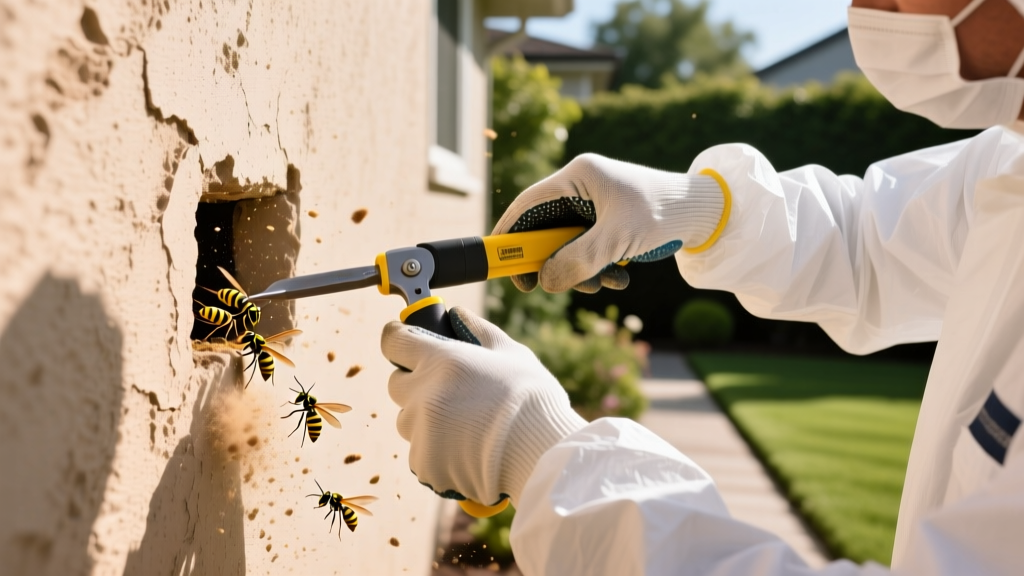
How to Get Rid of Yellow Jackets in a Wall: Safe Rescue Fixes
The Hidden Threat of Wall Void Nests
Discovering a yellow jacket nest inside your home’s wall void is a high-stakes pest control scenario. Unlike ground nests or exposed aerial nests, wall void nests (typically built by Vespula species) are hidden, structurally integrated, and prone to sudden, dangerous indoor breakouts. According to University of Minnesota Extension, yellow jackets can build massive paper colonies inside stud bays, sometimes containing over 5,000 workers by late summer.
The most critical danger of a wall void nest is the “chewing threat.” If interior entry points are blocked or the colony outgrows its space, trapped yellow jackets will chew directly through 1/2-inch standard drywall and latex paint, flooding your living space with thousands of aggressive, stinging insects. This guide provides a symptom-based diagnosis and targeted rescue fixes to eliminate the colony safely without triggering an indoor swarm.
Symptom Diagnosis: Confirming a Wall Void Nest
Before applying any treatment, you must confirm the pest and locate the exact entry point. Misidentifying the insect or misjudging the nest location leads to failed treatments and aggravated colonies.
1. Differentiating Yellow Jackets from Other Pests
- Yellow Jackets vs. Honeybees: Honeybees rarely nest in wall voids unless there is an existing cavity with old comb. Yellow jackets build grey, papery nests from chewed wood fibers. Honeybees are fuzzy and golden; yellow jackets are hairless with stark black and bright yellow bands.
- Yellow Jackets vs. Carpenter Bees: Carpenter bees bore perfectly round, 1/2-inch holes into bare wood and leave sawdust. They are solitary. Yellow jackets use existing gaps (weep holes, soffit vents, torn window screens) and exhibit heavy, continuous traffic.
2. The Traffic and Audio Test
Observe the suspected entry point from a safe distance (at least 15 feet) during mid-day when foraging is at its peak. A mature wall void nest will show a steady stream of 10 to 20 wasps entering or exiting per minute. At night, press a glass against the interior drywall near the suspected area. A mature colony will produce a distinct, low-frequency rustling and humming sound, easily distinguishable from the scratching of rodents.
⚠ CRITICAL WARNING: Never plug, caulk, or seal the exterior entry hole while the colony is active. Sealing the exit forces thousands of agitated yellow jackets to find a new way out—which is almost always through the drywall into your bedroom or living room.
Rescue Fix 1: The Insecticide Dust Method (Gold Standard)
Liquid sprays and aerosol foams are largely ineffective for deep wall voids because they only kill on contact and cannot penetrate the multi-layered paper envelope of the nest. Insecticide dust is the industry-standard rescue fix because it relies on the transfer effect. Foraging wasps track the dust through the entry hole, across the nest envelope, and deep into the brood chambers, eradicating the queen and larvae over 48 to 72 hours.
Recommended Dust Products
- Delta Dust (Deltamethrin): Priced around $25–$30 for a 1 lb shaker. It is completely waterproof, making it the mandatory choice for exterior weep holes, brick veneer gaps, or areas exposed to rain and humidity.
- Tempo 1% Dust (Cyfluthrin): Priced around $20. Highly effective and fast-acting, but degrades faster in high-moisture environments than Delta Dust.
- Drione Dust (Silica + Pyrethrin): Priced around $60. Excellent for dry, interior attic spaces or soffit voids where moisture is not a factor.
Step-by-Step Dust Application Protocol
- Timing is Everything: Apply the dust only at dusk or just before dawn. Foragers are inside the nest, and cooler temperatures (below 60°F) make the wasps sluggish and less aggressive.
- Prep the Applicator: Purchase a professional bulb duster, such as the B&G 1150 Bulb Duster ($15–$20). Fill it only 1/3 to 1/2 full with dust. Add a small coin or pebble inside the bulb to break up clumps and ensure a fine, even puff.
- Suit Up: Wear a bee jacket, thick leather gloves, and a veil. Keep a can of rapid-knockdown wasp spray on your belt as an emergency defensive measure.
- Inject the Dust: Insert the duster’s extension tube directly into the entry hole. Give 3 to 4 gentle puffs. Do not overfill the hole; you want a light coating on the landing zone, not a solid mound that the wasps will simply avoid or dig around.
- Withdraw and Wait: Leave the area immediately. The colony will show increased erratic activity for the first 24 hours as the dust spreads. By day 4, traffic should drop to near zero.
Rescue Fix 2: Foaming Aerosol (For Shallow, Accessible Voids)
Foaming aerosols (like Spectracide Wasp & Hornet Foaming Spray or Raid Wasp & Hornet) expand rapidly to fill cavities. This method is only viable if you are 100% certain the nest is shallow—such as directly behind a loose piece of fascia board, inside a hollow metal railing, or in a shallow soffit overhang where the nest is physically touching the entry point.
The Failure Mode: If the nest is deep inside a standard 2x4 or 2x6 stud bay (up to 14.5 inches wide and 8 feet tall), the foam will expand and harden long before it reaches the nest envelope. The colony will simply relocate deeper into the wall or chew through the interior drywall to escape the expanding chemical barrier. Penn State Extension strongly advises against using expanding foams for deep structural voids due to this exact failure mechanism.
Comparison Matrix: Wall Void Treatment Options
| Treatment Method | Best Use Case | Average Cost | Success Rate | Primary Risk / Limitation |
|---|---|---|---|---|
| Insecticide Dust | Deep stud bays, brick weep holes, siding gaps | $25 – $50 (DIY) | 90%+ | Requires patience (3-5 days); requires bulb duster tool |
| Foaming Aerosol | Shallow fascia gaps, hollow outdoor fixtures | $8 – $12 | 40% (for deep walls) | Foam blocks exit, forcing wasps through interior drywall |
| Liquid Spray | Exposed aerial nests (NOT wall voids) | $10 – $15 | Near 0% (voids) | Cannot penetrate paper envelope; zero transfer effect |
| Professional Exterminator | Multi-story homes, severe allergies, massive colonies | $250 – $500 | 99% | High cost; may require drywall cutting for nest removal |
Post-Removal Protocol: The Secondary Pest Threat
Once traffic has ceased for at least 7 consecutive days, the colony is dead. However, your rescue fix is not complete. Leaving thousands of dead yellow jackets and their protein-rich larvae inside a warm wall void creates a secondary pest crisis.
Preventing Carpet Beetle and Dermestid Infestations
Scavenger insects, specifically carpet beetles and dermestid beetles, are highly attracted to dead insect biomass. If the dead wasps are left in the wall, these beetles will breed in the void and eventually migrate into your home, where they will destroy wool rugs, silk curtains, and stored clothing.
The Fix: If possible, the drywall should be cut open, and the physical nest and dead wasps must be vacuumed out and discarded. If cutting the drywall is impossible, inject an Insect Growth Regulator (IGR) like Gentrol into the void through the exterior hole before sealing it. This disrupts the breeding cycle of any secondary scavenger beetles that find the carcass.
Sealing the Entry Point
Only after the nest is removed or treated with an IGR should you seal the exterior gap. Use copper mesh (Stuff-It) packed tightly into the hole, followed by a high-quality exterior polyurethane caulk or expanding foam. Yellow jackets can easily chew through standard silicone caulk and dried spray foam, but they cannot chew through copper or steel wool.
When to Call a Professional Exterminator
While the dust method is highly effective for DIYers, certain scenarios demand professional intervention. The EPA’s pesticide safety guidelines remind homeowners to always assess their physical capability and environmental risk before handling commercial-grade insecticides. Call a licensed pest control operator if:
- The entry point is on the second story or higher, requiring tall ladders (wasps will swarm and knock you off the ladder if agitated).
- You or a family member has a known anaphylactic allergy to Hymenoptera stings.
- The buzzing is audible across multiple rooms, indicating a massive, multi-year colony that has likely compromised the structural insulation.
- You have attempted the dust method twice over 10 days and traffic has not decreased (indicating the nest is in an adjacent, disconnected void).
Frequently Asked Questions (Edge Cases)
Can I use a shop vac to suck the yellow jackets out of the wall?
No. While some internet hacks suggest taping a shop vac to the entry hole, this is incredibly dangerous. The vacuum noise and vibration will enrage the colony. Wasps will release alarm pheromones, and many will escape the vacuum hose or find secondary exits into your home. Furthermore, the vacuum bag will become a lethal hazard when you attempt to dispose of it.
Will the yellow jackets just die off in the winter?
In most North American climates, yes. Worker yellow jackets and the original queen die when temperatures consistently drop below freezing in late autumn. However, leaving the nest in the wall invites rodents (who use the paper for nesting material) and scavenger beetles. Additionally, new queens may attempt to use the same sheltered void to overwinter. It is always best practice to eliminate the colony and seal the void before winter sets in.
What if I hear buzzing but see no exterior entry holes?
If you hear buzzing in the wall but cannot find any exterior gaps, the colony may have entered through an attic soffit vent, a damaged roof ridge vent, or a gap around an outdoor electrical outlet. Use a thermal imaging camera (or hire a pro with one) to scan the interior drywall. A mature yellow jacket nest generates significant metabolic heat and will show up as a distinct warm spot on the thermal display, allowing you to pinpoint the exact stud bay for targeted treatment.