
Home & Garden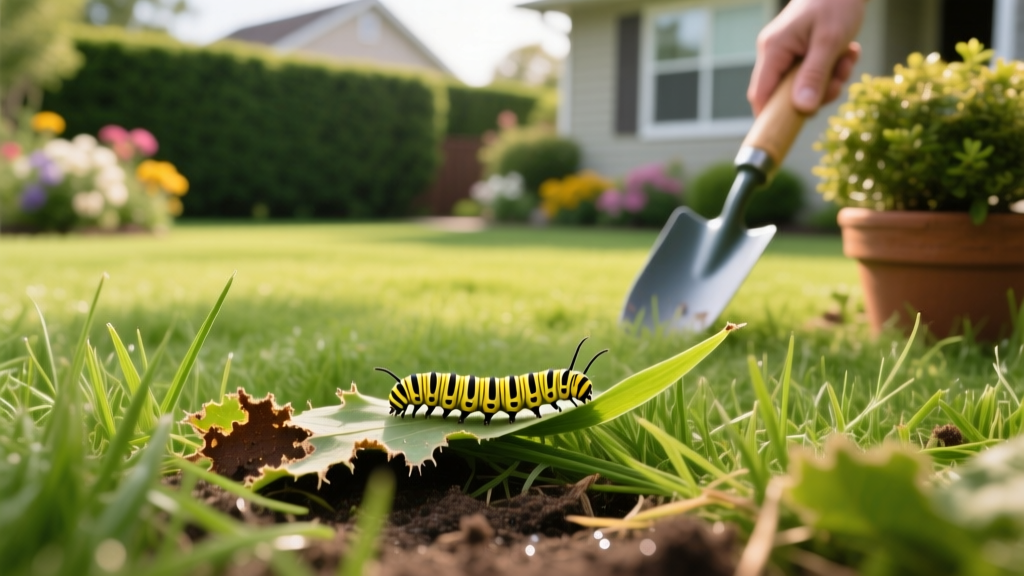
Yellow Striped Armyworm Damage: Diagnosis and Rescue Fixes
The Culprit: Identifying the Yellowstriped Armyworm
The yellowstriped armyworm (Spodoptera ornithogalli) is a highly destructive, generalist caterpillar that attacks over 30 species of turfgrass, vegetables, and ornamental plants. Unlike the fall armyworm, which primarily targets turf and field crops, the yellowstriped armyworm frequently bridges the gap between your lawn and your vegetable garden, causing severe defoliation in both environments. Adult moths lay clusters of 100 to 500 eggs on the underside of leaves or near the soil line. Within days, hatched larvae begin feeding aggressively, molting through six distinct growth stages (instars) before pupating in the soil.
Accurate identification is critical before deploying chemical controls. The mature caterpillar grows up to 1.5 inches long and features a dark brown to black body. The defining characteristic is a distinct, unbroken pale yellow stripe running down each side of its body from head to tail. Additionally, look for a pale, inverted "Y" shape on the dark head capsule—a trait shared with the fall armyworm, but the prominent lateral yellow stripes confirm S. ornithogalli.
Symptom Diagnosis: Is It Armyworms or Something Else?
Early detection separates a minor nuisance from a total lawn or garden loss. Young larvae (early instars) feed gregariously, skeletonizing leaves by eating the soft tissue and leaving the transparent epidermis and veins intact. As they mature into late instars, their mandibles strengthen, allowing them to shear grass blades entirely off at the soil line or consume entire tomato and pepper leaves, leaving only the central midrib.
Diagnostic Field Clue: Look for "frass" on the soil surface or in the thatch layer. Armyworm frass resembles bright green, sawdust-like pellets. If you see sheared grass blades accompanied by green pellet droppings, you have an active armyworm infestation.
Pest Comparison Matrix
| Pest | Visual Identification | Damage Pattern | Active Time |
|---|---|---|---|
| Yellowstriped Armyworm | Dark body, bright yellow side stripes, inverted Y on head. | Sheared turf, skeletonized broadleaves, green frass. | Dawn, dusk, and overcast days. |
| Cutworm | Fat, greasy gray/brown body, curls into a C-shape when disturbed. | Seeds and seedlings severed at the soil line; turf patches chewed off. | Strictly nocturnal; hides in soil during day. |
| Sod Webworm | Small (0.75"), translucent green/brown, distinct dark spots along the back. | Irregular brown patches, silk webbing in the thatch, notched grass blades. | Nighttime; rests in silken tunnels in thatch. |
The Rescue Protocol: Step-by-Step Eradication
Once you confirm the presence of Spodoptera ornithogalli, immediate intervention is required. The efficacy of your rescue treatment depends entirely on the size of the larvae and the timing of your application.
Step 1: The Soap Flush Test
Before treating the entire yard, confirm population density using a soap flush. Mix 1.5 fluid ounces of liquid dish soap (such as Dawn) into 1 gallon of water. Pour the solution evenly over a 1-square-yard area of damaged turf or garden perimeter. The soap irritates the caterpillars' skin, forcing them to the surface within 3 to 5 minutes. If you count more than 3 to 5 armyworms per square yard, a full-scale rescue treatment is economically and ecologically justified.
Step 2: Choosing Your Weapon (Biological vs. Chemical)
Selecting the right active ingredient depends on the larvae's size and your proximity to sensitive environments. According to the UC Statewide Integrated Pest Management Program, biological controls are highly effective on early instars but fail against mature caterpillars with thickened cuticles.
- Monterey B.t. (Bacillus thuringiensis var. kurstaki): A biological stomach poison. Cost: ~$16 for 16 oz. Rate: 2 oz per gallon of water, covering roughly 4,000 sq ft. Constraint: Only effective on larvae smaller than 0.5 inches. Must be ingested; thorough coverage of leaf undersides is mandatory.
- Captain Jack’s Deadbug Brew (Spinosad): A naturally derived bacterial metabolite. Cost: ~$22 for 16 oz. Rate: 2 oz per gallon. Advantage: Retains efficacy on slightly larger larvae (up to 0.75 inches) and has translaminar movement, meaning it absorbs slightly into the leaf tissue, protecting against rain wash-off.
- Talstar P (Bifenthrin 7.9%): A synthetic pyrethroid contact and stomach poison. Cost: ~$45 for 0.75 gallons. Rate: 1 oz per 1,000 sq ft mixed in 2 gallons of water. Advantage: Fast knockdown of large, mature instars. Warning: Highly toxic to aquatic invertebrates and bees during application. The EPA Safe Pest Control Guidelines mandate avoiding application near storm drains or waterways.
Step 3: Application Tactics for Maximum Kill Rate
Armyworms are photophobic; they retreat into the thatch and soil during the heat of the day. To maximize contact with the pest:
- Mow the Lawn: Cut your turf to the lower end of its recommended height to remove canopy cover and expose the thatch layer.
- Irrigate Lightly: Apply 0.1 inches of water an hour before spraying. This cools the soil surface and draws the caterpillars up into the grass canopy.
- Time the Spray: Apply your chosen insecticide between 6:00 PM and 8:00 PM, just as the sun sets and the larvae begin their nightly feeding cycle.
- Hold the Water: Do not irrigate the lawn or garden for at least 48 hours post-application to prevent washing the active ingredient into the soil profile before it is ingested.
Post-Rescue Lawn and Garden Recovery
Eradicating the pest is only half the battle. The remaining turf and plants will be severely stressed and vulnerable to secondary fungal infections like Pythium blight or brown patch. For turfgrass, apply a slow-release, low-burn nitrogen source to stimulate lateral growth without pushing vulnerable, rapid vertical shoot growth. Milorganite (5-2-0) applied at a rate of 32 lbs per 5,000 sq ft provides iron and steady nitrogen. For garden vegetables that have suffered severe defoliation, prune the skeletonized leaves back to the main stem to prevent fungal entry points, and apply a liquid kelp extract (such as Neptune's Harvest) at 1 oz per gallon as a foliar spray to reduce plant stress and stimulate new bud break.
Frequently Asked Questions
Will yellowstriped armyworms survive the winter?
No. Spodoptera ornithogalli cannot survive freezing temperatures. They overwinter as pupae in the soil only in the deep South (USDA Zones 8-10). In northern climates, they do not overwinter; instead, infestations are caused by adult moths migrating northward on weather fronts during late spring and summer.
Can I use Sevin dust on my tomatoes for armyworms?
While carbaryl (Sevin) is labeled for caterpillars, dust formulations are highly inefficient for armyworms. Dusts fail to penetrate the dense lower canopy where the larvae hide and feed, and they are easily blown off by wind. Liquid concentrates applied with a pump sprayer provide vastly superior coverage and kill rates.
Do beneficial nematodes work on armyworms?
Beneficial nematodes (Steinernema carpocapsae) can infect armyworm pupae in the soil, but they are largely ineffective against the active, surface-feeding caterpillar stage. Use nematodes as a preventative soil drench between generations, not as an active rescue treatment during a severe outbreak.