
Landscaping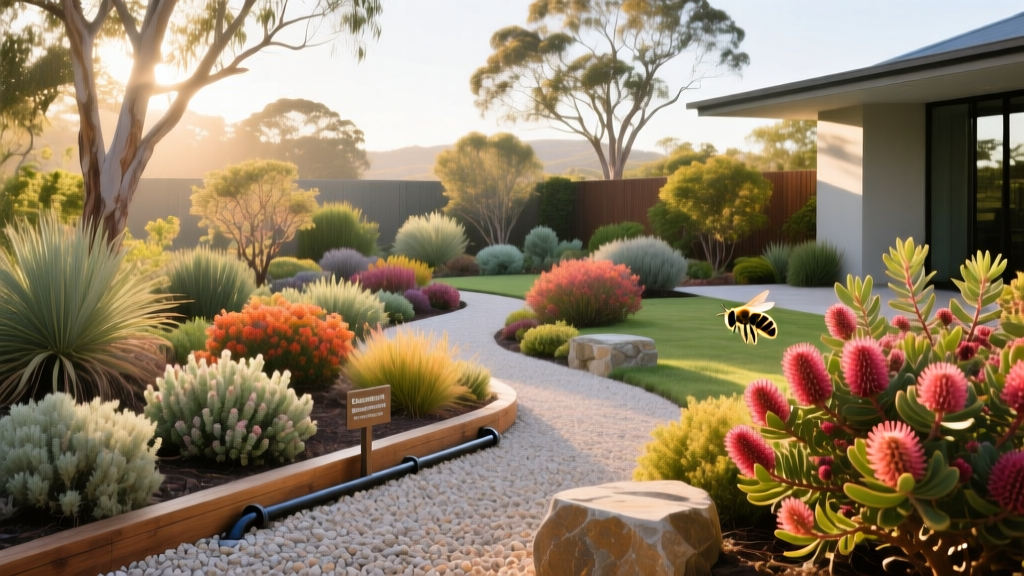
Austral Landscaping 101: Drought-Tolerant Native Garden Guide
Defining Austral Landscaping for the Modern Homeowner
Austral landscaping is a specialized design philosophy tailored to the harsh, sun-baked, and often drought-prone conditions of the Australasian climate zone. Unlike traditional European-style gardens that demand constant irrigation and rich loams, austral landscaping embraces the natural environment. It prioritizes indigenous flora, advanced water-management strategies, and hardscaping materials that withstand extreme UV exposure and heat fluctuations.
For beginners, transitioning to an austral landscape design offers massive reductions in water usage and maintenance time. According to Water Corporation guidelines, a well-designed native garden can reduce outdoor water consumption by up to 70% compared to traditional turf-heavy yards. This guide breaks down the exact soil science, plant selections, and structural elements you need to build a resilient, thriving native garden.
The Core Principles of Austral Landscape Design
Before digging your first hole, you must understand the three non-negotiable pillars of austral landscaping:
- Hydro-Zoning: Grouping plants with identical water requirements together. You never place a high-water fern next to a drought-tolerant Banksia.
- Soil Biology over Chemistry: Australasian natives rely on specific mycorrhizal fungi and soil microbes to access nutrients in poor soils. Synthetic fertilizers often destroy this delicate web.
- Microclimate Mapping: Identifying the 'heat sinks' in your yard. North-facing walls radiate intense afternoon heat, requiring highly resilient species, while southern eaves offer frost protection for more delicate understory plants.
Top Beginner-Friendly Australasian Plants
Selecting the right cultivars is where most beginners fail. Avoid planting wild-collected seedlings, which can grow unpredictably. Instead, source named cultivars that have been selectively bred for compact growth, disease resistance, and extended blooming periods. As of 2026, nursery pricing for advanced 140mm native pots averages between $18 and $35, depending on the species and region.
| Common Name | Botanical Cultivar | Mature Size (H x W) | Water Needs | Best Use Case |
|---|---|---|---|---|
| Dianella | Dianella caerulea 'Breeze' | 0.6m x 0.6m | Very Low | Mass border planting, driveway edges |
| Grevillea | Grevillea 'Robyn Gordon' | 1.5m x 2.0m | Low | Focal point, bird-attracting screen |
| Kangaroo Paw | Anigozanthos 'Big Roo' | 1.0m x 0.5m | Medium-Low | Patio pots, high-visual impact clusters |
| Coastal Rosemary | Westringia fruticosa 'Aussie Box' | 0.8m x 0.8m | Very Low | Formal hedging, topiary, lawn alternatives |
| Bottlebrush | Callistemon viminalis 'Little John' | 1.0m x 1.5m | Low | Low borders, salt-tolerant coastal zones |
For detailed botanical profiles and regional planting guides, the Australian Native Plants Society (ANPSA) remains the most authoritative resource for verifying a plant's specific frost and humidity tolerances before purchasing.
Soil Preparation: Fixing Hydrophobic Sands and Heavy Clays
The biggest killer of native plants is not drought; it is improper soil preparation. Many austral landscapes are built on ancient, highly leached sandy soils that become hydrophobic (water-repellent) due to waxy coatings left by decomposing organic matter.
The Bentonite Clay Amendment Strategy
If your soil repels water, simply adding organic matter is not enough—the compost will dry out and become hydrophobic itself. You must alter the soil structure.
- Test the Soil: Pour 100ml of water onto the surface. If it beads up and takes more than 30 seconds to penetrate, your soil is hydrophobic.
- Apply Bentonite: Broadcast granular bentonite clay at a rate of 500g per square meter. Bentonite swells when wet, permanently breaking the waxy sand coatings.
- Incorporate Organics: Mix in a coarse, composted pine bark or native soil conditioner at a ratio of 20% organic matter to 80% native soil. Avoid fine peat moss, which suffocates native root systems.
- Apply a Wetting Agent: Drench the bed with a polyacrylamide-free organic wetting agent (such as Eco-Hydrate) to ensure initial water penetration while the clay integrates.
Expert Tip: The Phosphorus Danger Zone
Never use standard NPK fertilizers on Proteaceae family plants (Grevillea, Banksia, Hakea, Macadamia). These species evolved in phosphorus-deficient soils and developed highly efficient 'cluster roots'. Standard fertilizers will cause fatal phosphorus toxicity. Always use a dedicated native plant fertilizer with a phosphorus (P) level below 3%.
Never use standard NPK fertilizers on Proteaceae family plants (Grevillea, Banksia, Hakea, Macadamia). These species evolved in phosphorus-deficient soils and developed highly efficient 'cluster roots'. Standard fertilizers will cause fatal phosphorus toxicity. Always use a dedicated native plant fertilizer with a phosphorus (P) level below 3%.
The 'Austral Mulch' Strategy
Mulching in an austral landscape requires a different approach than temperate gardening. The goal is to moderate soil temperature and suppress weeds without creating a water-repellent mat.
- Material: Use chunky Eucalyptus arborist mulch (25mm to 40mm pieces). Avoid fine pine bark or shredded hardwood, which compact and shed water when dry.
- Depth: Apply exactly 75mm of mulch. Anything thicker will prevent light rain from reaching the soil profile and can cause collar rot in native shrubs.
- Clearance: Maintain a strict 100mm mulch-free 'halo' around the base of woody native shrubs to prevent fungal pathogens like Phytophthora cinnamomi from attacking the root crown.
Hardscaping Elements That Complement Native Flora
Austral landscaping relies heavily on structural hardscaping to provide year-round visual interest, as many native plants have dormant or sparse periods. Choose materials that age gracefully and reflect the natural landscape.
Corten Steel (Weathering Steel)
Corten steel develops a stable, rust-like patina that protects it from further corrosion. Its warm, ochre tones perfectly mirror the red soils of the outback and contrast beautifully with the silver-grey foliage of Westringia and Acacia species. Use 3mm thick Corten sheets for custom planter boxes and retaining wall facades.
Exposed Aggregate and Decomposed Granite
Replace thirsty turf pathways with permeable surfaces. Decomposed granite (DG) compacted over a road-base sub-layer provides a natural, crunchy texture that allows rainwater to percolate directly into the water table. For high-traffic areas, exposed aggregate concrete featuring local river pebbles offers a durable, heat-reflective surface that integrates seamlessly with native planting beds.
Warning: Thermal Mass and Root Damage
When placing large boulders or thick concrete retaining walls, remember they act as thermal mass. They absorb heat all day and radiate it at night. Do not plant heat-sensitive understory natives (like Correa or Prostanthera) within 1 meter of the southern face of these structures, or they will suffer from heat stress and increased transpiration rates.
When placing large boulders or thick concrete retaining walls, remember they act as thermal mass. They absorb heat all day and radiate it at night. Do not plant heat-sensitive understory natives (like Correa or Prostanthera) within 1 meter of the southern face of these structures, or they will suffer from heat stress and increased transpiration rates.
Common Beginner Mistakes to Avoid
Transitioning to a waterwise garden requires unlearning some traditional gardening habits. Watch out for these critical errors:
- Overwatering Natives: 'Drought-tolerant' does not mean 'desert plant'. Natives need regular deep watering for their first 12 to 16 weeks to establish root systems. After that, watering should be reduced to deep, infrequent soaks to encourage deep root growth.
- Pruning at the Wrong Time: Avoid heavy pruning of Grevilleas and Banksias during their active flowering cycles. Tip-prune immediately after flowering finishes to promote dense, bushy growth rather than woody, leggy stems.
- Ignoring Local Provenance: A Lomandra sourced from a tropical nursery may fail in a frost-prone inland garden. Always ask your nursery for 'local provenance' stock grown from seed collected within 100km of your zip code.
Frequently Asked Questions
Can I mix exotic plants with austral native landscaping?
Yes, but only if they share the same water and soil requirements. Drought-tolerant Mediterraneans like Lavender, Rosemary, and Olive trees integrate well with Australasian natives because both groups prefer free-draining soil and full sun. Never mix high-water exotics (like Hydrangeas) in the same hydro-zone as native Banksias.
How do I attract native birds to my austral landscape?
Birds require a multi-layered canopy. Plant tall eucalypts for roosting, dense mid-story shrubs like Grevillea and Callistemon for nectar and nesting protection, and a groundcover layer of Lomandra and Dianella to harbor insects for foraging. Installing a shallow, ground-level birdbath with a rough, sloping edge will provide safe drinking access.
What is the best irrigation system for native gardens?
Drip irrigation is vastly superior to sprinklers for austral landscaping. Use inline drip tubing with pressure-compensating emitters spaced 300mm apart. This delivers water directly to the root zone, minimizing evaporation and preventing the fungal leaf diseases that plague native shrubs when their foliage is kept wet overnight.

