
Landscaping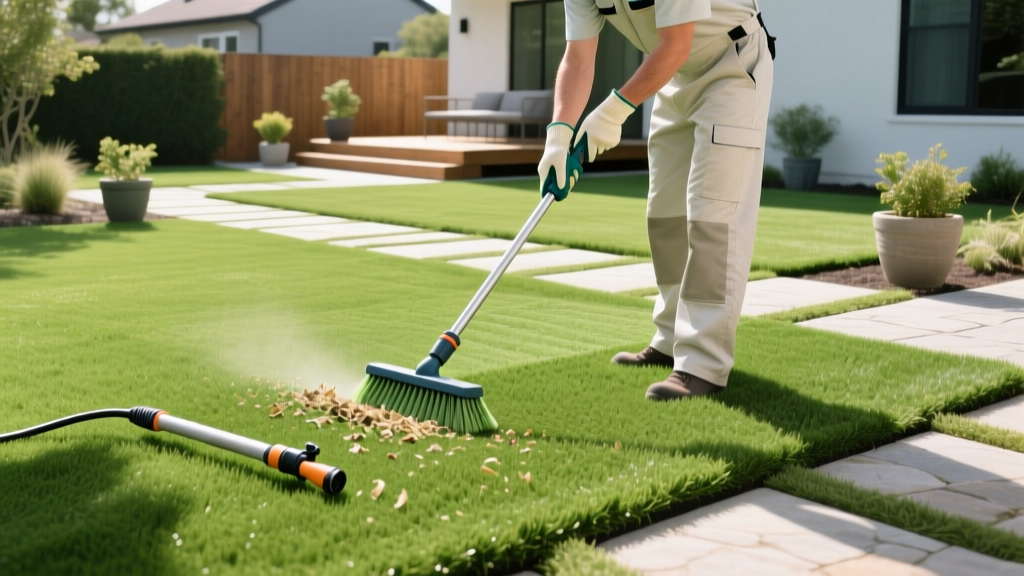
Step-by-Step Maintenance for Your Backyard Artificial Lawn
Installing a backyard artificial lawn is a significant investment, typically costing between $8 and $14 per square foot for premium polyethylene turf and a properly compacted aggregate sub-base. While synthetic turf eliminates mowing and fertilizing, the 'install and forget' mentality is a primary cause of premature matting, drainage failure, and bacterial odor buildup. To protect the 10-to-15-year lifespan of your turf, you must implement a structured mechanical and chemical maintenance protocol.
This guide outlines the exact step-by-step procedures required to maintain the structural integrity, drainage capacity, and visual appeal of your synthetic landscape.
The Maintenance Frequency Matrix
Before executing specific procedures, map out your maintenance schedule. The frequency of these tasks depends heavily on your local climate, tree canopy cover, and pet usage.
| Frequency | Core Task | Primary Equipment | Time Required (1,000 sq ft) |
|---|---|---|---|
| Weekly | Debris removal and surface clearing | Battery-powered leaf blower | 10-15 minutes |
| Bi-Weekly | Pet waste removal and spot rinsing | Pooper scooper, garden hose | 10 minutes |
| Monthly | Deep enzymatic cleaning (if pets present) | Hose-end sprayer, enzyme concentrate | 20 minutes |
| Quarterly | Cross-grain brushing and infill leveling | Motorized power broom or stiff synthetic rake | 45-60 minutes |
| Annually | Infill top-up and edge/seam inspection | Drop spreader, galvanized turf nails | 1-2 hours |
Step 1: Debris Removal and Surface Clearing
Organic debris—leaves, pine needles, and twigs—is the enemy of synthetic turf drainage. When left to decompose, organic matter creates a soil-like layer on top of the turf backing, which traps moisture, breeds mold, and provides a germination bed for weed seeds.
Tool Selection and Technique
Avoid metal rakes entirely; steel tines will slice the polyethylene blades and tear the primary backing. Instead, use a flexible poly-tine leaf rake or a high-CFM (cubic feet per minute) blower. For battery-powered options, the EGO LB6504 (650 CFM) provides enough force to clear heavy wet leaves without disturbing the underlying infill.
Warning: When using a leaf blower, keep the nozzle at least 12 to 18 inches above the turf surface. Holding the nozzle too close will blow away your crucial silica sand or antimicrobial infill, exposing the turf backing to UV degradation and causing the grass blades to mat down permanently.
Step 2: Deep Cleaning and Stain Neutralization
If your backyard artificial lawn is used by dogs, urine management is your most critical maintenance task. Dog urine contains high levels of urea and uric acid. While the liquid drains through the turf's perforated backing (which typically features a drainage rate of >30 inches per hour), the uric acid crystallizes in the infill layer. When humidity rises, these crystals release ammonia gas, causing severe odors.
The Enzyme Application Protocol
Standard household cleaners and bleach will not break down uric acid crystals. You must use a live bacteria-based enzyme cleaner, such as TurFresh BioS+ or Simple Green Outdoor Odor Eliminator.
- Dilution: Mix 2 to 4 ounces of enzyme concentrate per gallon of water, or attach a hose-end sprayer bottle directly to your garden hose for automated dilution.
- Timing: Apply the treatment in the late evening or on an overcast day. Direct UV sunlight kills the live bacillus bacteria before they can consume the uric acid crystals.
- Saturation: Apply enough solution to penetrate through the 1.5-inch turf pile and into the infill layer. For a 500-square-foot dog run, expect to use roughly 15 to 20 gallons of diluted solution.
- Dwell Time: Allow the turf to air dry naturally. Do not rinse the turf with plain water immediately after application, as this washes the bacteria away before the biological breakdown is complete.
For comprehensive guidelines on managing synthetic landscapes and environmental safety, refer to the standards published by the Synthetic Turf Council.
Step 3: Fiber Brushing and Infill Redistribution
The blades of a backyard artificial lawn are designed to stand upright, mimicking natural grass. Over time, foot traffic, rain, and gravity cause these blades to bend and mat down. Simultaneously, the infill—which provides ballast, UV protection for the backing, and cushioning—shifts and settles into low spots.
Cross-Grain Power Brushing
To restore the pile, you must brush the turf against the grain (the direction the blades naturally lean). For small areas, a stiff-bristled synthetic push broom works adequately. For lawns exceeding 500 square feet, rent a motorized power broom (such as a Smithco Sweepster or a generic turf brush attachment for a weed whacker), which typically costs $65 to $90 per day at local equipment rental yards.
- Brush Depth: Set the bristle depth so it barely touches the backing. If you dig too deep, you will displace the infill and fray the turf fibers.
- Pattern: Brush in overlapping, cross-hatch patterns (North-South, then East-West) to ensure the fibers are lifted from all angles and the infill is distributed evenly.
- Infill Top-Up: After brushing, check the infill levels. You should see about 1/2 inch to 3/4 inch of the grass blade tip exposed above the infill line. If the infill is low, use a drop spreader to apply an additional 1 to 2 pounds of rounded silica sand or Envirofill per square foot.
Step 4: Weed Prevention and Edge Securing
A common misconception is that weeds grow up through the impermeable backing of synthetic turf. In reality, weeds germinate in the organic debris and wind-blown soil that settle on top of the infill, or they sprout along the perimeter edges where the turf meets soil or hardscaping.
Perimeter and Surface Weed Control
For surface weeds, manual extraction is best. Pull the weed from the root before it goes to seed. If an infestation occurs, use a synthetic-turf-safe, glyphosate-free post-emergent herbicide. The Environmental Protection Agency provides extensive databases on minimum-risk pesticides, such as those utilizing d-limonene (citrus oil) or acetic acid, which kill weeds on contact without degrading the polyethylene turf fibers or harming the soil microbiome beneath the sub-base.
Along the perimeter, inspect the seaming tape and turf nails every six months. Temperature fluctuations cause the ground to heave and settle, which can pull 4-inch galvanized non-staining nails loose. Re-secure any lifted edges immediately to prevent tripping hazards and stop weeds from creeping under the backing.
Troubleshooting Common Backyard Artificial Lawn Issues
Even with strict adherence to maintenance protocols, specific environmental factors can cause localized issues. Use this diagnostic framework to address them.
Symptom: Severe Matting in High-Traffic Zones
- Cause: Insufficient infill or repetitive directional foot traffic.
- Fix: Power brush the area against the grain. Add 1.5 lbs/sq ft of antimicrobial acrylic-coated infill (like Envirofill) which resists compaction better than raw silica sand. Rotate the placement of outdoor furniture or play equipment quarterly to distribute wear.
Symptom: Water Pooling on the Surface
- Cause: The infill layer is clogged with fine silt, pollen, or decomposed organic matter, blocking the perforated drainage holes in the backing.
- Fix: Perform a deep rinse using a garden hose with a high-pressure nozzle to flush the silt through the sub-base. If pooling persists, the underlying crushed rock sub-base may have compacted or settled improperly, requiring professional aeration or sub-base re-grading.
Symptom: Turf Surface is Too Hot to Walk On
- Cause: Synthetic turf absorbs solar radiation. On a 95°F day, surface temperatures can exceed 140°F.
- Fix: Install a shade sail or pergola over high-use areas. For immediate relief, lightly mist the turf with a garden hose. The water evaporates rapidly off the synthetic fibers, dropping the surface temperature by 20°F to 30°F within minutes. Avoid using dark-colored infill, as lighter silica sand reflects more heat than black crumb rubber.
Maintaining a backyard artificial lawn requires shifting your mindset from 'growing' grass to 'managing' a synthetic surface. By strictly controlling organic debris, utilizing biological enzymes for pet waste, and mechanically resetting the fibers and infill, you will ensure your landscape remains durable, hygienic, and visually indistinguishable from natural turf for over a decade.

