
Landscaping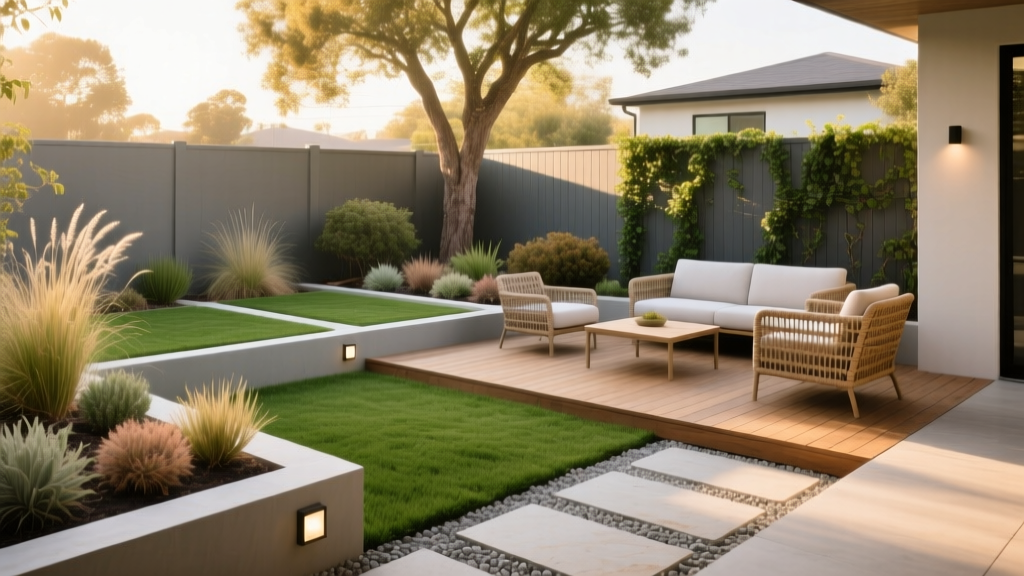
Mastering Backyard Designs for Small Yards: A Step-by-Step Guide
The Geometry of Small Yards: Zoning for Function
Small yards—typically defined as lots under 1,500 square feet of usable outdoor space—demand a radically different architectural approach than sprawling suburban properties. When executing backyard designs for small spaces, every square inch must serve a deliberate purpose. The most effective framework for compact lots is the 'Rule of Thirds' zoning method. Instead of a single, undefined patch of grass, divide your yard into three distinct functional zones: an active hardscape area (dining or fire pit), a transitional circulation path, and a passive visual buffer (vertical planting or water feature).
Pro Tip: Keep primary walkways at a minimum of 36 inches wide, but scale down secondary garden paths to 24 inches. This psychological trick makes the overall yard feel larger by varying the scale of movement.
Eliminate traditional turfgrass entirely in yards under 800 square feet. Maintaining a 400-square-foot patch of Bermuda or Fescue requires the same mowing, edging, and irrigation effort as a 2,000-square-foot lawn, but yields virtually no usable recreational space. Replace turf with multi-functional hardscaping or high-density groundcovers like Thymus serpyllum (Creeping Thyme) between stepping stones.
Hardscaping on a Budget: Material Cost Matrix
The foundation of any compact landscape is the patio surface. In small backyard designs, the hardscape often consumes 40% to 60% of the total footprint. Material selection dictates not just the aesthetic, but the drainage dynamics and long-term maintenance costs. Below is a 2026 cost and performance matrix for the three most viable small-yard patio materials.
| Material | Avg. Installed Cost (per sq ft) | Drainage Rate | Maintenance Level | Best Use Case |
|---|---|---|---|---|
| Decomposed Granite (DG) | $4.00 - $7.00 | High (Permeable) | High (Requires annual top-dressing) | Informal dining, rustic pathways |
| Stamped Concrete | $14.00 - $22.00 | None (Requires grading) | Low (Seal every 2-3 years) | Modern, seamless entertaining zones |
| Permeable Pavers (e.g., Belgard Aquastone) | $18.00 - $28.00 | Very High (Eco-friendly) | Medium (Weed control in joints) | Eco-conscious homes, poor-draining soil |
Why Permeable Pavers Dominate Small Lots
In tight urban lots, managing stormwater runoff is a critical challenge. Traditional concrete patios shed 100% of rainwater toward the foundation or street, often overwhelming French drains. According to the EPA's Green Infrastructure guidelines, permeable pavers can reduce runoff volume by up to 80% while filtering pollutants. For a 400-square-foot patio, installing a permeable system like Techo-Bloc Aqua-Via or Belgard Aquastone requires a 12-inch sub-base of crushed angular gravel. This initial excavation cost is offset by the elimination of trench drains and catch basins, which typically add $1,500 to $3,000 to a small yard hardscape budget.
Going Up: Vertical Landscaping Techniques
When horizontal space is exhausted, small backyard designs must expand vertically. Traditional privacy hedges like Green Giant Arborvitae or Leyland Cypress require a minimum 4-foot width to mature properly, instantly cannibalizing a small yard's usable footprint. The solution is structural vertical planting.
Follow this three-step protocol for establishing high-density vertical privacy screens:
- Install Rigid Armatures: Avoid flimsy wooden lattice that bows under the weight of mature vines. Use 1/4-inch thick powder-coated steel trellis panels or architectural cable wire systems tensioned between steel posts.
- Select Low-Volume Vines: Plant Trachelospermum jasminoides (Star Jasmine) for evergreen coverage and fragrant blooms, or Clematis armandii for rapid spring growth. These species provide dense visual screening while occupying less than 12 inches of ground-level depth.
- Implement Drip Irrigation: Vertical planters and narrow boundary beds dry out 40% faster than in-ground beds. Run 1/4-inch drip tubing with 1-GPH (gallon per hour) emitters directly to the root zone of each vine, automated via a smart controller like the Rachio 3.
For container-based vertical gardens, utilize Corten steel planter boxes. The natural rust patina provides a striking industrial contrast to green foliage, and the heavy-gauge steel prevents the toppling hazards associated with lightweight plastic or resin pots in high-wind corridors.
Optical Illusions: Lighting and Sightlines
'A small yard should never be illuminated uniformly. Uniform lighting exposes the boundaries of the space, making it feel like a confined box. Instead, light the textures and the vertical elements to draw the eye upward and outward.' — Principles of Landscape Architecture
Strategic low-voltage lighting is the most cost-effective way to artificially expand the perceived boundaries of a small yard. To achieve this, deploy the following lighting techniques:
- Uplighting for Depth: Place 2700K warm-white LED brass well lights at the base of vertical trees (like Japanese Maples or Crape Myrtles) in the far corners of the yard. This pushes the visual boundary into the darkness, creating an illusion of infinite depth.
- Grazing for Texture: Mount directional spotlights 12 inches away from stone veneer walls or wooden privacy fences to highlight the physical texture of the materials, drawing focus to the hardscape rather than the property line.
- Concealed Sources: Never expose the light bulb or fixture to the seating area. Use plant material or architectural baffles to hide the source, allowing only the ambient glow to reach the patio.
Critical Small Yard Mistakes to Avoid
Warning: Ignoring the 'Scale to Space' ratio. Placing a standard 8-foot deep sectional sofa on a 10x12 foot patio leaves less than 24 inches of clearance for walking. Always opt for apartment-scale outdoor furniture (e.g., 30-inch deep seating) or build custom 18-inch deep perimeter benches with hidden hydraulic storage hinges.
Another frequent failure in compact landscape architecture is 'Species Clutter.' Homeowners often attempt to replicate botanical gardens by planting 15 different shrub species in a 200-square-foot bed. This results in visual chaos and makes the space feel claustrophobic. Expert guidelines from Cornell University's gardening resources emphasize the 'drift planting' method: select a maximum of three to four plant species and plant them in dense, repeating blocks of three or five. This creates a cohesive, modern aesthetic that visually expands the area.
Finally, never compromise on subsurface drainage to save money on the initial build. In small, fully paved yards, a single heavy rainstorm can turn a sunken patio into a wading pool if the sub-base is not properly compacted and graded at a minimum 2% slope away from the home's foundation. The American Society of Landscape Architects (ASLA) consistently ranks proper grading and subsurface drainage as the top predictors of long-term landscape survivability. Invest in a laser level during the excavation phase and verify your slope before a single grain of base gravel is laid.

