
Landscaping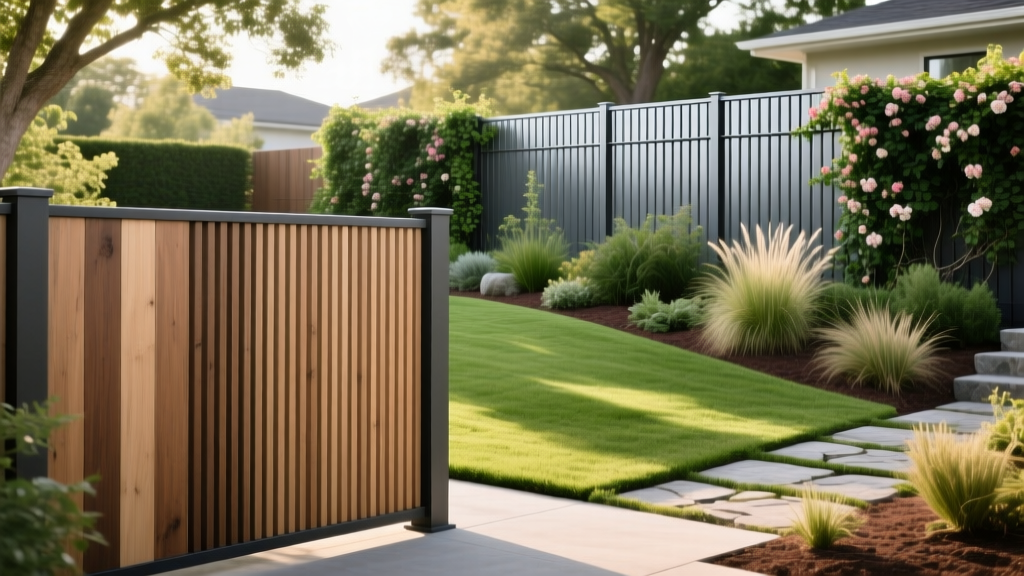
Best Types of Fences for Backyard Privacy and Security
The Anatomy of a Backyard Fence: What Actually Matters
Choosing from the various types of fences for backyard boundaries requires looking past aesthetic preferences to evaluate structural longevity, wind load resistance, and maintenance cycles. A fence is a cantilevered structure that must withstand lateral wind pressure, soil heaving from freeze-thaw cycles, and the sheer mechanical stress of gravity. The primary failure point in 80% of residential fences is not the picket material, but the post-setting methodology.
The industry standard for post depth is the 'one-third rule': one-third of the total post length must be buried underground. For a standard 6-foot privacy fence, this means using 9-foot posts buried 3 feet deep, or utilizing 8-foot posts set into a 30-inch concrete collar over a 6-inch gravel drainage base to prevent frost heave.
Zoning & Property Line Warning: Never assume your existing property pins or neighbor's fences are accurate. Hire a licensed land surveyor (typically $350-$600) before breaking ground. Building a fence even two inches over your property line can result in forced removal and legal liability. Always check local municipal codes for height restrictions, which commonly cap backyard fences at 6 feet and front yard fences at 4 feet.
Wood Fences: The Classic Standard (and Its Modern Upgrades)
Wood remains the most popular choice among the types of fences for backyard privacy due to its natural look and customization potential. However, not all lumber performs equally in ground-contact scenarios.
Cedar vs. Pressure-Treated Pine vs. Redwood
- Pressure-Treated Southern Yellow Pine ($15-$22 per linear foot): The most economical option. To prevent premature rot, ensure the lumber meets the American Wood Protection Association (AWPA) Use Category UC4B (Ground Contact) or UC4C (Heavy Duty Ground Contact) for posts. Above-ground rails and pickets only require UC3B.
- Western Red Cedar ($25-$35 per linear foot): Contains natural tannins and oils that resist decay and insect damage without chemical treatment. Cedar is dimensionally stable, meaning it warps and twists significantly less than pine when exposed to moisture fluctuations.
- California Redwood ($40-$60 per linear foot): The premium tier. Heart-grade redwood offers exceptional longevity (25-30+ years) and a rich, tannin-heavy color that weathers to a distinguished silver-gray if left unsealed.
Pro-Tip for Wood Longevity: Apply a penetrating oil-based sealer (like Cabot Australian Timber Oil or TWP) within 30 days of installation. Film-forming finishes like polyurethane will peel and require intensive sanding for reapplication, whereas penetrating oils simply fade and can be reapplied directly over the existing coat.
Vinyl and Composite: The Low-Maintenance Contenders
If your priority is eliminating annual staining and sealing, synthetic materials offer a compelling alternative. However, the manufacturing process dictates the structural integrity of these fences.
PVC/Vinyl Fencing ($28-$45 per linear foot): Cheap vinyl becomes brittle and cracks under UV exposure. High-quality vinyl fencing is co-extruded with a cap layer containing titanium dioxide (TiO2), which acts as a UV inhibitor. When evaluating vinyl, check the wall thickness; residential rails should have a minimum wall thickness of 0.160 inches, while posts should exceed 0.120 inches. Internal aluminum or steel reinforcement channels are mandatory for gate posts and long-span rails to prevent sagging.
Composite Fencing ($45-$75 per linear foot): Made from a blend of recycled wood fibers and high-density polyethylene (HDPE). Brands like Trex Fencing offer the authentic texture of wood with the rot-resistance of plastic. Composite is exceptionally heavy—a 6-foot panel can weigh over 70 lbs. This requires heavier-duty hardware and closer post spacing (typically 6 feet on-center rather than the standard 8 feet) to prevent structural bowing.
Metal Fencing: Aluminum, Wrought Iron, and Steel
Metal fences prioritize security, boundary definition, and unobstructed sightlines over total privacy.
'Wrought iron provides unmatched security and a classic aesthetic, but it requires sanding and repainting every 5-7 years to halt oxidation. For a zero-maintenance metal alternative, specify marine-grade powder-coated aluminum, which utilizes a zinc-rich primer undercoat to prevent subsurface rust bubbling.'
Chain Link ($12-$20 per linear foot): While traditional galvanized chain link is highly durable, modern landscape design favors vinyl-coated chain link in black or dark green. The dark coating visually recedes into the background foliage, making it far less obtrusive than reflective silver wire.
Material Comparison Matrix
| Material | Cost (Per Lin. Ft.) | Expected Lifespan | Privacy Level | Wind Load Resistance |
|---|---|---|---|---|
| Pressure-Treated Pine | $15 - $22 | 15-20 Years | High (Solid) | Moderate (Acts as a sail) |
| Western Red Cedar | $25 - $35 | 20-25 Years | High (Solid) | Moderate |
| Co-Extruded Vinyl | $28 - $45 | 30+ Years | High (Solid) | High (If reinforced) |
| Powder-Coated Aluminum | $30 - $50 | 50+ Years | Low (Open Pickets) | Exceptional (Air passes through) |
| Composite (e.g., Trex) | $45 - $75 | 25-30 Years | High (Solid) | Moderate (Heavy panels) |
Decision Framework: Matching Fence Type to Your Primary Need
Use this framework to align your material choice with your specific functional requirements, referencing guidelines from the U.S. Consumer Product Safety Commission (CPSC) and local building codes.
- If Total Privacy is the Goal: Choose a 'board-on-board' or 'shadowbox' wood fence, or solid tongue-and-groove vinyl. Shadowbox designs (alternating pickets on both sides of the rail) offer privacy while reducing wind load by allowing slight air filtration.
- If Pool Security is Required: You must adhere to the International Residential Code (IRC) pool barrier requirements. The fence must be at least 48 inches high, with no gaps allowing a 4-inch sphere to pass through. Aluminum fencing with closely spaced pickets and self-closing, self-latching gate hardware is the standard compliance choice.
- If Containing Large Dogs: Avoid chain link (which dogs can climb) and standard 4-foot pickets. Opt for a 6-foot cedar privacy fence with a 'kickboard' (a rot-resistant 2x8 base board) installed flush to the ground to prevent digging escapes.
- If Noise Reduction is Needed: Solid mass blocks sound. A dense, 6-foot composite or thick timber fence will reduce high-frequency street noise by 5-10 decibels. For maximum acoustic dampening, pair a solid masonry or composite fence with dense evergreen landscaping (like Arborvitae) planted 2 feet in front of the fence line.
Hidden Costs and Installation Gotchas
Budgeting for a fence requires accounting for variables that rarely appear in initial contractor quotes. According to landscaping data tracked by the University of Minnesota Extension, site preparation often accounts for 15-20% of hidden project costs.
The Gate Hardware Failure Point
The gate is the only moving part of a fence and bears immense dynamic stress. Standard 4x4 wooden gate posts will inevitably lean over time due to the leverage of the swinging gate. The Fix: Upgrade gate posts to 6x6 lumber, or insert a galvanized steel post anchor (like the Oz-Post system) inside the 4x4. Always use heavy-duty strap hinges secured with structural lag screws (not standard wood screws), and install an anti-sag cable kit on any gate wider than 4 feet to maintain square geometry.
Sloped Yards: Racking vs. Stepping
If your backyard has a significant grade change, you must choose an installation method: Racking (Following the slope): The fence panels tilt to match the ground contour. This works well for chain link, aluminum, and certain vinyl systems, but leaves triangular gaps at the bottom that must be filled with custom-cut pickets or landscaping. Stepping (Staircase method): The fence remains perfectly level, dropping down in distinct 'steps' at each post. This is mandatory for rigid composite panels and provides a much cleaner aesthetic for solid privacy fences on steep hills, though it requires precise custom-cutting of pickets at each post transition.
Rock Excavation and Utility Strikes
Always call 811 to have underground utilities marked for free before digging post holes. If you encounter bedrock or heavy clay shale, contractors will charge a 'rock excavation' fee (often $50-$100 per hole) requiring rock bars, rotary hammers, or core drilling equipment. In solid rock, posts can be anchored using steel pin anchors drilled directly into the stone, eliminating the need for deep concrete footings.

