
Landscaping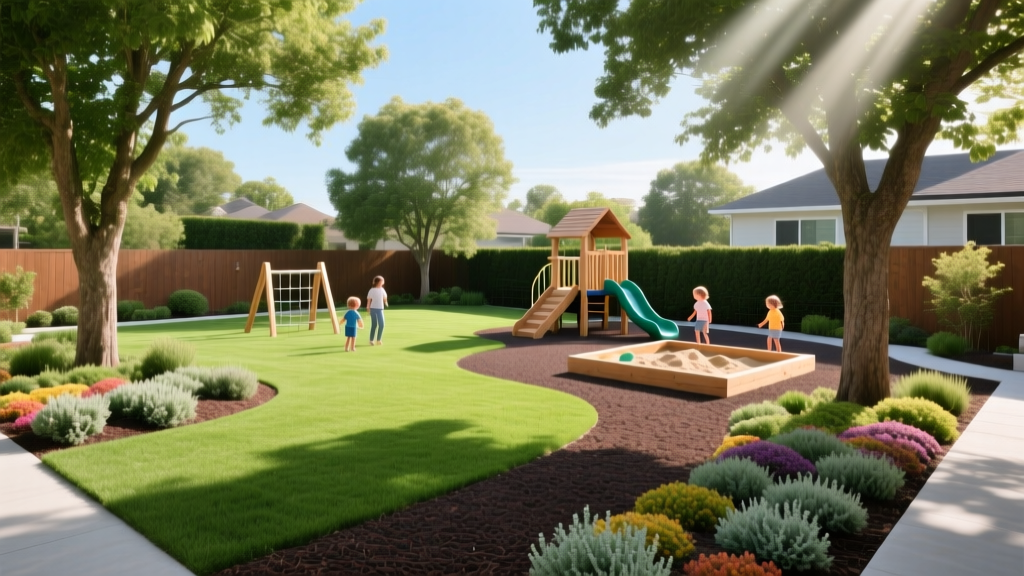
Family-Friendly Backyard Play Area Ideas: Turf, Trees, and Groundcover Establishment
The Intersection of Play and Plant Establishment
Designing a functional outdoor play space requires more than selecting a swing set or pouring a concrete pad. The living surfaces surrounding play equipment must endure severe soil compaction, recover from divots, and provide safe, soft landings. Standard ornamental landscaping fails under the sheer foot traffic of active children. Successful backyard play area ideas hinge on selecting high-shear-strength turfgrass cultivars, engineering the soil profile to resist bulk density increases, and strategically placing shade trees to lower ambient surface temperatures without compromising play structure footings.
Selecting High-Traffic Turfgrass for Play Zones
Turfgrass in a play zone must possess high rhizome density to knit the soil together and recover rapidly from tearing. According to Texas A&M AgriLife Extension, wear tolerance is dictated by the plant's lateral growth habit and cell wall rigidity. Avoid fine fescues and standard Kentucky bluegrass in high-traffic zones; they lack the tensile strength to survive daily cleat and shoe friction.
| Cultivar | Climate Zone | Wear Tolerance | Recovery Rate | Est. Sod Cost (2026) |
|---|---|---|---|---|
| 'TifTuf' Bermuda | Warm-Season (Zones 7-11) | Exceptional | 5-7 days (peak summer) | $0.65 - $0.85 / sq ft |
| 'Zenith' Zoysia | Transitional (Zones 6-9) | High | 10-14 days | $0.55 - $0.75 / sq ft |
| 'Titan Ultra' Tall Fescue | Cool-Season (Zones 3-7) | Moderate-High | 21-28 days | $0.45 - $0.60 / sq ft |
For warm-season climates, 'TifTuf' Bermuda (Cynodon dactylon) is the industry standard for athletic fields and residential play zones. It requires 38% less water than older Bermuda varieties while maintaining high turgor pressure under drought stress. For cool-season regions, 'Titan Ultra' Tall Fescue features a deep, fibrous root system that anchors the soil, though it requires annual overseeding at a rate of 5 lbs per 1,000 square feet to maintain density.
Soil Preparation and Grading for Safe Play Surfaces
Play areas suffer from soil bulk density exceeding 1.4 g/cm³, which restricts root growth and creates anaerobic conditions that drown turf. Proper establishment requires engineering the soil profile before laying sod or seed.
- Excavation: Remove the top 4 inches of existing soil across the entire play footprint.
- Drainage Layer: If native soil is heavy clay, install a 2-inch base layer of coarse, washed river sand to prevent perched water tables.
- Topsoil Amendment: Apply 4 inches of loamy topsoil mixed with 20% expanded shale or calcined clay. This inorganic amendment prevents pore space collapse under heavy foot traffic.
- Grading: Laser-grade the surface to a 1.5% slope away from the play structure's concrete footings. This prevents water from pooling around wooden posts, mitigating rot and mosquito breeding.
- Pre-Plant Fertilization: Incorporate a starter fertilizer with a 1-2-1 NPK ratio and 0.10% mesotrione (Tenacity) to prevent weed seed germination during the establishment window.
Warning: Never use black plastic weed barrier beneath play zone turf or loose-fill groundcovers. It prevents water infiltration, creates a slip hazard when wet, and eventually tears, leaving sharp plastic edges exposed in the play zone.
Strategic Shade Tree Planting for UV Protection
Shade is critical for lowering the surface temperature of play equipment, which can exceed 140°F on exposed metal and dark plastics during summer. However, improper tree placement destroys play area infrastructure.
"Tree roots seek the path of least resistance. The loose, frequently watered soil beneath a play zone's mulch or turf bed will attract aggressive surface roots that can heave concrete footings and lift paver borders within five years." — Arbor Day Foundation Planting Guidelines
Placement and Species Selection
Plant shade trees 15 to 20 feet south or southwest of the play structure. This angle maximizes afternoon shade coverage over the equipment while keeping the primary root mass away from the footings. To cast a wide, high canopy that allows adults to supervise children from a distance, select species with strong branch unions and high clearance potential.
- Bur Oak (Quercus macrocarpa): Drought-tolerant, deep taproot, excellent wind resistance. Growth rate: 12-18 inches/year.
- Red Maple 'Red Sunset' (Acer rubrum): Fast-growing, provides dense summer canopy and vibrant fall color. Avoid in highly alkaline soils (pH > 7.2) to prevent iron chlorosis.
- London Planetree (Platanus × acerifolia 'Bloodgood'): Highly resistant to anthracnose, tolerates urban compaction and reflected heat from nearby fences.
Pro Tip: Install a 24-inch deep, 60-mil HDPE (High-Density Polyethylene) root barrier in a semi-circle between the tree and the play structure during planting. This forces roots downward rather than laterally toward the equipment.
Soft Groundcovers for Fall Zones and Equipment Borders
The Consumer Product Safety Commission (CPSC) mandates 9 to 12 inches of loose-fill material in the "use zone" (fall zone) beneath elevated equipment. However, the borders and low-traffic transition areas require living groundcovers that stabilize the soil without creating trip hazards.
Microclover (Trifolium repens var. Pirouette)
Microclover is a low-growing, non-blooming legume that stays under 4 inches tall without mowing. It fixes its own atmospheric nitrogen, reducing fertilizer requirements by up to 60%.
Establishment: Seed at 2 to 3 lbs per 1,000 square feet in early fall or early spring. Keep the top 1 inch of soil consistently moist for 14 days until germination occurs. Microclover provides a softer landing surface than bare dirt or compacted turf, though it does not replace engineered wood fiber or rubber mulch in the primary fall zone.
Creeping Thyme (Thymus serpyllum)
Ideal for planting between stepping stones leading to the play area. It tolerates light foot traffic, releases a pleasant scent when crushed, and requires zero mowing. It fails, however, in heavy, poorly drained clay soils where it will succumb to root rot.
Establishing Perimeter Buffer Plants
Buffer plants define the boundaries of the play area, keep stray balls from entering neighboring garden beds, and provide a visual windbreak. When selecting shrubs for play area perimeters, safety and maintenance dictate the choices.
Species to Avoid
Never plant species with thorns, toxic berries, or brittle branches near play zones. Avoid Berberis (Barberry), Rosa rugosa, Ilex opaca (American Holly - due to sharp leaf spines), and Nerium oleander (highly toxic if ingested).
Recommended Buffer Shrubs
- Arrowwood Viburnum (Viburnum dentatum): Features soft, toothed leaves, flexible branches that bend rather than snap when hit by toys, and non-toxic blue berries that attract birds. Prune in late winter to maintain a dense 4-foot hedge.
- Inkberry Holly (Ilex glabra 'Shamrock'): A soft-leaved, spineless evergreen that provides year-round screening. Tolerates both wet soils and drought once established. Space plants 3 feet apart for a solid hedge.
- Red Twig Dogwood (Cornus sericea): Fast-growing and highly flexible. The bright red winter stems add visual interest when deciduous play structures look barren. Cut back 20% of the oldest stems to the ground annually in early spring to maintain vibrant color.
Frequently Asked Questions
How long should we wait to use the play area after planting new turf?
Restrict all foot traffic on newly sodded play zones for a minimum of 21 days, or until the sod cannot be pulled up by the corners. For seeded areas like Tall Fescue, enforce a strict 6-week exclusion zone. Premature traffic will shear the fragile new root hairs, leading to permanent bare patches that require costly spot-sodding.
Can we plant artificial turf instead of natural grass in the play zone?
While artificial turf eliminates mowing, it absorbs and radiates significantly more heat than natural grass. On a 90°F day, synthetic turf surface temperatures can exceed 150°F, posing a severe burn risk to bare skin. If using synthetic turf, you must install a specialized cooling infill (like TCool) and a shock pad beneath the backing to meet critical fall height (HIC) safety standards.
How do we manage soil compaction in the play area long-term?
Even with excellent initial soil preparation, play zones will compact over time. Schedule deep core aeration every September for cool-season grasses and May for warm-season grasses. Follow aeration immediately with a topdressing of 1/4 inch of screened compost to rebuild soil structure and introduce beneficial mycorrhizal fungi that protect roots from stress.

