
Landscaping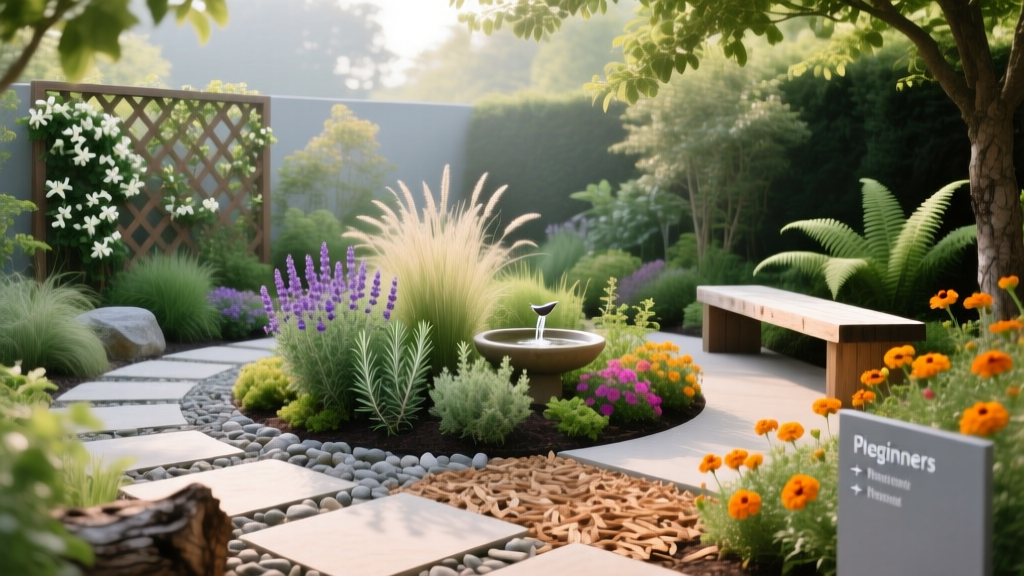
Sensory Garden Design for Beginners: Layout & Plant Guide
The Core Philosophy of Multi-Sensory Landscaping
A successful sensory garden design moves beyond simply planting fragrant flowers. It requires intentional spatial planning to manipulate microclimates, create textural contrasts, and sequence seasonal interest. According to research published by Oregon State University Extension (EM 9178), multi-sensory landscapes significantly improve cognitive engagement and lower cortisol levels, making them highly effective for neurodivergent individuals, dementia patients, and anyone seeking a restorative outdoor space.
'The most effective sensory gardens do not rely on a single dominant feature. Instead, they layer acoustic, tactile, and olfactory stimuli at varying heights to ensure accessibility for seated visitors, children, and those with limited mobility.' — Royal Horticultural Society (RHS)
Mapping Your Yard: The 5-Sense Zoning Framework
Beginners often make the mistake of scattering sensory plants randomly across existing beds. Instead, use a zoning framework. Group plants with similar water and sunlight requirements, but layer their sensory outputs to create distinct 'rooms' or corridors.
💡 The 3-Tier Accessibility Rule:
1. Ground Level (0-12 inches): Tactile groundcovers and acoustic gravel paths.
2. Mid-Level (12-36 inches): Olfactory herbs and visual color-block perennials.
3. Canopy Level (36+ inches): Wind-rustling ornamental grasses and shade-casting pergolas.
1. Ground Level (0-12 inches): Tactile groundcovers and acoustic gravel paths.
2. Mid-Level (12-36 inches): Olfactory herbs and visual color-block perennials.
3. Canopy Level (36+ inches): Wind-rustling ornamental grasses and shade-casting pergolas.
Zone 1: Visual Anchors & Color Theory
High-contrast color palettes aid visually impaired visitors. Pair deep purple foliage with bright chartreuse or silver. Avoid relying solely on red and green combinations, as red-green color blindness affects roughly 8% of men. Instead, use blue and yellow contrasts, which remain highly visible across most spectrums of color vision deficiency.
Zone 2: Acoustic Elements & Soundscaping
Soundscaping masks unwanted neighborhood noise. Broad-leaved plants like Hosta create a heavy, rhythmic drumming during rain, while fine-textured grasses produce a continuous, soothing white noise in mild breezes. Position acoustic plants near seating areas, ideally 3 to 5 feet away, to maximize the decibel level without overwhelming conversation.
Plant Selection Matrix by Sensory Category
The following matrix provides specific, commercially available cultivars optimized for residential sensory garden design. Prices reflect average 2026 nursery retail costs.
| Sense | Plant Cultivar | Sun / Water Needs | Sensory Trigger | Est. Cost |
|---|---|---|---|---|
| Sight | Salvia nemorosa 'Caradonna' | Full Sun / Low | Deep violet spikes, attracts pollinators | $9 / 1-Gal |
| Sound | Miscanthus sinensis 'Gracillimus' | Full Sun / Moderate | Dry foliage rustling, seed head rattling | $28 / 3-Gal |
| Touch | Stachys byzantina 'Helen von Stein' | Part Shade / Low | Dense, velvet-like silver foliage | $7 / 1-Qt |
| Smell | Lavandula angustifolia 'Munstead' | Full Sun / Low | Camphor-floral oils released by heat | $14 / 1-Gal |
| Taste | Mentha × piperita 'Chocolate' | Part Shade / High | Edible leaves, mint-chocolate aroma | $6 / 1-Qt |
Hardscaping for Tactile and Olfactory Engagement
Hardscape materials dictate the physical flow and acoustic baseline of your garden. Standard concrete or mulch paths miss the opportunity for sensory engagement. Upgrade your pathways and borders using these specific materials:
- Decomposed Granite (DG): Costs between $40 and $60 per ton. When compacted with a stabilizer binder, DG provides a firm, ADA-accessible surface that emits a satisfying, crisp 'crunch' underfoot. It also retains heat, warming the immediate microclimate for adjacent low-growing herbs.
- Smooth River Rock (1-3 inch caliber): Costs roughly $120 to $150 per ton. Use this in dry creek beds or as a border. The stones retain moisture and stay cool to the touch, offering a stark thermal contrast to sun-baked flagstone.
- Crushed Oyster Shells: Costs $80 to $110 per ton. Ideal for Mediterranean-style sensory zones. They reflect moonlight beautifully for evening garden walks and release a faint, briny mineral scent after heavy rainfall.
Integrating Water Features for White Noise
For beginners, avoid complex Koi ponds or large waterfalls, which require intense filtration and algae management. Instead, install a recirculating bubbling rock or basalt column. A 30-inch basalt column paired with the Aquascape Ultra 1100 Water Pump (retailing around $249) provides an adjustable flow rate up to 1,100 gallons per hour. This generates enough surface agitation to create a consistent 40-decibel white noise mask, effectively drowning out distant traffic while using less than 150 watts of electricity.
Common Beginner Mistakes to Avoid
⚠️ Warning: Uncontained Taste Zones
Never plant edible mints, lemon balms, or aggressive comfrey directly in the ground. Their rhizomatous root systems will overrun delicate tactile plants like Lamb's Ear within two seasons. The Fix: Plant mints in 5-gallon nursery pots, then sink the pots directly into the soil bed. This contains the roots while maintaining a seamless visual aesthetic.
Never plant edible mints, lemon balms, or aggressive comfrey directly in the ground. Their rhizomatous root systems will overrun delicate tactile plants like Lamb's Ear within two seasons. The Fix: Plant mints in 5-gallon nursery pots, then sink the pots directly into the soil bed. This contains the roots while maintaining a seamless visual aesthetic.
⚠️ Warning: The Winter Sensory Dead Zone
Beginners often design sensory gardens that peak in June and look barren by November. The Fix: Allocate 30% of your planting budget to evergreen structural plants (like Pieris japonica or dwarf conifers) and leave ornamental grasses uncut until late February. The dried grass plumes provide crucial winter acoustic stimulation and foraging material for local bird populations.
Beginners often design sensory gardens that peak in June and look barren by November. The Fix: Allocate 30% of your planting budget to evergreen structural plants (like Pieris japonica or dwarf conifers) and leave ornamental grasses uncut until late February. The dried grass plumes provide crucial winter acoustic stimulation and foraging material for local bird populations.
Maintenance & Seasonal Succession
A sensory garden requires targeted maintenance to keep its stimuli sharp. Follow this seasonal checklist to maintain peak engagement:
- Early Spring (March): Cut back Miscanthus and Pennisetum grasses to 4 inches above the crown. Apply a 1-inch layer of arborist wood chips to olfactory zones to suppress weeds without smothering shallow-rooted thyme.
- Early Summer (June): Deadhead Lavandula and Salvia immediately after the first bloom cycle. This forces a second, slightly smaller bloom in late August, extending the visual and olfactory season.
- Autumn (October): Harvest and dry edible herbs. Top-dress the decomposed granite pathways with a fresh 0.5-inch layer to restore the acoustic crunch that degrades over summer foot traffic.
By treating your landscape as an interactive environment rather than a static visual display, your sensory garden design will yield a deeply immersive space. Focus on the physical properties of the plants and hardscapes, and the garden will naturally engage every visitor who steps onto the property.

