
Landscaping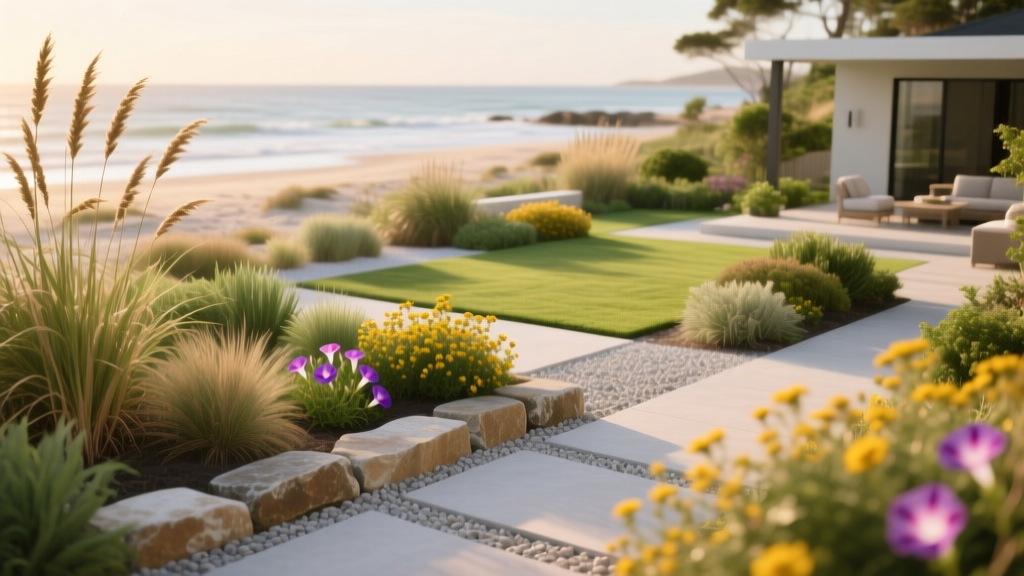
Beach Landscaping for Beginners: Salt-Tolerant Plants & Design Tips
Coastal properties offer stunning views but present a hostile environment for traditional turf and ornamental plants. Salt aerosol, shifting sands, high water tables, and relentless winds demand a specialized approach to beach landscaping. For beginners, the mistake of installing standard suburban nursery plants near the ocean often results in dead foliage, rusted fixtures, and wasted money within a single season.
Successful coastal design requires working with the environment rather than fighting it. According to the University of Florida IFAS Extension, coastal landscapes must be designed around salt tolerance, wind resistance, and drought adaptation. This guide breaks down the exact soil amendments, plant species, and hardscaping materials you need to build a resilient, low-maintenance coastal yard.
Mapping the Three Coastal Microclimate Zones
Beach landscaping is not uniform across your property. The distance from the ocean dictates the microclimate, which determines what you can successfully grow. Divide your property into three distinct zones before purchasing any materials.
Zone 1: The Beachfront (0–50 feet from water)
Conditions: Extreme salt spray, direct wind, shifting sand, and high sun exposure.
Strategy: Strictly native pioneer species. Deep root systems are required to stabilize sand. In many municipalities, altering the natural dune system in this zone is illegal. Stick to Sea Oats (Uniola paniculata) and Railroad Vine (Ipomoea pes-caprae).
Zone 2: The Primary Dune / Mid-Yard (50–150 feet)
Conditions: Moderate salt spray, sandy soil with some organic matter, filtered wind.
Strategy: Salt-tolerant ornamental grasses, shrubs, and hardy perennials. This is your primary visual garden space where you can introduce color and structured landscape beds.
Zone 3: The Inland / Protected Zone (150+ feet)
Conditions: Low salt exposure, wind blocked by structures or tree canopies, better soil retention.
Strategy: You can introduce less tolerant ornamentals, vegetable gardens (if fenced), and traditional shade trees, provided the soil is properly amended.
Engineering Sandy Soil for Plant Survival
Pure beach sand has virtually zero Cation Exchange Capacity (CEC), meaning it cannot hold onto nutrients or water. When you apply standard liquid fertilizers to sandy coastal soil, they leach directly into the water table within hours. To support plant life in Zones 2 and 3, you must artificially build soil structure.
The Biochar and Compost Protocol
Do not simply dump topsoil on top of sand; it will wash away in the first heavy rain. Instead, integrate amendments directly into the native substrate.
- Step 1: Excavate planting holes to 18 inches deep and 24 inches wide.
- Step 2: Mix 1 part horticultural biochar (priced around $45–$60 per cubic foot) with 2 parts aged municipal compost.
- Step 3: Blend this mixture at a 40/60 ratio with the native sand you excavated.
Biochar acts as a permanent, porous sponge that traps nutrients and moisture, while the compost provides the initial biological food web. This specific blend reduces irrigation needs by up to 35% in arid coastal environments.
Top Salt-Tolerant Plants for Beach Landscaping
Selecting the right flora is the most critical decision in coastal design. The NC State Extension categorizes plants by their ability to withstand salt aerosol without suffering leaf burn or stunted growth. Below is a curated matrix of high-performing, beginner-friendly coastal plants.
| Botanical Name | Common Name | Salt Tolerance | Mature Size | Avg. Cost (3-Gal) |
|---|---|---|---|---|
| Muhlenbergia capillaris | Pink Muhly Grass | High | 3x3 ft | $18 - $24 |
| Yucca filamentosa | Adam's Needle | Very High | 4x5 ft | $35 - $50 |
| Juniperus virginiana | Eastern Red Cedar | High | 40x20 ft | $85 - $120 |
| Agave americana | Century Plant | Very High | 6x10 ft | $40 - $65 |
| Liriope muscari | Big Blue Lilyturf | Moderate | 1.5x2 ft | $8 - $12 |
Hardscaping Materials That Survive Salt Air
The ocean atmosphere is highly corrosive. Standard wrought iron fences will develop surface rust within 14 months, and untreated pine decking will splinter and rot. When planning your hardscapes, patios, and walkways, specify materials engineered for marine environments.
Fencing and Railing
- Marine-Grade Aluminum: Powder-coated 6061-T6 aluminum fencing costs between $45 and $85 per linear foot. It will never rust, making it the premier choice for oceanfront property lines.
- 316L Stainless Steel: If you prefer the look of metal cable railings on a deck, you must specify 316L (marine-grade) stainless steel. Standard 304 stainless steel will pit and corrode in salt air.
- Composite Decking: Capped polymer composite boards (like Trex Transcend or TimberTech AZEK) resist salt absorption and UV fading far better than pressure-treated lumber, though they carry a premium of $12–$18 per square foot for materials.
Pathways and Driveways
Avoid poured concrete in Zone 1 and Zone 2. Salt penetrates concrete pores, corroding the internal rebar and causing spalling (surface flaking). Instead, use crushed oyster shells or decomposed granite for walkways. These permeable materials cost roughly $3 to $5 per square foot installed, allow rainwater to percolate into the water table, and naturally buffer soil acidity.
Warning on Windbreaks: Do not build solid wooden privacy fences near the beach. Solid walls create wind turbulence and vortexes that can rip the fence from its footings and damage nearby plants. Use slatted wood screens with 30% to 40% gaps to filter and slow the wind without stopping it abruptly.
Coastal Irrigation Strategies
Overhead spray irrigation is highly inefficient in beach landscaping. Coastal winds atomize the water droplets, blowing them onto neighboring properties or pavement before they reach the root zone. Furthermore, if your local well water is slightly brackish (common in coastal aquifers), overhead spraying deposits salt directly onto plant leaves, causing severe foliar burn.
The Solution: Install a subsurface drip irrigation system using pressure-compensating emitters. Bury the drip lines 2 inches beneath a layer of pine straw mulch. This delivers water directly to the root zone, eliminates wind drift, and prevents salt accumulation on foliage. Pair this with a smart controller that pauses watering during coastal rain events to prevent waterlogging in sandy soils.
Frequently Asked Questions
Can I grow a traditional grass lawn on the beach?
Turfgrass struggles immensely in Zone 1 and Zone 2 due to salt spray and poor water retention. If you must have a walkable surface, plant Zoysia japonica or St. Augustinegrass in Zone 3, heavily amended with compost. However, most coastal designers recommend replacing turf with sprawling groundcovers like Asiatic jasmine or permeable hardscapes to reduce maintenance and water usage.
How do I protect my plants from a hurricane or tropical storm?
Prune trees and shrubs in early spring to create an open canopy that allows wind to pass through. For newly planted trees, use flexible, wide-strapped guy wires anchored to deep earth augers rather than rigid wooden stakes, which can snap and damage the trunk during high wind events.
Is it legal to move sand around my property?
In most coastal states, the frontal dune system is strictly protected by environmental agencies. Moving sand, importing foreign fill dirt, or altering the natural grade near the primary dune can result in severe fines. Always consult your local Department of Environmental Protection or coastal commission before moving earth in Zone 1.

