
Landscaping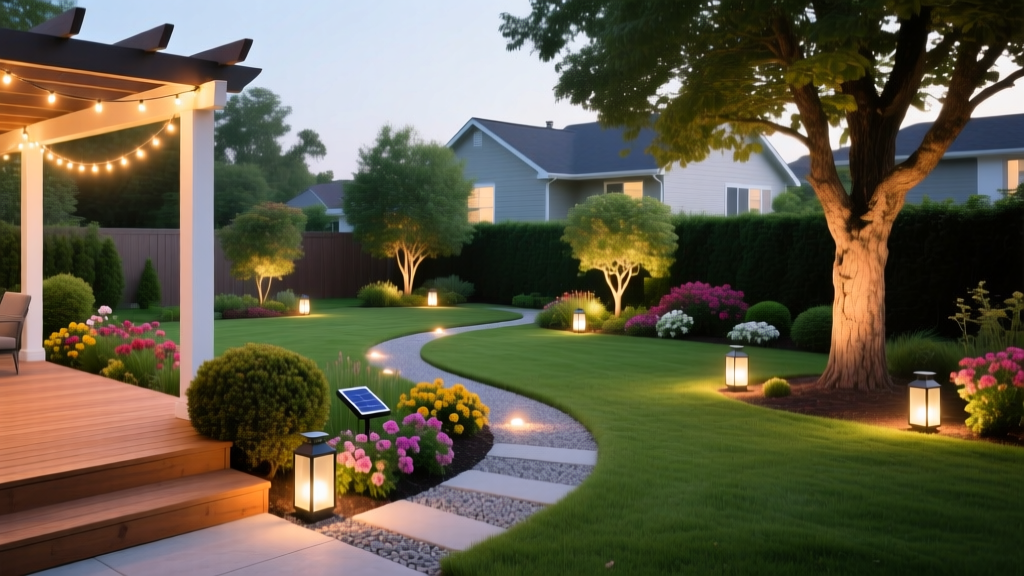
Beginner Backyard Lights Ideas: 5 Easy Landscape Designs
Transforming a dark, unusable yard into an inviting outdoor living space requires more than just sticking a few solar stakes into the mulch. Strategic landscape lighting extends your usable square footage, highlights architectural features, and improves security. For homeowners tackling their first outdoor illumination project, understanding the balance between aesthetics, electrical safety, and light pollution is critical.
This guide breaks down the foundational science of outdoor illumination and provides five actionable, beginner-friendly backyard lights ideas that deliver professional results without requiring a master electrician.
The Science of Outdoor Illumination: Lumens, Kelvin, and CRI
Before purchasing fixtures, you must understand three metrics that dictate how light behaves in a natural environment. According to the U.S. Department of Energy, modern LEDs offer precise control over these variables, making them the only viable choice for new landscape installations.
The Golden Specifications for Landscape Lighting:
- Color Temperature (Kelvin): Stick to 2700K (warm white) or 3000K (soft white). Anything above 4000K mimics moonlight poorly and creates a harsh, commercial glare that disrupts circadian rhythms.
- Brightness (Lumens): Path lights require 100–150 lumens. Uplights for trees need 200–400 lumens. Avoid 800+ lumen floodlights unless they are tied to motion sensors for security.
- Color Rendering Index (CRI): Look for a CRI of 80 or higher. This ensures the natural greens of your lawn and the browns of your mulch look vibrant, not washed out.
5 Beginner-Friendly Backyard Lights Ideas
These five designs utilize low-voltage (12V) systems, which are safe for DIY installation, highly customizable, and do not require buried conduit or licensed electrical work.
1. Staggered Pathway Illumination
The most common beginner mistake is the "runway effect"—placing path lights directly across from each other at exact intervals. Instead, stagger your fixtures in a zig-zag pattern, spacing them 8 to 10 feet apart. This creates a continuous pool of light that guides the eye naturally. Use brass or copper path lights with a 3-inch to 4-inch shade to shield the bulb from direct view, reducing glare. Brands like Volt Lighting offer solid brass path lights (around $45 per fixture) that withstand soil acidity and moisture far better than painted aluminum alternatives.
2. Architectural Tree Uplighting
Highlighting mature trees adds immense depth to a yard at night. Place a well light or directional uplight 12 to 18 inches from the base of the trunk.
For tall, narrow trees like Italian Cypress, use a 15-degree beam angle optic. For wide-canopy trees like Oaks or Maples, swap to a 36-degree or 60-degree optic to ensure the light reaches the outer branches. Aim for 300 lumens to adequately illuminate a 30-foot canopy without bleeding light into the night sky.
3. Hardscape Under-Cap Lighting
If your backyard features retaining walls, built-in seating, or stone steps, hardscape lights are the ultimate subtle accent. These linear LED strips or low-profile brass fixtures mount directly beneath the capstone of a wall. They cast a soft downward wash that defines the architecture of the space while providing safe ambient light for seating areas. Ensure these fixtures carry an IP67 waterproof rating, as they are highly exposed to rain runoff and irrigation splash.
4. Patio Canopy with Commercial-Grade String Lights
Forget the flimsy, battery-operated fairy lights. For a permanent patio canopy, invest in commercial-grade bistro string lights featuring shatterproof S14 LED bulbs. Look for sets with 12-inch socket spacing and heavy-duty 16-gauge wiring. Suspend them in a V-pattern or zig-zag over your dining area using turnbuckles and steel guide wires anchored to your home's fascia or wooden pergola posts. Running them at 2200K provides a nostalgic, candlelit ambiance perfect for entertaining.
5. Smart Deck and Step Integration
For modern homes, integrating smart lighting into deck stairs and railings merges safety with convenience. Recessed LED step lights (often called brick lights) can be wired into a smart transformer. In 2026, systems utilizing the Matter protocol, such as the latest Philips Hue Outdoor line or Ring Smart Lighting, allow you to sync your deck lights with interior smart home routines. Set your step lights to automatically illuminate at 20% brightness when your back door unlocks after sunset.
Power Source Comparison: Making the Right Choice
Choosing how to power your backyard lights ideas is the most critical technical decision. Here is a breakdown of the three primary power sources for residential landscapes.
| Power Type | Typical Lumen Output | Installation Difficulty | Estimated Cost (10 Lights) | Best Use Case |
|---|---|---|---|---|
| Solar | 2 – 15 lumens | Very Easy (Stake-in) | $30 – $80 | Temporary accents; renters |
| Low-Voltage (12V) | 100 – 400 lumens | Moderate (DIY Friendly) | $250 – $600 | Pathways, uplighting, hardscapes |
| Line-Voltage (120V) | 800 – 2000+ lumens | Hard (Requires Electrician) | $1,500 – $3,000+ | Security floodlights, large sports courts |
Step-by-Step Low-Voltage Installation Framework
For the vast majority of backyard lights ideas, a 12V low-voltage system is the optimal choice. Follow this framework to ensure a reliable, long-lasting installation.
- Map and Calculate: Draw your layout. Add up the total wattage of all fixtures. If you have ten 4-watt LED path lights, your total load is 40 watts.
- Select the Transformer: Buy a transformer rated for at least 20% more than your total load. For a 40-watt load, a 60-watt or 100-watt transformer is ideal. Never load a transformer past 80% of its rated capacity to prevent overheating and voltage drop.
- Trench the Wire: Bury your main trunk line at least 6 inches deep to protect it from aeration tools and edging. Use 12-gauge direct-burial wire for runs over 50 feet to minimize voltage drop, and 14-gauge for shorter branch lines.
- Make Waterproof Connections: Do not use standard indoor wire nuts. Use silicone-filled gel wire connectors or heat-shrink marine-grade butt splices. Moisture intrusion at the connection point is the number one cause of landscape lighting failure.
- Adjust and Secure: Once the system is powered on at night, adjust the glare shields and beam angles. Stake the fixtures firmly into undisturbed soil, avoiding the loose dirt directly on the edge of mulch beds where they can easily be kicked over.
Common Beginner Mistakes to Avoid
Warning: Light Trespass and Pollution
Unshielded lights that spill into your neighbor's windows or point upward into the sky are not just annoying; they violate local nuisance ordinances in many municipalities. The International Dark-Sky Association strongly recommends using fully shielded fixtures that direct light only where it is needed. Always angle uplights slightly inward toward your property, and use hoods on path lights to prevent upward light bleed.
Pro Tip: Beware of Voltage Drop
If the lights closest to your transformer are bright, but the lights at the end of the wire run are dim and flickering, you are experiencing voltage drop. To fix this, upgrade to a thicker wire gauge (e.g., from 14 AWG to 12 AWG), utilize a multi-tap transformer that allows you to output 13V or 14V at the source to compensate for the drop, or split your layout into two separate wire runs originating directly from the transformer.
'Landscape lighting is an exercise in subtraction. The goal is not to eliminate the dark, but to carve out pockets of visual interest that guide the eye and create depth. When in doubt, remove a fixture rather than add one.' — Principles of Architectural Outdoor Lighting
By focusing on warm color temperatures, precise beam angles, and robust low-voltage wiring techniques, you can execute stunning backyard lights ideas that rival high-end professional installations. Start with a small pilot zone—like a single pathway or a focal tree—test your transformer load, and expand your system as you refine your aesthetic preferences.

