
Landscaping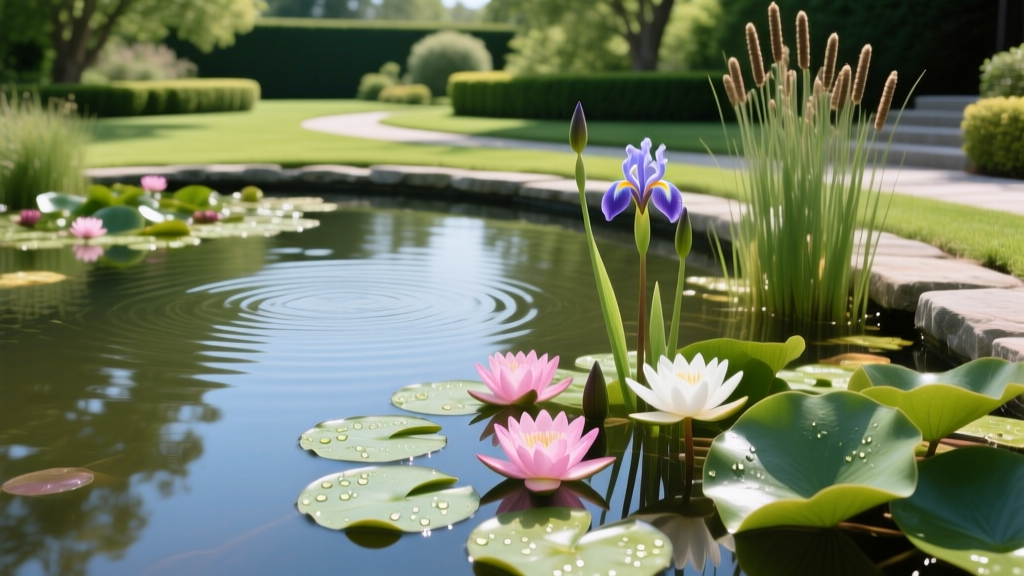
Best Pond Flowers for Beginners: Water Garden Planting Guide
Adding pond flowers to a backyard water garden transforms a static body of water into a thriving, colorful ecosystem. For beginners, the sheer variety of aquatic plants can be overwhelming, and using the wrong soil or planting depth is the most common reason new water gardens fail. This guide breaks down the exact cultivars, soil requirements, and planting techniques you need to establish a blooming, low-maintenance pond in 2026.
Understanding the Three Pond Planting Zones
Before buying any plants, you must understand that aquatic flowers are categorized by the water depth they require. A balanced pond utilizes all three zones to filter water, provide shade, and produce blooms.
| Zone | Water Depth | Plant Function | Beginner Examples |
|---|---|---|---|
| Marginal (Bog) | 0 to 6 inches | Filtration, vertical height, edge softening | Blue Flag Iris, Canna Lilies |
| Deep Water | 12 to 36 inches | Surface shade, algae reduction, primary blooms | Hardy Water Lilies, Lotus |
| Floating / Submerged | Surface or Fully Submerged | Oxygenation, nutrient competition | Water Snowflake, Hornwort |
5 Best Pond Flowers for Beginners
When starting out, choose hardy, disease-resistant cultivars that bloom reliably without demanding constant division or hyper-specific water chemistry. Expect to spend between $20 and $60 per bare-root rhizome or potted plant at specialized aquatic nurseries.
1. Dwarf Water Lily (Nymphaea 'Helvola')
Standard water lilies require massive ponds, but 'Helvola' is a dwarf hardy lily perfect for small water gardens or half-barrel setups. It produces pale yellow, star-shaped flowers (2 to 3 inches across) that sit just above the water. Planting Depth: 4 to 12 inches over the crown. Light: Minimum 5 hours of direct sun. Cost: $25 - $35 per rhizome.
2. Dwarf Pink Lotus (Nelumbo 'Momo Botan')
Lotus plants are notorious for taking over large ponds, but 'Momo Botan' stays compact, rarely exceeding 2 feet in height. It produces stunning, double-petal pink blooms that rise dramatically above the foliage. Planting Depth: 6 to 12 inches. Light: Full sun (6+ hours). Cost: $40 - $60 per tuber.
3. Blue Flag Iris (Iris versicolor)
Native to North America, this marginal plant is a powerhouse for natural water filtration. It sends up 3-foot-tall stalks with striking purple-blue flowers in late spring. According to the North Carolina State University Extension Plant Toolbox, native irises are excellent for stabilizing pond edges and attracting pollinators. Planting Depth: 0 to 4 inches (crown can be slightly above water line). Cost: $12 - $18 per potted plant.
4. Water Snowflake (Nymphoides peltata)
Often used as a surface-covering alternative to water lilies, Water Snowflake produces unique, fringed yellow flowers that look like tiny snowflakes. The leaves are small and scalloped, providing excellent surface shade to block algae-causing sunlight. Planting Depth: 12 to 24 inches. Cost: $20 - $28.
5. Tropicanna Canna Lily (Canna 'Tropicanna')
While technically a marginal bog plant, Tropicanna is grown primarily for its dramatic, dark bronze-purple foliage with striking orange blooms. It adds tropical flair and vertical structure to the back of the pond shelf. Planting Depth: 0 to 6 inches. Cost: $15 - $25.
The 'No-Fail' Soil and Container Strategy
The number one mistake beginners make is using standard bagged potting soil. Potting mixes contain peat moss, perlite, and vermiculite. When submerged, perlite floats to the surface and ruins the aesthetic, while peat moss washes out, turning the water black and triggering massive algae blooms.
Warning: Avoid Miracle-Gro and Lightweight Mixes
Never use standard garden potting soil or any mix containing chemical fertilizers. Aquatic plants require heavy, nutrient-poor loam or clay soil. The fertilizer should be added directly to the root zone via tabs, not mixed into the soil where it will leach into the pond water.
Never use standard garden potting soil or any mix containing chemical fertilizers. Aquatic plants require heavy, nutrient-poor loam or clay soil. The fertilizer should be added directly to the root zone via tabs, not mixed into the soil where it will leach into the pond water.
The Right Soil: Use a dedicated aquatic planting media (like API Aquatic Planting Media) or dig up heavy, clay-based topsoil from your yard. Remove all organic matter, twigs, and leaves. The Right Container: Use rigid, mesh-sided aquatic planting baskets (e.g., Laguna 10x10x6 inch baskets, approx. $12 each). The mesh allows water and nutrients to flow through while containing the soil. Line the basket with a layer of burlap or newspaper before adding soil to prevent the clay from washing out through the holes.
Step-by-Step Planting and Fertilization
Follow this exact sequence to ensure your pond flowers establish quickly without clouding your water.
- Prepare the Basket: Line your mesh aquatic basket with damp burlap.
- Add Base Soil: Fill the basket two-thirds full with heavy clay loam or aquatic media. Tamp it down firmly to remove air pockets.
- Position the Plant: For water lilies and lotus, plant the rhizome horizontally with the growing tip (the 'eye') angled slightly upward and left exposed above the soil line. Do not bury the crown.
- Top Dress: Cover the soil with a 1-inch layer of pea gravel or heavy river rock. This is a critical step—it prevents koi or turtles from digging up the soil and keeps the soil from floating away when you submerge the basket.
- Fertilize: Push 2 to 3 aquatic fertilizer tabs (such as Pondcare Aquatic Plant Tabs, NPK 10-26-10) deep into the soil, about 2 inches away from the main root mass. Repeat this every 4 to 6 weeks during the growing season.
- Submerge Slowly: Lower the basket into the pond at an angle to let air bubbles escape. This prevents the soil from erupting through the gravel layer.
Winterizing Your Pond Flowers
How you handle winter depends entirely on whether you chose hardy or tropical varieties.
Hardy Plants (Water Lilies, Lotus, Native Iris)
Hardy plants survive freezing temperatures as long as their root systems do not freeze solid. In late autumn, after the foliage turns yellow and dies back, trim the dead stems down to the crown. Move the baskets to the deepest part of the pond (below the frost line, typically 18 to 24 inches deep). The Clemson University Home & Garden Information Center notes that as long as the rhizomes remain in unfrozen water at the bottom, they will reliably return in spring.
Tropical Plants (Tropicanna Canna, Tropical Water Lilies)
Tropicals will not survive freezing water. Before the first frost, remove them from the pond. For cannas, cut the foliage back, dig up the tubers, and store them in a box of damp peat moss in a cool (50°F), dark basement. Tropical water lilies can be treated as annuals and replaced each year, or overwintered indoors in tubs of water kept at 65°F under grow lights.
Expert Tip: Never break the ice over a wintering pond with a hammer. The shockwaves can damage the dormant crowns of your deep-water lilies and lotus. Use a pot of boiling water to melt a hole for gas exchange instead.
Frequently Asked Questions
Do pond flowers require a pump or filter?
While a pump isn't strictly required for the plants to survive, a small circulation pump or fountain is highly recommended. Moving water prevents stagnation, deters mosquitoes from laying eggs, and ensures dissolved oxygen levels remain high enough to support plant respiration and beneficial bacteria.
Why are my water lily leaves turning yellow and rotting?
Yellowing leaves usually indicate one of three issues: the plant is planted too deep (the crown is suffocating), it is lacking nutrients (needs a fresh fertilizer tab pushed near the roots), or the water pH is highly alkaline (above 8.5). Test your water and adjust depth accordingly.
Can I plant pond flowers directly into the pond bottom without baskets?
It is not recommended for beginners. Planting directly into the pond substrate makes it nearly impossible to divide overgrown plants, remove dead foliage, or protect the roots from foraging wildlife. Baskets give you complete control over the plant's environment and maintenance.

