
Landscaping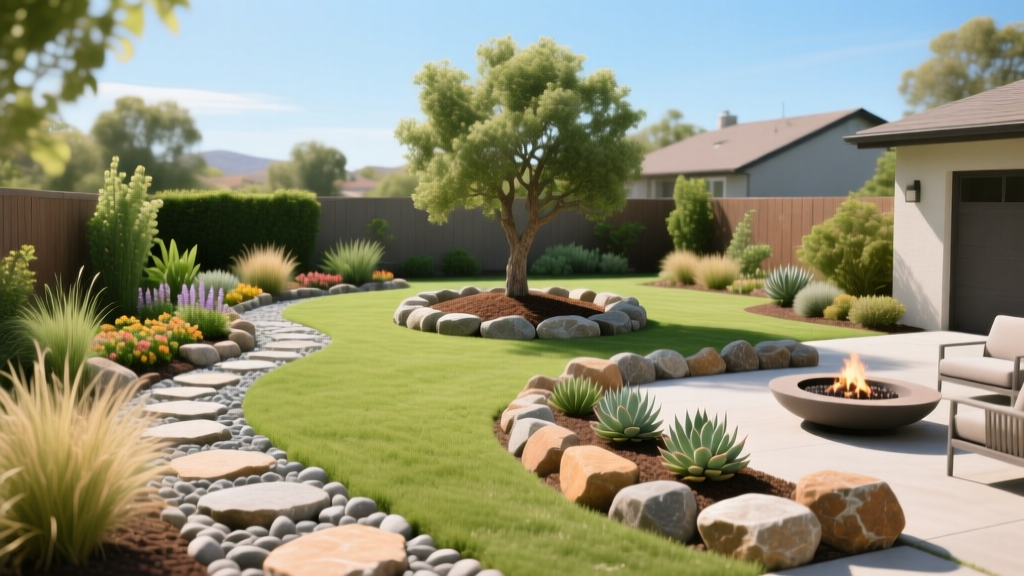
Beginner River Rock Landscaping Ideas: 5 Easy Yard Designs
River rock is one of the most forgiving and versatile hardscape materials available to homeowners. Unlike organic mulches that require annual replenishment, or complex paver patios that demand precise base compaction, river rock offers a permanent, low-maintenance solution for drainage, weed suppression, and visual contrast. However, beginners often make critical errors in sizing, base preparation, and edging that lead to scattered stones and weed breakthroughs.
This guide breaks down the exact specifications, material costs, and design frameworks you need to execute professional-grade river rock landscaping ideas without hiring a contractor.
The Beginner’s Sizing Guide: Which River Rock to Buy?
Buying the wrong size river rock is the most common beginner mistake. Small rocks migrate into lawn turf and get sucked up by mowers, while massive cobbles are difficult to spread and walk on. Use this matrix to select the correct diameter for your specific project.
| Size Category | Diameter Range | 2026 Avg. Cost (Per Ton) | Best Application |
|---|---|---|---|
| Pea Gravel / Small | 1/4' to 3/8' | $45 - $75 | Pathways, patio bases, playground surfaces |
| Standard River Rock | 3/4' to 1.5' | $60 - $110 | Mulch beds, tree rings, dry creek centers |
| Medium Cobbles | 1.5' to 3' | $80 - $130 | Dry creek bed edges, drainage swales, borders |
| Large Boulders | 3' to 6'+ | $100 - $180+ | Focal points, retaining wall anchors, fire pit surrounds |
Pro Tip: Always calculate your tonnage based on a 2-inch to 3-inch depth for standard river rock. One ton of 1-inch river rock covers approximately 100 to 120 square feet at a 2-inch depth.
5 Beginner-Friendly River Rock Landscaping Ideas
1. The Dry Creek Bed (Solving Drainage Issues)
If your yard suffers from standing water or erosion during heavy rains, a dry creek bed is a highly functional landscaping feature. According to the University of Minnesota Extension, directing surface runoff through a rock-lined channel prevents topsoil erosion and protects foundation integrity.
- The Framework: Dig a trench that meanders naturally (avoid straight, rigid lines). Ensure a minimum slope of 1% (a 1-inch drop for every 8 feet of length).
- The Stone Mix: Line the edges with 2-inch to 4-inch medium cobbles to anchor the structure, and fill the center channel with 3/4-inch standard river rock to allow rapid water flow.
2. Xeriscape Tree Rings (Protecting Trunks)
Lawnmowers and string trimmers cause fatal damage to tree bark. A river rock tree ring creates a permanent buffer zone. However, you must avoid the 'volcano mulching' mistake.
- The Framework: Clear a 3-to-4-foot radius around the trunk. Lay down non-woven geotextile fabric.
- The Critical Gap: Keep the river rock at least 3 inches away from the actual tree flare. Piling rocks against the bark traps moisture and invites fungal rot and rodent nesting.
3. Minimalist Walkway Borders
Instead of traditional plastic edging that degrades in UV light, use a 12-inch wide trench filled with 1-inch river rock to border your concrete or paver walkways. This creates a clean, modern transition between the hardscape and the lawn while catching runoff.
4. The Fire Pit Base & Surround
River rock is non-combustible and handles extreme temperature fluctuations better than limestone or sandstone, which can crack or pop when exposed to high heat.
- The Framework: Create a 6-foot diameter circle around your fire pit. Use 1.5-inch to 3-inch cobbles. The larger size prevents the stones from being kicked into the fire bowl and provides a stable, uneven surface that discourages people from placing chairs too close to the flames.
5. French Drain Disguise
French drains require a surface inlet to catch water, which can be an eyesore. You can disguise the drain pipe outlet by surrounding it with a 2-foot wide bed of 1-inch river rock. The smooth stones allow water to percolate down into the perforated pipe without clogging it with soil or organic debris.
Step-by-Step Installation: The 'No-Mistakes' Method
The longevity of your river rock landscape depends entirely on what happens beneath the stones. Follow this exact sequence to prevent weeds and rock migration.
- Excavate the Bed: Dig out the area to a depth of 3.5 inches. This allows for 0.5 inches of base soil compaction, the thickness of the fabric, and a 2.5-inch layer of rock.
- Install Steel Edging: Do not use cheap plastic coils. Install commercial-grade steel edging (such as Col-Met or PermaEdge) driven at least 4 inches into the soil. This creates an impenetrable barrier that stops the rocks from creeping into your lawn and stops grass rhizomes from invading the rock bed.
- Lay the Correct Fabric: This is where most beginners fail. Do not use woven black plastic or cheap slit-film weed barriers from big-box stores; they block water drainage and tear within two years. You must use a 3 oz per square yard non-woven geotextile fabric (like DeWalt Pro Series or Proliner). Overlap all seams by at least 12 inches and secure them with 6-inch landscape staples every 3 feet.
- Spread and Level: Dump the river rock in piles and spread it with a steel landscaping rake to a uniform 2.5-inch depth. Do not walk on the fabric with cleated shoes before the rock is laid, as you will puncture the membrane.
⚠️ Heat Reflection Warning
River rock absorbs and radiates significant solar heat. According to the Colorado State University Extension, rock mulches can raise the ambient temperature of the surrounding soil and air. Never place light-colored river rock directly adjacent to vinyl siding (the reflected heat can warp or melt the siding) or around shallow-rooted shade plants like hostas and ferns, which will scorch in the radiant heat.
Cost Breakdown: DIY vs. Professional Installation
Understanding the true cost of river rock landscaping helps you budget accurately. Here is a realistic breakdown for a standard 200-square-foot front yard mulch bed project in 2026.
| Material / Service | DIY Cost (200 sq ft) | Pro Contractor Cost (200 sq ft) |
|---|---|---|
| River Rock (2 tons) | $140 - $220 | $250 - $350 (Markup included) |
| Delivery Fee | $60 - $120 | $0 (Absorbed in quote) |
| Non-Woven Geotextile Fabric | $45 - $70 | $80 - $110 |
| Steel Edging & Staples | $85 - $130 | $150 - $200 |
| Labor (Excavation & Install) | $0 (Your weekend) | $600 - $1,200 |
| Total Estimated Cost | $330 - $540 | $1,080 - $1,860 |
Frequently Asked Questions
Will river rock alter my soil pH?
Unlike limestone gravel, which is highly alkaline and will raise your soil pH over time (potentially causing iron chlorosis in acid-loving plants), natural river rock is generally inert. It will not significantly alter your soil chemistry, making it safe for a wide variety of plantings.
How do I clean leaves and debris out of a river rock bed?
Do not use a traditional leaf rake, as it will pull up the stones. Instead, use a commercial-grade backpack blower or a handheld electric blower (like the EGO Power+ 56V) on a low-to-medium setting. Blow the debris at a shallow angle to lift the leaves without displacing the 1-inch rocks.
Can I put river rock directly over existing grass?
No. While the fabric will eventually smother the grass, the decomposing turf will create a spongy, uneven base that causes the rocks to sink and shift. Always scalp the grass to the dirt and remove the top 1 inch of topsoil before laying your fabric and rock.

