
Landscaping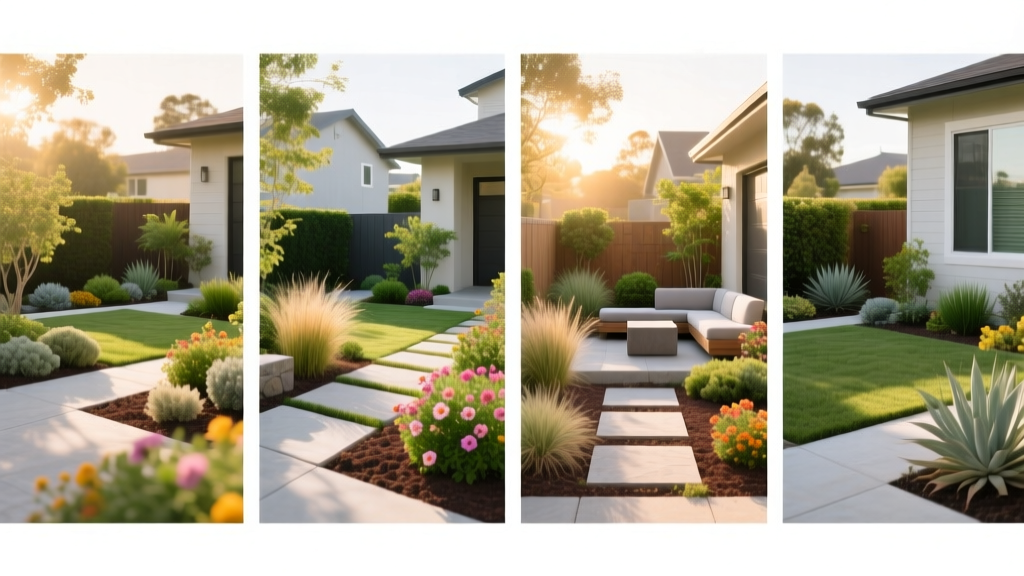
4 Beginner-Friendly Small Front Yard Landscaping Plans
Designing a compact outdoor space requires a completely different approach than managing a sprawling suburban estate. When working with small front yard landscaping plans—typically defined as under 500 square feet of plantable area—every square inch matters. Overplanting, ignoring mature plant sizes, and cluttering the sightlines are the most common pitfalls that turn a potentially charming entryway into a chaotic, overgrown mess.
This guide provides four distinct, beginner-friendly landscaping blueprints tailored for small front yards. Whether you are dealing with heavy shade from street trees, strict HOA water restrictions, or a desire for a modern minimalist aesthetic, these plans include exact plant cultivars, hardscape materials, and 2026 pricing estimates to help you execute your vision without hiring an expensive landscape architect.
The 3 Golden Rules of Small-Space Design
- Respect the Sightlines: Never plant anything that will exceed 24 inches in height within 5 feet of your front door or walkway. Blocking the entry makes the home feel uninviting and creates security blind spots.
- Calculate Mature Spread, Not Pot Size: A 1-gallon nursery pot looks tiny, but a Juniperus horizontalis can spread 8 feet wide over five years. Always read the tag's mature width and multiply by 1.2 to account for local growing conditions.
- The 60/40 Hardscape Ratio: In yards under 400 square feet, aim for 60% hardscape (paths, patios, gravel) and 40% softscape (plants). This prevents the yard from feeling like an impenetrable jungle and reduces maintenance.
Plan 1: The Modern Minimalist (Geometric & Clean)
This plan relies on strong horizontal lines, repetitive planting, and a restrained color palette. It is ideal for contemporary homes, townhouses, or mid-century modern facades where architectural symmetry is key.
Layout & Hardscape
Replace the traditional front lawn with a rectangular grid of 24x24 inch concrete pavers set in 3/8-inch pea gravel. Use 4-inch black powder-coated steel landscape edging to create razor-sharp borders between the gravel and planting beds. The steel edging costs approximately $4.50 per linear foot in 2026, but it provides a permanent, rust-proof barrier that flexible plastic edging simply cannot match.
Plant Palette
- Anchor Plant: Pennisetum alopecuroides 'Hameln' (Dwarf Fountain Grass). Grows exactly 2 to 3 feet tall and wide. Plant three in a row along the foundation for architectural repetition.
- Filler: Agave 'Blue Flame' (if in USDA Zones 8-10) or Yucca filamentosa 'Color Guard' (Zones 5-9) for striking structural focal points.
- Groundcover: Liriope muscari 'Big Blue' planted tightly at 12-inch intervals to create a dense, dark green border along the walkway.
Estimated Budget: $900 - $1,200 (Assuming a 300 sq ft conversion, including pavers, gravel, steel edging, and 12 nursery plants).
Plan 2: The Cottage-Style Pollinator Haven
If you want to support local ecology while adding vibrant color and movement to your front yard, this meandering, soft-edged design is the perfect fit. It mimics a traditional English cottage garden but is scaled down for compact urban lots.
Layout & Hardscape
Install a meandering pathway using 12x12 inch tumbled concrete pavers laid directly into a 2-inch bed of coarse builder's sand. The curves should gently sweep left and right, forcing visitors to slow down and visually expanding the depth of a shallow yard. According to the National Wildlife Federation, incorporating native flowering plants in these beds is critical for supporting declining bee and butterfly populations.
Plant Palette
- Anchor Plant: Hydrangea quercifolia 'Ruby Slippers'. A dwarf oakleaf hydrangea that maxes out at 3.5 feet tall, providing massive white blooms that age to deep pink in late summer.
- Mid-Level Drifts: Echinacea purpurea 'PowWow Wild Berry' and Nepeta faassenii 'Walker's Low'. Plant these in odd-numbered clusters (groups of 3 or 5) to create natural-looking drifts of purple and magenta.
- Spillers: Heuchera 'Caramel' planted near the pathway edges to spill slightly over the pavers, softening the hardscape transition.
Estimated Budget: $1,100 - $1,500 (Higher plant count and richer soil amendments like composted leaf mulch drive up the cost slightly).
Plan 3: The Shade-Tolerant Woodland Edge
Many small front yards are dominated by the dense canopy of mature street trees (like Norway Maples or Oaks), leaving the ground below in deep shade and choked with surface roots. This plan embraces the shade rather than fighting it.
Layout & Hardscape
Avoid digging deeply to prevent severing critical tree roots. Instead, use a 'no-dig' mulch bed approach. Lay down overlapping layers of uncoated cardboard directly over the existing grass, then top it with 3 inches of double-shredded hardwood bark mulch. Create a simple, straight pathway using large, irregular flagstones (minimum 18 inches across) set directly into the mulch.
Plant Palette
- Anchor Plant: Camellia japonica (Zones 7-9) or Rhododendron 'PJM' (Zones 4-8). These provide evergreen structure and brilliant early-spring blooms without requiring full sun.
- Foliage Contrast: Hosta 'Patriot' (variegated green and white leaves) mixed with Ferns (Dryopteris erythrosora 'Brilliance'). The contrast between the broad hosta leaves and the fine, feathery fern fronds creates high visual interest without relying on flowers.
- Accent: Helleborus orientalis (Lenten Rose) for late-winter color when the rest of the yard is dormant.
Estimated Budget: $600 - $850 (Lower hardscape costs, but premium pricing on mature shade perennials).
Plan 4: The Drought-Resistant Xeriscape
For homeowners in the Southwest, or those facing strict municipal water restrictions, xeriscaping is not just an environmental choice; it is a financial necessity. The EPA's WaterSense program notes that replacing turfgrass with drought-tolerant landscaping can reduce outdoor water use by up to 50%.
Layout & Hardscape
Remove all turf and lay a commercial-grade, woven geotextile weed barrier (do not use cheap black plastic, which traps moisture and rots roots). Top the barrier with 3 inches of 3/8-inch minus decomposed granite (DG) in a warm tan or ochre color. Install boulders (100-200 lbs each) as structural anchors before planting.
Plant Palette
- Anchor Plant: Dasylirion wheeleri (Desert Spoon) or Agave parryi 'Truncata'. These sculptural succulents serve as living art pieces.
- Color & Pollinators: Salvia greggii 'Furman's Red' and Agastache 'Blue Fortune'. These require zero supplemental water once established and bloom relentlessly from June to October.
- Groundcover: Delosperma cooperi (Hardy Ice Plant) to cascade over the boulders and suppress any remaining weed seeds.
Estimated Budget: $750 - $1,000 (Decomposed granite is highly cost-effective, and succulents require minimal soil amendment).
Material & Plant Budget Comparison Matrix
| Plan Type | Est. Cost (300 sq ft) | Maintenance Hrs/Year | Water Needs | Best Climate / Zones |
|---|---|---|---|---|
| Modern Minimalist | $900 - $1,200 | 10 - 15 Hours | Moderate | Zones 5 - 9 |
| Cottage Pollinator | $1,100 - $1,500 | 25 - 30 Hours | High | Zones 4 - 8 |
| Shade Woodland | $600 - $850 | 8 - 12 Hours | Moderate | Zones 4 - 9 (Shade) |
| Drought Xeriscape | $750 - $1,000 | 4 - 6 Hours | Very Low | Zones 7 - 10 |
Step-by-Step Execution Guide for Beginners
Do not buy a single plant until you have completed the site preparation. Follow this sequence to ensure your small front yard landscaping plans survive their first year.
- Call Before You Dig: Always dial 811 or visit call811.com at least 72 hours before breaking ground. Utility companies will mark underground lines for free, preventing catastrophic damage to gas or fiber-optic lines.
- Test Your Soil: Purchase a basic soil test kit from your local university extension office. Small front yards near sidewalks often suffer from high pH due to concrete leaching. If your pH is above 7.5, you will need to amend the soil with elemental sulfur to lower it before planting acid-loving shrubs like hydrangeas.
- Kill Existing Turf: If removing grass, use the solarization method (clear plastic sheeting for 4-6 weeks in summer) or apply a targeted glyphosate treatment, waiting a full 14 days before tilling. Never simply rototill live grass into the soil, or you will be fighting grassy weeds for the next decade.
- Install Hardscape First: Lay down pathways, steel edging, and boulders before adding soil and mulch. It is much easier to maneuver a wheelbarrow over bare dirt than over newly planted root balls.
- Plant and Mulch: Dig holes exactly as deep as the root ball, but twice as wide. Backfill with native soil mixed with 20% organic compost. Apply 2 to 3 inches of mulch, keeping it strictly 3 inches away from the base of woody shrubs to prevent crown rot.
Warning: The Foundation Trap
Beginners frequently plant shrubs flush against the home's foundation. This is a critical error. Planting within 2 feet of the house traps moisture against the siding, promotes wood rot, blocks weep holes in brickwork, and provides a hidden highway for termites and carpenter ants. Always leave a minimum 2-foot clearance between your foundation and any softscape planting.
Final Thoughts on Curb Appeal
Executing small front yard landscaping plans successfully is about restraint and intentionality. By selecting dwarf cultivars, investing in permanent hardscape edging, and matching your plant palette to the specific microclimate of your property, you can create a high-impact entryway that adds immediate equity to your home while keeping weekend maintenance to an absolute minimum.

