
Landscaping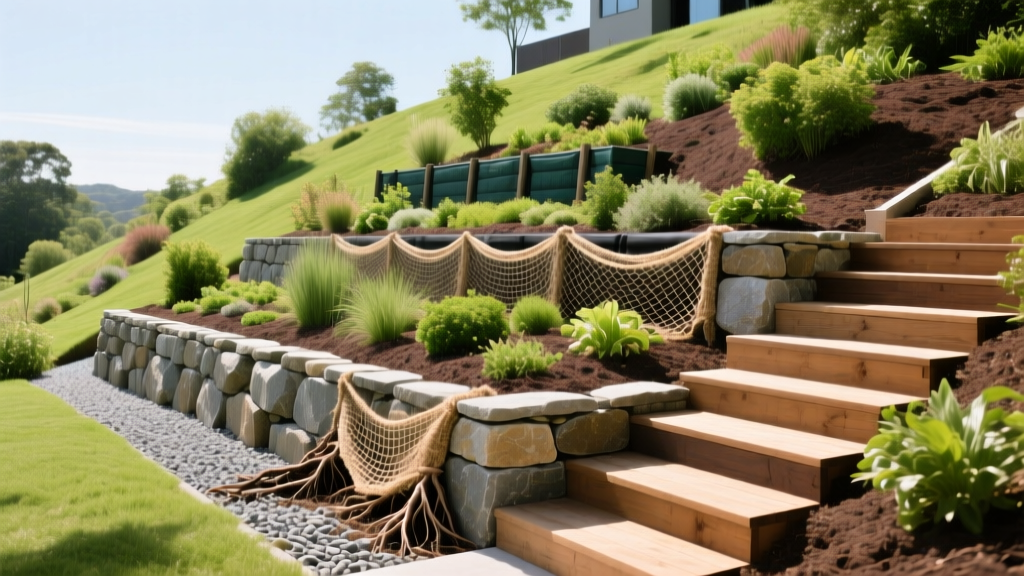
Steep Hillside Landscaping Ideas on a Budget: 5 DIY Erosion Fixes
The Physics of Slopes: Understanding Your Grade
Mowing a steep incline is dangerous, damages turfgrass roots, and accelerates topsoil runoff. Before selecting a landscaping method, you must calculate your slope's grade. Slope percentage is calculated as (Rise / Run) x 100. A 10% grade rises 1 foot for every 10 feet of horizontal distance. According to UMass Amherst Extension, slopes under 10% can be managed with standard turf, but anything exceeding 15% requires specialized erosion control and structural planting.
Slope Grade Quick Reference:
- Under 10%: Standard lawn or basic garden beds.
- 10% to 33%: Requires deep-rooted groundcovers, terracing, or jute netting.
- Over 33%: High erosion risk. Requires structural check dams, riprap, or retaining walls.
5 Steep Hillside Landscaping Ideas on a Budget
Expensive concrete retaining walls are not the only solution for sloped yards. By leveraging gravity, biology, and affordable materials, you can stabilize a hillside for a fraction of the cost of hardscaping.
1. Jute Netting and Hydroseeding
For slopes between 15% and 30% where you want grass or a wildflower meadow, bare soil will wash away before seeds germinate. Jute netting is a 100% biodegradable, woven mesh that holds soil and seed in place. It costs between $0.15 and $0.25 per square foot. Pair this with hydroseeding (a slurry of seed, mulch, and tackifier), which costs roughly $0.08 to $0.15 per square foot when DIY-rented. The jute degrades over 12 to 24 months, leaving established root systems behind.
2. Deep-Rooted Groundcover Mats
Replacing turf with aggressive, deep-rooted groundcovers eliminates the need for mowing on dangerous inclines. Juniperus horizontalis (Creeping Juniper) is exceptionally drought-tolerant and features a dense, fibrous root mat that locks soil in place. Purchase 1-gallon containers for $15 to $25 each and plant them on 3-foot centers. To keep costs low, use a woven polypropylene landscape fabric (minimum 3.0 oz/sq yd weight) beneath the junipers, cutting X-slits for planting, and pin it with 6-inch steel landscape staples every 4 feet.
3. Timber Check Dams (Mini-Terracing)
Check dams are horizontal barriers placed across a slope to slow water velocity and capture sediment. While concrete walls cost $40 to $80 per linear foot, 4x6 pressure-treated landscaping timbers cost roughly $18 to $24 each. By stacking single timbers and securing them with rebar, you create a series of shallow, 6-inch terraces that stabilize the hill and create flat planting pockets for shrubs or perennials.
4. Woven Geotextile and Riprap
For severe slopes (over 33%) or areas with heavy concentrated water runoff, vegetation alone will fail. Riprap consists of angular, crushed stone (typically 3 to 5 inches in diameter) that interlocks to dissipate water energy. The critical, often-skipped budget component is the base layer: a heavy-duty woven geotextile fabric. Non-woven fabrics will tear under the stone's weight. Expect to pay $0.40 to $0.60 per square foot for the fabric and $50 to $80 per ton for the stone, making this significantly cheaper than poured concrete.
5. No-Mow Fescue Meadow Conversion
If your slope is moderately steep (up to 25%) and you simply want to stop mowing, convert the area to a fine fescue blend (Hard, Chewings, and Creeping fescues). These grasses grow to 6-8 inches and flop over, creating a dense, erosion-resistant mat that requires cutting only once a year. Seed costs approximately $12 to $18 per pound, applied at a rate of 5 lbs per 1,000 square feet. As noted by Penn State Extension, fine fescues thrive in poor, sloped soils where traditional Kentucky Bluegrass fails.
Cost and Effectiveness Matrix
| Method | Material Cost (per 100 sq ft) | Max Slope Grade | Time to Establish |
|---|---|---|---|
| Jute Netting + Hydroseed | $23 - $40 | 30% | 60 - 90 Days |
| Creeping Juniper | $120 - $180 | 45% | 2 - 3 Years |
| Timber Check Dams | $60 - $90 (per linear tier) | 50% | Immediate |
| Geotextile + Riprap | $80 - $120 | 60%+ | Immediate |
| No-Mow Fine Fescue | $6 - $10 | 25% | 1 Growing Season |
DIY Installation: Building a Timber Check Dam
Timber check dams are the most cost-effective way to physically slow water on a 20% to 40% slope. Follow these exact specifications to prevent the timbers from blowing out during heavy spring rains.
- Dig a Level Trench: Excavate a trench 2 inches deep and 6 inches wide across the slope. Use a 4-foot carpenter's level to ensure the trench is perfectly horizontal, not parallel to the slope.
- Lay the Timber: Place a 4x6 pressure-treated timber (rated for ground contact, UC4A or higher) into the trench. The 6-inch side should face the downhill direction for maximum structural resistance.
- Drill Anchor Holes: Using a 5/8-inch spade bit, drill completely through the timber every 4 feet. Drill slightly angled toward the uphill side so water pressure pushes the rebar deeper into the soil rather than pulling it out.
- Drive the Rebar: Insert 24-inch lengths of #4 (1/2-inch diameter) steel rebar into the holes. Use a 3-pound sledgehammer to drive the rebar until it is flush with the top of the timber.
- Backfill and Compact: Shovel soil behind the uphill side of the timber and tamp it down firmly with a hand tamper to eliminate air pockets that could lead to undercutting.
⚠️ Structural Warning: Never build timber check dams higher than 12 inches (two stacked timbers) without consulting a structural engineer. On slopes exceeding 45%, or in heavy clay soils with poor drainage, the hydrostatic pressure behind a taller wall can cause catastrophic failure, sending timber and mud into your home's foundation or public roadways.
Sourcing Cheap and Free Materials
To keep your hillside project strictly on budget, avoid buying bagged materials from big-box hardware stores. Use these professional sourcing strategies:
- Municipal Compost Facilities: Most city or county waste management sites offer bulk, screened leaf compost for $15 to $25 per cubic yard—a fraction of the $40+ charged at private nurseries. This is ideal for amending poor slope soils before hydroseeding.
- Arborist Woodchips (ChipDrop): Use services like ChipDrop to get free loads of raw arborist woodchips. Note: Do not use fresh woodchips directly on steep, bare slopes, as they will wash away in heavy rain. Use them only on terraced, flat pockets behind check dams or on stabilized walking paths.
- Local Stone Quarries: Buy riprap and crushed stone directly from local quarries by the ton rather than in pallets of bagged rock from retail stores. Factor in a $75 to $120 local delivery fee, which is still vastly cheaper for projects exceeding 200 square feet.

