
Landscaping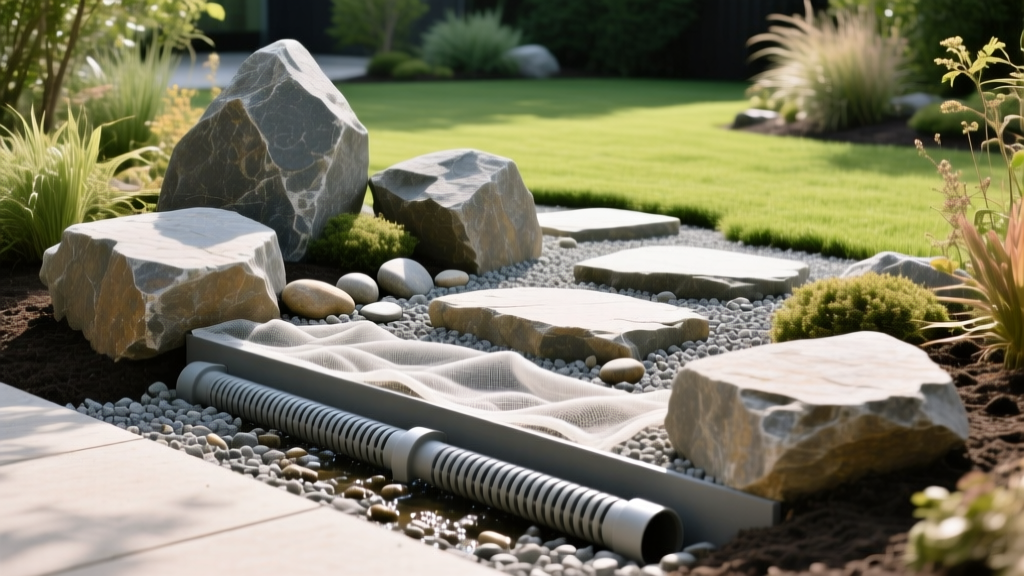
How to Build a Rock Garden: Step-by-Step Drainage & Stone Layout
The most common misconception about rock gardens is that they are simply decorative piles of stones placed over existing topsoil. In reality, a true alpine or scree garden is a highly engineered drainage system. Industry data shows that over 80% of rock garden plant failures are caused by winter wetness and root suffocation, not summer drought. If you are researching how to build a rock garden that sustains specialized alpine flora, succulents, and creeping perennials, you must prioritize subsurface hydrology before placing a single stone.
The Anatomy of a Successful Rock Garden
A structurally sound rock garden mimics a natural alpine slope, requiring three distinct subterranean zones to manage water movement. Without these layers, heavy clay or standard loam soils will trap moisture against the taproots of alpine plants, leading to rapid collar rot.
Critical Warning: The Landscape Fabric Myth
Never place permeable landscape fabric between your gravel base and your soil layer. While fabric suppresses weeds in standard mulch beds, in a rock garden it creates a perched water table. Water will pool at the soil-fabric interface, drowning deep taproots. Weeds in a rock garden should be managed via a thick top-dressing of inorganic grit, not fabric barriers.
Never place permeable landscape fabric between your gravel base and your soil layer. While fabric suppresses weeds in standard mulch beds, in a rock garden it creates a perched water table. Water will pool at the soil-fabric interface, drowning deep taproots. Weeds in a rock garden should be managed via a thick top-dressing of inorganic grit, not fabric barriers.
Material Sizing and Stone Selection
Your choice of stone dictates the microclimate, soil pH, and aesthetic longevity of the garden. As of 2026, material costs have fluctuated based on regional quarrying regulations, but the physical properties of the stones remain the primary deciding factor.
| Stone Type | Porosity & Weight | pH Impact | 2026 Avg Cost (Per Ton) |
|---|---|---|---|
| Tufa Rock | Extremely high porosity; lightweight | Alkaline (pH 7.5-8.0) | $180 - $250 |
| Sandstone | Moderate porosity; heavy | Neutral (pH 6.5-7.0) | $90 - $130 |
| Limestone | Low porosity; very heavy | Highly Alkaline (pH 8.0+) | $70 - $100 |
| Granite | Non-porous; extremely heavy | Acidic (pH 5.5-6.0) | $120 - $160 |
For authentic alpine crevice planting, Tufa rock is the gold standard because its sponge-like structure allows plant roots to penetrate directly into the stone itself, accessing residual moisture during dry spells. However, for larger structural anchor stones, Sandstone provides the best balance of cost, weight, and neutral pH compatibility.
Step-by-Step Construction and Drainage Engineering
Building the foundation requires heavy labor but guarantees the survival of your plantings. Follow these exact specifications for a standard 10x10 foot backyard footprint.
- Excavation (18 to 24 inches deep): Remove all existing topsoil and organic matter. If your native soil is heavy clay, dig an additional 6 inches and score the clay subsoil with a pickaxe to prevent a hardpan barrier.
- The Base Drainage Layer (12 inches): Fill the bottom 12 inches with 3/4-inch minus crushed angular gravel. The term 'minus' means the gravel includes stone dust and smaller particles, which lock together to create a stable, load-bearing foundation that still permits rapid water percolation. Never use washed river rock, as the smooth, round stones shift and fail to create stable crevices.
- Setting the Anchor Stones: Place your largest stones (minimum 50 lbs each) directly into the gravel base. Crucial technique: Bury at least one-third of each stone's height, and angle the top surface backward toward the slope at a 5-to-10-degree tilt. This backward tilt ensures rainwater runs off the stone and directly into the root zones of the plants, rather than shedding away from them.
- Backfilling and Settling: Backfill around the anchor stones with your custom soil mix (detailed below). Water the area heavily and let it settle for 48 hours before adding smaller accent stones or planting.
The Critical Soil Mix: Getting the Grit Ratio Right
Standard potting soils or garden topsoils are fatal to rock garden plants. According to cultivation guidelines from the Alpine Garden Society, the soil matrix must prioritize air-filled porosity over water retention. You are building a scree, not a flowerbed.
The 50/30/20 Alpine Soil Formula
- 50% Sharp Horticultural Grit: Particle size must be 2mm to 4mm. This creates the macro-pores necessary for taproot respiration.
- 30% Loam-Based Topsoil: Use a heavy loam or John Innes No. 2 base. Avoid peat-heavy mixes, which act like sponges and hold winter moisture.
- 20% Leaf Mold or Fine Pine Bark: Provides slow-release organic matter and slight acidity to buffer alkaline stones.
Never substitute horticultural grit with builder's sand or play sand. Sand particles are microscopic and round; they will compact into a cement-like layer when wet, entirely suffocating the root system.
Planting Strategy: Matching Roots to Crevices
Once the hardscape and soil are in place, plant selection must align with the physical dimensions of your stone layout. Group plants by their root architecture:
- Deep Taproots (e.g., Daphne, Penstemon): Require 18+ inches of uninterrupted soil depth. Plant these in the wide valleys between major anchor stones where the soil profile is deepest.
- Fibrous Mat-Formers (e.g., Creeping Thyme, Sedum): Ideal for the shallow edges and top-dressing layers. They stabilize the surface grit and prevent soil erosion during heavy downpours.
- Crevices and Rosettes (e.g., Saxifraga, Sempervivum, Ramonda): These plants thrive in the tight, vertical gaps between stones. When planting in crevices, wrap the bare roots in a small ball of moist clay and soil, then use a dibber to push the root ball deep into the crack, ensuring the foliage rosette sits flush against the stone surface.
Common Failure Modes and Troubleshooting
Even with meticulous construction, environmental factors can disrupt the garden's equilibrium. Use this diagnostic matrix to correct issues before they result in total plant loss.
| Symptom | Underlying Cause | Corrective Action |
|---|---|---|
| Blackening at the plant base (collar rot) | Soil touching the foliage crown; poor surface drainage | Pull soil away from the crown; top-dress with a 1-inch layer of 4mm grit to keep the neck dry. |
| Stunted growth, pale foliage | pH lockout (iron deficiency in alkaline soil) | If using limestone/tufa, apply chelated iron or sulfur to lower localized pH for acid-loving specimens. |
| Soil washing out of crevices | Stones angled forward; missing surface mulch | Re-set stones with a backward tilt; apply heavy scree mulch to armor the soil surface. |
| Moss or algae growing on stones/soil | Insufficient sunlight; chronic dampness | Thin overhead tree canopies to increase UV exposure; improve air circulation. |
Building a rock garden is an exercise in hydrological engineering as much as it is an art form. By strictly adhering to the 12-inch angular gravel base, utilizing the 50% grit soil ratio, and angling your stones to harvest rainwater, you create a resilient, low-maintenance landscape that will thrive for decades.

