
Landscaping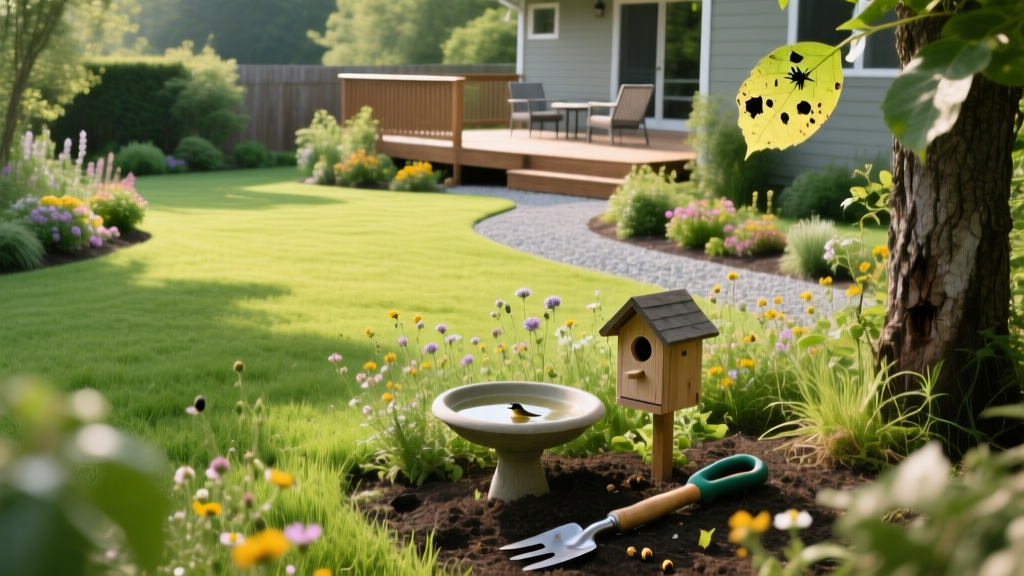
Why Your Certified Backyard Wildlife Habitat Application Failed
The Reality of Backyard Habitat Certification
Earning a National Wildlife Federation (NWF) certification is not merely about planting a few flowers and hanging a bird feeder. It requires a rigorous ecological audit of your property's food, water, cover, and sustainable practices. When applications are rejected—or when previously certified yards lose their status—it is almost always due to subtle, systemic failures in habitat design rather than a lack of effort.
This diagnostic guide identifies the exact failure points that derail certification applications and provides the specific, actionable corrections required to meet NWF and National Audubon Society ecological standards.
Diagnosing the Food Source Deficit: The Nativar Trap
The most common reason for application rejection is an overreliance on non-native ornamentals or "nativars" (native cultivars). While a nursery may market a purple coneflower cultivar as wildlife-friendly, ecological research demonstrates that altered leaf chemistry and modified flower structures in nativars drastically reduce their utility for native food webs.
The Keystone Plant Requirement
To pass the food source audit, your landscape must support the local food web from the bottom up. Entomologist Dr. Doug Tallamy's research identifies "keystone plants"—genera that support the vast majority of local Lepidoptera (caterpillar) species. Because 95% of terrestrial birds require between 6,000 and 9,000 caterpillars to fledge a single brood, lacking these plants guarantees a failed habitat audit.
Ecological Rule of Thumb: A single native oak tree (Quercus) supports over 500 species of caterpillars, whereas a non-native ginkgo tree supports zero. Prioritize keystone genera to maximize your habitat score per square foot.
Cost-Effective Planting Strategy: Stop buying 1-gallon potted natives at $15 to $22 each. Order straight-species native "plugs" (deep-rooted 2x2 inch starter plants) from regional native plant nurseries. A tray of 50 plugs typically costs $120 to $160, allowing you to establish high-density drifts (3 to 5 plants per square meter) required for effective pollinator foraging.
Water Feature Failures: Stagnation and Ecological Traps
A certified backyard wildlife habitat must provide clean, fresh water year-round. However, poorly designed water features often become ecological traps—breeding mosquitoes or drowning small amphibians and ground-foraging birds.
Symptom: High Mosquito Larvae Concentration
Diagnosis: Stagnant water with a surface film. The NWF strictly prohibits the use of synthetic chemical larvicides, meaning you must rely on biological controls and hydrodynamics.
Solution: Introduce a solar-powered water dripper rated for at least 1 GPH (gallon per hour) to break the surface tension, preventing female mosquitoes from laying eggs. For unavoidable standing water in rain gardens or pond edges, use BTI (Bacillus thuringiensis israelensis) dunks. BTI is a naturally occurring bacterium that targets only mosquito and black fly larvae, leaving birds, amphibians, and beneficial insects unharmed. A 6-pack costs roughly $6 and treats 100 square feet of water surface for 30 days.
Symptom: Drowning Incidents in Birdbaths
Diagnosis: Bath basins are too deep or have slippery, steep sides.
Solution: The maximum depth of any ground or pedestal birdbath must not exceed 2 inches in the center. If your existing bath is too deep, submerge a layer of clean, flat river stones to create a graduated shelf. Ensure the basin edges have a textured, sloped gradient (ideally a 1:4 ratio) to allow small mammals and amphibians to easily exit the water.
The Cover and Nesting Crisis: Over-Mulching and Improper Boxes
Wildlife requires layered cover for protection from predators and harsh weather. Two highly common landscaping practices directly violate habitat certification requirements: excessive mulching and the installation of unsafe nesting boxes.
The "Mulch Volcano" Violation
Piling hardwood mulch 6 to 8 inches high against tree trunks (mulch volcanoes) is a frequent audit failure. This practice suffocates tree roots, invites fungal pathogens, and completely eliminates the bare soil patches required by 70% of native ground-nesting bee species (such as sweat bees and mining bees).
The Fix: Limit organic mulch to a maximum depth of 2 to 3 inches, keeping it at least 4 inches away from the root flare of trees. Dedicate at least 10% of your garden bed footprint to completely bare, undisturbed soil to serve as nesting habitat for solitary native bees.
Nesting Box Specifications and Predator Guards
Standard decorative birdhouses sold at big-box stores often feature entrance holes that are too large, allowing invasive European Starlings to enter and outcompete native cavity nesters. Furthermore, boxes with exterior dowel perches actively assist predators like domestic cats and raccoons.
- Chickadees & Nuthatches: Require a precise 1.125-inch (1 1/8") entrance hole.
- Eastern Bluebirds & Tree Swallows: Require a 1.5-inch (1 1/2") entrance hole.
- Predator Deterrence: Mount a 24-inch galvanized steel stovepipe predator guard on the mounting post, positioned at least 4 feet above the ground to prevent raccoon and snake access.
- Ventilation & Drainage: Ensure the box has four 1/4-inch drainage holes in the floor and two 1/4-inch ventilation holes near the roof peak.
Diagnostic Matrix: Common Habitat Mistakes vs. Certification Requirements
| Observed Symptom | Root Cause | NWF Requirement | Corrective Action |
|---|---|---|---|
| Low bird nesting success | Lack of caterpillar biomass; invasive plant dominance | Minimum 3 layers of native vegetation (canopy, understory, herbaceous) | Remove invasive honeysuckle; plant keystone Prunus (cherry) and Amelanchier (serviceberry) understory trees |
| Pollinator absence in late summer | Spring-blooming bias in plant selection | Continuous bloom succession across three seasons | Integrate late-season asters (Symphyotrichum) and goldenrods (Solidago) in dense 3-plant clusters |
| Soil compaction under trees | Foot traffic; lack of root-zone protection | Protected, undisturbed soil ecology and fungal networks | Install permeable stepping stones; apply 2 inches of leaf litter instead of wood chips under the drip line |
| Amphibian mortality in ponds | Steep synthetic liners; lack of egress ramps | Safe wildlife egress from all water features | Install a textured coir log or wooden ramp with chicken wire traction extending from the water to the bank |
Chemical Violations: The Hidden Certification Killers
The NWF certification requires a signed pledge to eliminate or strictly minimize the use of synthetic pesticides and fertilizers. The most insidious violations come from systemic chemicals that homeowners apply without realizing their long-term ecological half-life.
Identifying Systemic Neonicotinoids
Products containing imidacloprid or dinotefuran (often marketed as systemic rose care or tree-and-shrub drenches) are absorbed into the plant's vascular system. These chemicals remain active in the soil and plant tissues for up to three years, poisoning nectar, pollen, and the caterpillars that feed on the leaves. If you have used these products within the last 36 months, your application will likely be flagged during the soil management review.
The Organic Transition Framework
To remediate chemically degraded soil and pass the sustainable practices audit, implement the following transition protocol:
- Cease all synthetic applications immediately. Bag and dispose of any remaining chemical fertilizers or pesticides via your local hazardous waste facility.
- Inoculate the soil biology. Apply a top-dressing of screened compost (1/2 inch depth) and water in with a compost tea extract to reintroduce beneficial mycorrhizal fungi and bacteria.
- Switch to OMRI-listed amendments. Replace synthetic nitrogen (which burns soil microbes) with alfalfa meal (N-P-K ratio of roughly 4-1-2) or feather meal (12-0-0) for slow-release, biologically active nitrogen.
- Deploy biological pest control. Instead of broad-spectrum insecticides, release beneficial nematodes (Steinernema feltiae) in early spring to target soil-dwelling grubs and flea beetles without harming earthworms.
Step-by-Step Re-Application and Documentation Strategy
Once you have corrected the ecological deficits in your landscape, you must document the changes meticulously for the NWF regional reviewers. A rejected application is rarely a permanent denial; it is usually a request for better data.
Pro-Tip for Map Submission: Do not submit a hand-drawn sketch. Use a free tool like Google Earth to trace your property lines, then color-code the zones: Green for native canopy, Yellow for native herbaceous beds, Blue for water features, and Brown for brush piles or snag areas. Reviewers process visual data much faster than text descriptions.
Photograph your habitat features at eye level to demonstrate the vertical stratification (the distinct layers of ground cover, shrub, and canopy). Ensure your photos clearly show the specific entrance holes of your nesting boxes and the shallow gradients of your water features. By addressing the root ecological failures rather than just the aesthetic symptoms, your yard will not only achieve certified backyard wildlife habitat status but will become a resilient, self-sustaining ecosystem.

