
Landscaping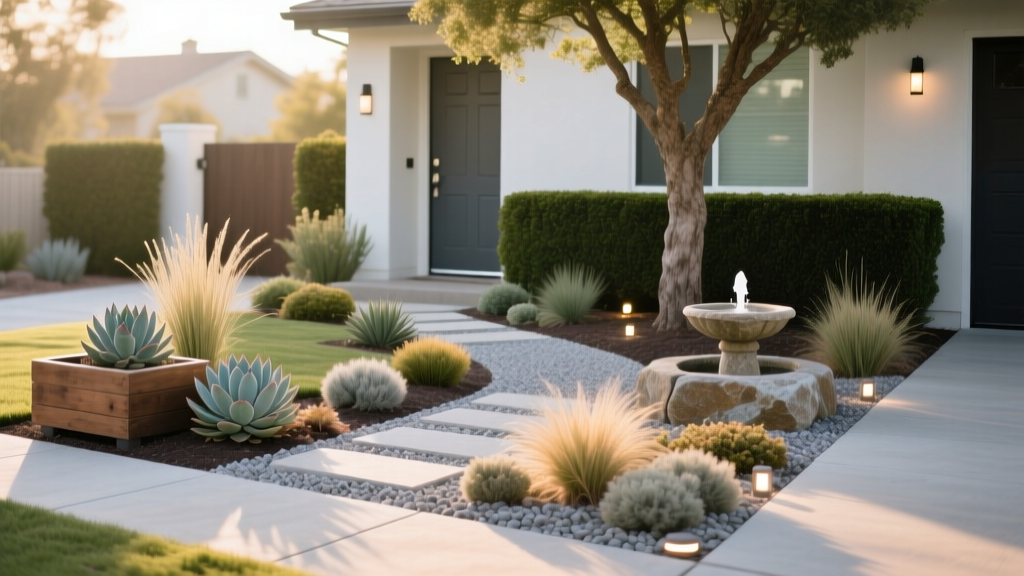
Small Area Cheap Simple Front Yard Landscaping Ideas on a Budget
Maximizing curb appeal in a compact space does not require a massive budget or heavy machinery. When evaluating small area cheap simple front yard landscaping ideas, the most successful designs rely on high-contrast textures, drought-tolerant dwarf cultivars, and strategic hardscape ratios rather than expensive mature trees or complex irrigation systems. For front yards under 500 square feet, a complete aesthetic overhaul can be executed for $300 to $800 using big-box store materials and a weekend of labor.
The 30% Hardscape Framework for Yards Under 500 Sq Ft
Small front yards often suffer from visual clutter when overplanted. Landscape architects utilize the 30% Hardscape Framework to anchor compact spaces. This principle dictates that exactly 30% of the visible soil area should be dedicated to inorganic hardscape (gravel, river rock, or pavers), while the remaining 70% is allocated to low-profile softscape (mulch and plants).
Pro Tip: In a 400 sq ft planting bed, dedicate 120 sq ft to a 3-inch deep layer of 1.5-inch polished river rock. This creates a permanent, weed-resistant visual anchor that requires zero seasonal maintenance and costs roughly $45 when bought in bulk bags.
5 Cheap & Simple Implementations for Small Front Yards
1. The River Rock & Ornamental Grass Border
Replace traditional wood mulch near the walkway with 1.5-inch river rock and plant Pennisetum alopecuroides 'Hameln' (Dwarf Fountain Grass) at 24-inch intervals. 'Hameln' maxes out at 2 feet tall, preventing the dreaded 'overgrown walkway' look that plagues small yards. The rock reflects light, while the grass provides kinetic movement. According to the UC Davis WUCOLS database, this grass is rated 'Low' for water use once established, saving significant irrigation costs.
2. Geometric Mulch Beds with Dwarf Nandina
Use a flat-edging spade to cut sharp 90-degree angles into your existing turf, creating a rectangular planting bed. Fill with double-shredded hardwood mulch (2 inches deep) and plant Nandina domestica 'Firepower' in a staggered grid. 'Firepower' offers brilliant red winter color without the aggressive spreading habit of standard Nandina. At $8 to $12 per 1-gallon pot, a 50 sq ft bed requires only 7 plants ($56-$84 total) for full coverage within two seasons.
3. Faux Dry Creek Bed for Drainage Issues
Small yards often suffer from concentrated runoff from the roof. Dig a shallow, meandering trench (12 inches wide, 4 inches deep) from the downspout to the street. Line it with Typar ProPlus 3 oz commercial weed fabric (avoid cheap woven plastics that degrade in UV light). Fill the trench with a mix of 3-inch and 5-inch fieldstone. This solves a drainage problem while mimicking an expensive natural water feature for under $100 in materials.
4. Painted Concrete Curbing
If your yard already has a concrete walkway but lacks definition, pour a 4-inch wide, 2-inch high concrete curb directly adjacent to the existing path using a $20 plastic edging form. Once cured, paint the curb with a masonry stain in a contrasting charcoal or slate gray. This creates a premium, custom-poured look for a fraction of the cost of stamped concrete or brick pavers.
5. Agave & Crushed Granite Xeriscape Islands
For hot, sunny front yards, create a 4x4 foot 'island' bed surrounded by turf. Fill the island with 3/8-inch minus crushed granite (which compacts hard like concrete) and center a single Agave attenuata (Fox Tail Agave). The EPA WaterSense program notes that replacing small turf islands with xeriscaped focal points can reduce outdoor water use by up to 50% in arid climates. The crushed granite costs about $35 per ton, making a 4x4 island cost less than $10 in stone.
Material & Plant Cost Matrix (2026 Pricing)
Budgeting accurately prevents mid-project stall. Below is the current average cost matrix for materials commonly used in budget-friendly small yard transformations. Prices reflect national averages from major home improvement retailers.
| Material / Plant | Unit Size | Avg. Cost | Coverage / Yield |
|---|---|---|---|
| 1.5" Polished River Rock | 0.5 cu ft bag | $5.50 | Covers ~2 sq ft at 3" depth |
| 3/8" Minus Crushed Granite | 50 lb bag | $4.25 | Covers ~3 sq ft at 2" depth |
| Typar ProPlus Weed Fabric | 3 ft x 50 ft roll | $48.00 | 150 sq ft total |
| Double-Shredded Hardwood Mulch | 2 cu ft bag | $3.75 | Covers ~8 sq ft at 3" depth |
| Pennisetum 'Hameln' (1 gal) | 1 Gallon Pot | $11.00 | Matures to 2 ft x 2 ft |
| Nandina 'Firepower' (1 gal) | 1 Gallon Pot | $9.50 | Matures to 2.5 ft x 2.5 ft |
Weekend Execution Plan: 48-Hour Transformation
Do not attempt to dig, plant, and lay rock in a single day. Soil compaction and fatigue lead to poor edging and uneven material distribution. Follow this phased approach for a 400 sq ft project area.
Day 1: Demolition and Earthworks (Saturday)
- Turf Removal: Use a manual sod cutter or a flat spade to remove existing grass in the designated beds. Cut 2 inches deep to remove the root mat.
- Edging Installation: Dig a 4-inch deep trench along the perimeter of the new bed. Install 4-inch galvanized steel landscape edging, securing it with 12-inch steel stakes every 3 feet. Steel prevents the 'wavy' look common with cheap plastic edging.
- Soil Amendment: If your native soil is heavy clay, till in 1 inch of expanded shale or pumice to improve drainage before laying fabric.
Day 2: Fabric, Hardscape, and Softscape (Sunday)
- Fabric Layout: Roll out the Typar weed fabric. Overlap seams by 6 inches and secure with 6-inch landscape staples every 2 square feet. Cut 'X' slits where plants will go.
- Planting: Dig holes through the slits. Ensure the root crown of the dwarf grasses sits exactly 0.5 inches above the surrounding soil grade to prevent crown rot.
- Material Spreading: Pour the river rock or mulch over the fabric. Use a leaf rake turned upside down (tines facing up) to spread the material evenly without tearing the fabric beneath.
Edge Case Warning: Never use landscape fabric under organic wood mulch. As the mulch decomposes, it creates a soil layer on top of the fabric, allowing weeds to root into the fabric itself. Fabric should only be used under inorganic hardscapes like river rock or crushed granite.
Common Small Yard Mistakes to Avoid
- Planting Standard Species in Small Beds: A standard Juniperus chinensis can easily outgrow a 4-foot wide bed in three years, blocking windows and walkways. Always verify the mature spread on the plant tag and subtract 20% to account for local microclimate vigor.
- Using Dyed Mulch: Red or black dyed mulch fades unevenly and can leach trace chemicals into small, confined soil volumes. Stick to natural, double-shredded hardwood or cedar.
- Ignoring the 'View from the Street': Small front yards are viewed from a distance and from a moving vehicle. High-contrast borders (like dark mulch against a light concrete walkway) read much better from the street than subtle, blended color palettes.
By applying strict spatial ratios, selecting dwarf cultivars verified by the Missouri Botanical Garden Plant Finder, and separating hardscape installation from planting, you can achieve a high-end architectural look on a strict budget.

