
Landscaping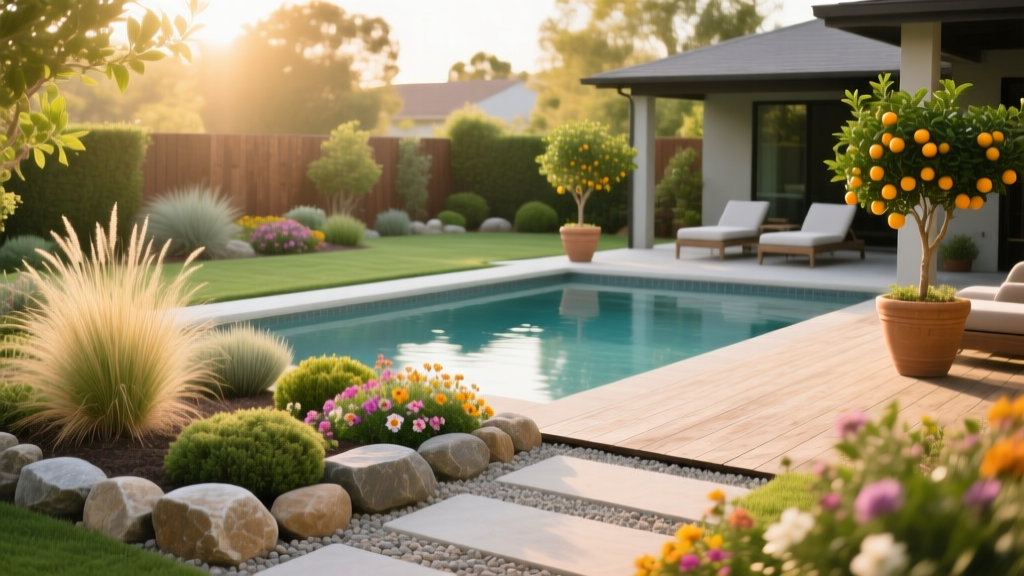
Beginner Landscaping Ideas for Around Inground Pools That Thrive
The Unique Microclimate of Poolside Landscaping
Designing the perimeter of an inground pool requires a fundamentally different approach than standard yard landscaping. The poolside environment is a harsh microclimate characterized by constant chemical exposure (chlorine or salt), high humidity, intense sun reflection off the water, and heavy foot traffic. For beginners, the most common failure mode is selecting plants and materials based purely on aesthetics, only to watch them die from chemical burn or create a massive debris cleanup problem.
To build a resilient, low-maintenance oasis, you must prioritize three factors: debris control, chemical tolerance, and slip resistance. This guide breaks down exact plant species, hardscape materials, and spatial layout frameworks to ensure your poolside landscape thrives in 2026 and beyond.
💡 The 3 Golden Rules of Poolside Planting:
- Zero Small-Leaf Debris: Avoid plants that drop tiny leaves, needles, or small petals that will bypass your skimmer basket and clog the main drain.
- High Chlorine/Salt Tolerance: Splashing water will raise the soil salinity and pH. Plants must tolerate alkaline, saline soil conditions.
- No Thorns or Spikes at Knee-Level: Bare feet and exposed skin are the norm. Keep aggressive thorny plants at least 6 feet from the coping.
Best Chlorine-Tolerant Plants for Beginners
When selecting flora, look for species with waxy, thick, or needle-like foliage. These leaf structures naturally resist chemical absorption and retain moisture in high-heat reflection zones. Below is a comparison matrix of beginner-friendly, low-debris plants that perform exceptionally well in splash zones.
| Botanical Name | Common Name | Chlorine Tolerance | Debris Risk | Avg Cost (1-Gal Pot) |
|---|---|---|---|---|
| Liriope muscari | Big Blue Lilyturf | High | Very Low | $5 - $7 |
| Agave attenuata | Foxtail Agave | Very High | None | $12 - $18 |
| Cordyline fruticosa | Ti Plant | High | Low | $9 - $14 |
| Viburnum tinus | Laurustinus | Moderate | Moderate | $15 - $22 |
For borders directly adjacent to the pool coping, Liriope muscari is the undisputed champion. Its grass-like blades stay intact, it requires minimal pruning, and it easily survives heavy chlorine splashing without showing tip-burn.
Hardscaping: Choosing the Right Decking and Borders
Hardscape materials dictate the temperature, safety, and maintenance level of your pool deck. The Static Coefficient of Friction (SCOF) is the critical metric here; the Interlocking Concrete Pavement Institute (ICPI) recommends a minimum wet SCOF of 0.50 for pedestrian safety. Let us compare the top three beginner-friendly materials.
1. Tumbled Travertine Pavers
- Pros: Naturally porous, staying up to 20% cooler than poured concrete in direct summer sun. Tumbled edges provide excellent slip resistance (SCOF > 0.60).
- Cons: Porosity means it can absorb pool chemicals and stain if not sealed annually with a penetrating silane/siloxane sealer.
- 2026 Installed Cost: $18 - $28 per square foot.
2. Stamped Concrete with Acrylic Overlay
- Pros: Seamless look, highly customizable colors, and lower initial material costs. When mixed with a non-slip additive, it meets safety standards.
- Cons: Absorbs massive amounts of heat. Darker stains can reach 130°F+ on bare feet. Requires resealing every 2-3 years to prevent UV fading and chemical etching.
- 2026 Installed Cost: $14 - $20 per square foot.
3. Capped Composite Decking (e.g., Trex Transcend)
- Pros: Zero splinters, highly resistant to chlorine and salt degradation, and requires no annual sealing. Excellent for raised pool decks.
- Cons: Even with cooling technology, dark composite boards get warm. Lighter colors (like coastal grey or pale sand) are mandatory for barefoot comfort.
- 2026 Installed Cost: $22 - $32 per square foot.
Step-by-Step Layout Planning: The Zone Framework
Do not plant randomly around the pool. Use the 'Splash Zone' framework to organize your layout based on distance from the water's edge.
⚠️ Warning: The Root Intrusion Threat
Tree roots seek out the moisture and warmth of pool plumbing. According to the University of Minnesota Extension, tree roots can extend up to three times the width of the canopy. Never plant fast-growing, water-seeking trees like Weeping Willows, Poplars, or Silver Maples within 20 feet of an inground pool shell or underground plumbing lines. If you must plant large shade trees, install a 36-inch deep high-density polyethylene (HDPE) root barrier between the tree and the pool equipment.
- Zone 1: The Coping Edge (0 to 3 feet)
Keep this area strictly hardscaped or use ultra-low-profile, non-shedding succulents like Agave attenuata. Ensure a minimum 36-inch wide clear walkway for safe transit and emergency access. - Zone 2: The Splash Transition (3 to 8 feet)
This is your primary planting bed. Use ornamental grasses and mid-height shrubs (2 to 4 feet tall). Angle the soil grading away from the pool at a 2% slope to prevent mulch and soil runoff from washing into the water during heavy rains. - Zone 3: The Privacy Perimeter (8+ feet)
Place taller evergreen screens and shade trees here. Use clumping bamboo (like Bambusa multiplex) rather than running bamboo to avoid aggressive rhizome spread that can crack concrete decks.
Common Beginner Mistakes to Avoid
Avoid these specific landscaping errors that routinely ruin pool water chemistry and create maintenance nightmares:
- Using Pine Straw or Fine Mulch: Pine straw acts like a needle and slips right through pool skimmer nets, sinking to the main drain. Use heavy, large-chunk cedar bark or decorative river rock (minimum 2-inch diameter) in Zone 2 beds.
- Planting Bougainvillea Near the Edge: While beautiful and drought-tolerant, Bougainvillea sheds thousands of tiny, papery bracts that bypass filtration systems and hide aggressive, skin-tearing thorns.
- Overwatering the Perimeter: Standard sprinkler heads often overspray onto the pool deck, diluting pool water and wasting treated chemicals. Swap standard spray heads for drip irrigation lines in poolside beds.
Integrating Smart Irrigation and Low-Voltage Lighting
To protect your investment, integrate technology that respects the pool environment. For irrigation, use a smart controller like the Rachio 3 paired with soil moisture sensors. This prevents the system from running after a rainstorm, protecting your pool deck from unnecessary moisture pooling and soil erosion. The EPA WaterSense program highlights that smart controllers can reduce outdoor water use by up to 20%, which is crucial for preventing hydrostatic pressure buildup behind pool retaining walls.
For lighting, avoid aluminum fixtures. The airborne chlorine and salt around inground pools will oxidize and destroy aluminum housings within two seasons. Invest in solid brass or marine-grade stainless steel low-voltage LED path lights (such as the Kichler Solid Brass series). Place them 18 inches back from the coping edge, aiming the beams away from the water to prevent glare for nighttime swimmers.
✅ Summary Checklist for Your Poolside Project:
- Select waxy, thick-leaved plants (Liriope, Agave, Ti Plant).
- Choose hardscapes with a wet SCOF > 0.50 (Tumbled Travertine or Textured Composite).
- Maintain a 3-foot clear hardscape zone directly around the coping.
- Install 36-inch HDPE root barriers for any perimeter shade trees.
- Use large river rock instead of fine mulch to prevent pool clogging.
- Specify brass or stainless steel for all low-voltage lighting fixtures.

