
Landscaping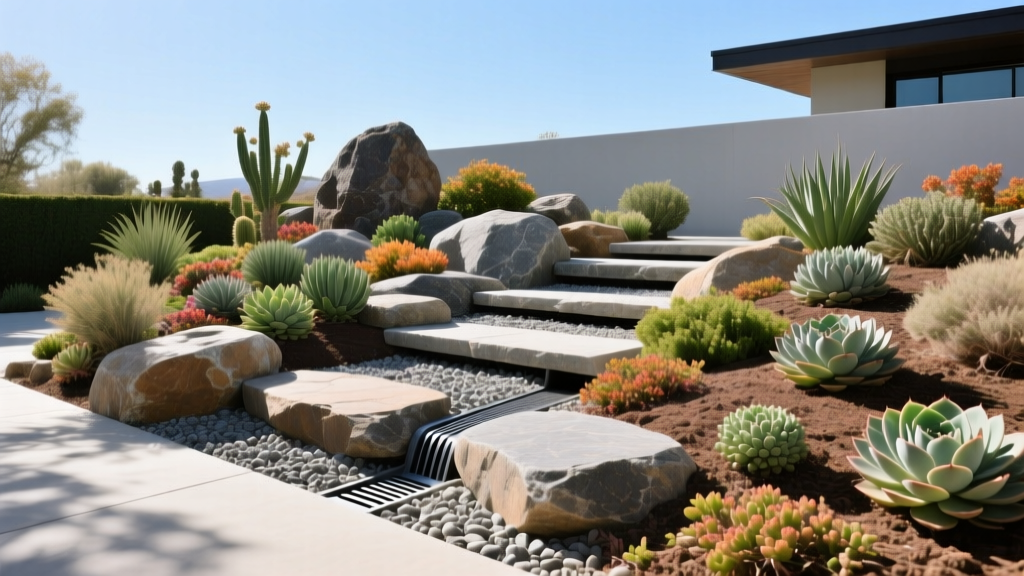
How to Construct a Rock Garden: Fixing Drainage and Weed Failures
The Hidden Failures in Rock Garden Construction
When learning how to construct a rock garden, most homeowners focus entirely on the aesthetic placement of boulders and the selection of alpine plants. However, 80% of rock garden failures—characterized by sinking stones, waterlogged plant roots, and aggressive weed infiltration—occur below the surface. A rock garden is fundamentally a drainage and microclimate engineering project. If the subsurface base fails, the surface aesthetics will collapse within two to three seasons.
This diagnostic guide bypasses basic design theory to address the structural failure points of rock gardens. By diagnosing soil percolation rates, selecting the correct geotextile membranes, and understanding rock-to-soil pH interactions, you can engineer a permanent landscape feature that resists frost heave and biological degradation.
Phase 1 Diagnosis: Base and Drainage Failures
The most catastrophic failure in rock garden construction is subsidence. Boulders weighing 500 to 2,000 pounds will slowly sink into native topsoil, especially in clay-heavy profiles, creating depressions that pool water and drown surrounding flora. To prevent this, you must diagnose your soil's percolation rate before ordering materials.
The 12-Inch Percolation Test
- Dig a test hole 12 inches deep and 6 inches wide in the lowest elevation point of your planned garden.
- Fill the hole with water and let it drain completely to saturate the surrounding soil matrix.
- Refill the hole to the top and insert a measuring tape. Measure the water level drop after exactly one hour.
Diagnostic Matrix: Soil Drainage Profiles
< 1 inch/hour: Heavy clay. Requires a 6-inch compacted base of 3/4-inch angular gravel and integration of a perforated PVC French drain routed to a lower elevation.
1 to 3 inches/hour: Loam. Requires a 4-inch compacted base of 3/4-inch angular gravel. Ideal for most alpine and succulent species.
> 4 inches/hour: Sandy soil. Requires a 2-inch base of 1/2-inch crushed gravel to retain minimal moisture for plant establishment.
< 1 inch/hour: Heavy clay. Requires a 6-inch compacted base of 3/4-inch angular gravel and integration of a perforated PVC French drain routed to a lower elevation.
1 to 3 inches/hour: Loam. Requires a 4-inch compacted base of 3/4-inch angular gravel. Ideal for most alpine and succulent species.
> 4 inches/hour: Sandy soil. Requires a 2-inch base of 1/2-inch crushed gravel to retain minimal moisture for plant establishment.
Never use rounded river rock for your base layer. Rounded stones lack fracture faces and will not lock together under compaction, leading to shifting and settling. You must use 3/4-inch crushed angular gravel (often sold as #57 stone or crushed basalt), compacted in 2-inch lifts using a mechanical plate compactor. According to the Royal Horticultural Society, proper subsurface drainage is the single most critical factor in preventing root rot in rock garden plantings.
Phase 2 Diagnosis: Weed Barrier Degradation
The second major failure point is the misuse of landscape fabric. Homeowners frequently lay cheap, non-woven polypropylene fabric beneath rocks, assuming it will permanently block weeds. Research from Washington State University Extension, specifically the extensive reviews by Dr. Linda Chalker-Scott on landscape fabric myths, demonstrates that non-woven fabrics clog with silt and organic matter within 24 to 36 months. Once clogged, water pools on top of the fabric, and wind-blown weed seeds germinate in the debris layer, sending roots directly through the degraded membrane.
Geotextile Selection Matrix
| Material Type | Water Permeability | Lifespan Under Rock | Diagnostic Verdict |
|---|---|---|---|
| Non-Woven Polypropylene | High (initially), clogs rapidly | 2-3 Years | REJECT: Traps water, causes anaerobic soil conditions. |
| Woven Slit-Tape Geotextile | Moderate, resists clogging | 10-15 Years | APPROVE: Use 3.2 oz/sq yard minimum (e.g., DeWitt Pro 5). |
| No Fabric + 4" Crushed Mulch | Excellent | Permanent | APPROVE: Best for densely planted gardens; starves weed seeds of soil contact. |
If your design features large, widely spaced boulders with sparse planting, use a heavy-duty woven slit-tape geotextile. Cut X-shaped slits only where plants will be installed. If your design is a dense alpine scree garden, omit the fabric entirely and rely on a 3-to-4-inch top-dressing of 3/8-inch crushed gravel mulch. This inorganic mulch prevents weed seeds from reaching the soil while maintaining perfect surface drainage.
Phase 3: Rock Selection and Placement Mechanics
Aesthetic failure in rock gardens usually stems from the "sprinkled stone" effect—rocks placed entirely on top of the soil surface. In nature, bedrock outcroppings are deeply anchored. To replicate this and provide structural stability against frost heave, you must employ the Iceberg Rule: bury at least one-third of the vertical height of any boulder larger than 12 inches in diameter.
pH Reactivity and Plant Health
Rock selection is not merely visual; it is chemical. The mineral composition of your stones will slowly leach into the surrounding soil, altering the pH over time.
- Limestone and Tufa: Highly alkaline. These will raise soil pH over a 5-year period. Use these only if you are planting calciphiles (lime-loving plants) like Dianthus, Saxifraga, or Geranium.
- Granite, Basalt, and Sandstone: pH neutral. These are inert and safe for ericaceous (acid-loving) plants like dwarf Rhododendrons, Cassiope, and Gentiana.
"When placing key boulders, always orient the strata lines (the natural grain of the rock) in the exact same direction across the entire garden. Mixing horizontal and vertical strata lines subconsciously signals to the human eye that the rocks were artificially dropped, rather than naturally eroding from a single bedrock source."
— Principles of Landscape Architecture, ASLA Guidelines
2026 Cost Breakdown and Material Sourcing
Budgeting for a rock garden requires accounting for heavy freight costs, as stone is priced by the ton and delivery fees scale rapidly with distance. Below is the current 2026 pricing matrix for a standard 200-square-foot rock garden build.
| Material / Service | Unit Specification | Estimated 2026 Cost |
|---|---|---|
| 3/4" Angular Base Gravel | Per Ton (covers ~100 sq ft at 2" depth) | $45 - $65 / ton |
| Feature Boulders (Granite/Basalt) | Per Ton (1-2 ton stones) | $180 - $320 / ton |
| Woven Geotextile Fabric | 300 sq ft roll (3.2 oz weight) | $140 - $190 / roll |
| 3/8" Crushed Gravel Mulch | Per Cubic Yard | $60 - $85 / yard |
| Skid Steer / Mini-Excavator Rental | Per Day (for boulder placement) | $350 - $500 / day |
Sourcing Tip: Avoid big-box hardware stores for feature boulders. Source stone directly from regional landscape supply yards or local quarries to eliminate middleman markups and reduce freight distances. Request "moss rock" or "weathered face" boulders, which have already been surface-aged and will blend into the landscape immediately.
Pre-Build Diagnostic Checklist
Before breaking ground, verify these structural parameters to ensure your rock garden survives its first decade without major intervention:
- [ ] Percolation Test Completed: Soil drainage rate documented and base gravel depth adjusted accordingly.
- [ ] Utility Locates Cleared: 811 (or local equivalent) called to mark subsurface gas, water, and fiber-optic lines before excavating boulder footings.
- [ ] Strata Alignment Planned: All selected boulders share a consistent geological grain direction.
- [ ] Geotextile Specified: Woven slit-tape fabric purchased, or fabric omitted in favor of deep crushed gravel mulch.
- [ ] Equipment Secured: Machinery or block-and-tackle rigging planned for safe placement of stones exceeding 150 pounds.

