
Landscaping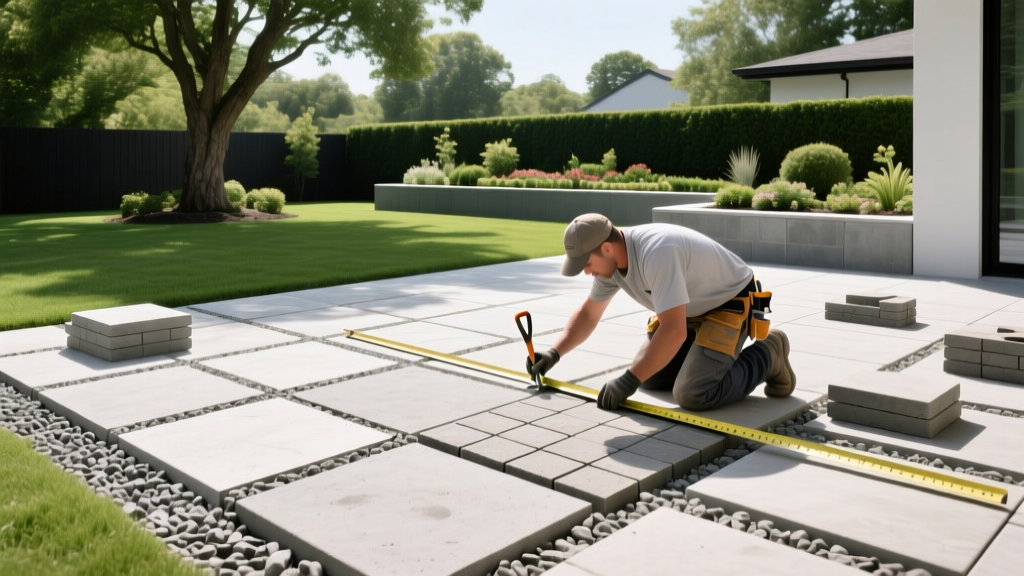
Cost of Patio Paving in 2026: Materials, Labor & Project Breakdown
The True Cost of Patio Paving: 2026 Baselines
Calculating the cost of patio paving requires looking far beyond the price tag of the surface material. In 2026, the national average for a fully installed patio ranges from $14 to $38 per square foot, with most homeowners spending between $2,800 and $7,600 for a standard 200-square-foot space. However, this wide variance is driven by three critical factors: material grade, site preparation complexity, and regional labor rates.
According to recent industry data compiled by Forbes Home, material costs account for roughly 35% to 45% of the total project budget, while labor and site preparation consume the remaining 55% to 65%. Understanding this ratio is the first step in preventing budget overruns and selecting a paving system that aligns with your property's soil conditions and long-term maintenance tolerance.
Material Cost Matrix: Pavers, Concrete, and Stone
The surface material dictates the aesthetic, lifespan, and structural requirements of your patio. Below is a comparative breakdown of the most common paving materials, reflecting 2026 market pricing for both materials and professional installation.
| Material Type | Installed Cost (per sq. ft.) | Material Only | Lifespan | Best Application |
|---|---|---|---|---|
| Poured Concrete (Broom Finish) | $8 - $14 | $3 - $6 | 25-30 Years | Budget-friendly, large flat areas |
| Stamped Concrete | $16 - $24 | $8 - $12 | 25-30 Years | High-end look without stone pricing |
| Concrete Pavers (Standard) | $14 - $22 | $4 - $8 | 40-50+ Years | DIY-friendly, freeze-thaw climates |
| Brick Pavers (Clay) | $18 - $32 | $8 - $15 | 50+ Years | Traditional aesthetics, high heat areas |
| Natural Bluestone (Thermal) | $28 - $45 | $14 - $25 | 50+ Years | Premium landscapes, high foot traffic |
| Flagstone (Irregular) | $25 - $50+ | $12 - $30 | 50+ Years | Organic, rustic garden integration |
Decoding Concrete Paver Specifications
Not all concrete pavers are created equal. When sourcing materials from suppliers like Unilock or Techo-Bloc, verify that the pavers meet ASTM C936 standards. This specification requires a minimum compressive strength of 8,000 PSI and a maximum water absorption rate of 5%. Pavers that fall below these metrics are prone to spalling, chipping, and premature degradation in freeze-thaw cycles.
The Hidden Budget Killer: Base Preparation and Labor
The most common cause of patio failure is inadequate base preparation. A beautiful natural stone surface will crack and settle within three years if laid on an improperly compacted subgrade. Professional hardscapers typically charge $5 to $12 per square foot strictly for excavation and base installation.
The Anatomy of a High-Performance Paver Base
To ensure structural integrity, your contractor must follow a rigorous base preparation protocol. Do not accept bids that omit these layers:
- Subgrade Excavation: Removing 8 to 12 inches of topsoil and organic matter until stable, undisturbed subsoil is reached.
- Geotextile Fabric: A non-woven separation fabric laid over the subgrade. This prevents the crushed stone base from migrating down into clay-heavy soils, which is the primary cause of frost heave and settling.
- Aggressive Base Layer: 6 to 8 inches of 3/4-inch crushed stone (meeting ASTM D2940 specifications), compacted in 2-inch lifts using a vibratory plate compactor.
- Bedding Sand: A precise 1-inch layer of coarse, washed concrete sand (never masonry sand, which retains too much moisture and causes efflorescence).
Expert Warning: If your contractor proposes using 'stone dust' or 'screenings' instead of washed concrete sand for the bedding layer, decline the bid. Stone dust traps water, leading to severe efflorescence (white staining) and shifting during winter freezes.
Site-Specific Variables That Inflate Costs
The baseline costs above assume a flat, easily accessible backyard with standard loam soil. Real-world landscaping rarely fits this mold. Anticipate the following surcharges based on your property's unique topography:
- Heavy Clay or Rocky Soil: Clay requires over-excavation and additional crushed stone to ensure proper drainage, adding $2 to $4 per square foot. Rocky soil may require specialized excavation equipment, adding $500 to $1,500 in machinery fees.
- Sloped Yards and Retaining Walls: If your patio requires leveling on a slope, you will need a retaining wall. Segmental retaining wall blocks (SRWs) cost an additional $45 to $85 per linear foot installed.
- Limited Access: If a skid steer or mini-excavator cannot fit through your side gate (typically requiring a 36-inch clearance), all excavation and base materials must be moved by wheelbarrow. Expect a 20% to 30% labor premium for manual material handling.
- Tree Root Mitigation: Building near mature trees requires careful root pruning or bridging. Severing major structural roots to lay a patio base can kill the tree and destabilize the patio edge. Arborist consultation and specialized root-bridging techniques add $400 to $900 to the project.
Modern Landscaping Trend: Permeable Paving Systems
With municipal stormwater regulations tightening in many urban and suburban zones, permeable interlocking concrete pavement (PICP) has become a highly requested alternative. According to research published by Penn State Extension, permeable pavers can reduce surface runoff by up to 80%, allowing water to infiltrate directly into the underlying soil aquifer.
Permeable Paver Cost & ROI Analysis
Upfront Cost: $18 to $28 per square foot (20-30% more than standard pavers).
Why it costs more: Requires a specialized open-graded base (no fine aggregates) and precise joint spacing filled with crushed aggregate rather than polymeric sand.
The ROI: While the initial cost of patio paving is higher with PICP, homeowners often save $1,500 to $4,000 by eliminating the need for secondary drainage infrastructure, such as French drains, catch basins, or underground dry wells.
Actionable Decision Framework: Matching Budget to Material
Use this framework to align your hardscape vision with your financial parameters. Do not compromise on base preparation to afford a premium surface material; a $40/sq. ft. bluestone patio built on a $2/sq. ft. base will fail faster than a $10/sq. ft. concrete slab built on a $10/sq. ft. engineered base.
Tier 1: The Utility Budget ($8 - $14 per sq. ft.)
Best Choice: Poured concrete with a broom finish or exposed aggregate.
Strategy: Maximize square footage. Use large, simple geometric shapes (squares or rectangles) to minimize forming and finishing labor. Avoid stamped concrete in this tier, as the stamping and coloring labor will push you into Tier 2 pricing.
Tier 2: The Balance Budget ($15 - $24 per sq. ft.)
Best Choice: Standard concrete pavers or stamped concrete.
Strategy: Concrete pavers offer superior longevity in freeze-thaw climates because individual units shift slightly with ground movement and can be easily reset. If choosing stamped concrete, ensure the contractor uses a fiber-mesh reinforced mix and cuts control joints every 8 to 10 feet to manage inevitable shrinkage cracking.
Tier 3: The Premium Investment ($25 - $50+ per sq. ft.)
Best Choice: Natural Bluestone, travertine, or high-end porcelain pavers.
Strategy: At this price point, insist on a mortared setting bed over a reinforced concrete slab rather than a sand-set base. This 'wet-set' method eliminates weed growth in the joints, prevents ant infiltration, and provides a perfectly level surface for high-end outdoor dining furniture.
Long-Term Maintenance and Sealing Costs
Factor post-installation maintenance into your 10-year cost analysis. Poured concrete and stamped patios require acrylic or polyurethane sealing every 2 to 3 years at a cost of $1.50 to $2.50 per square foot. Concrete pavers require joint sand replenishment and sealing every 3 to 5 years. Natural stone like bluestone is highly dense and often requires no sealing at all, making its long-term maintenance cost virtually zero despite the high initial investment.

