
Landscaping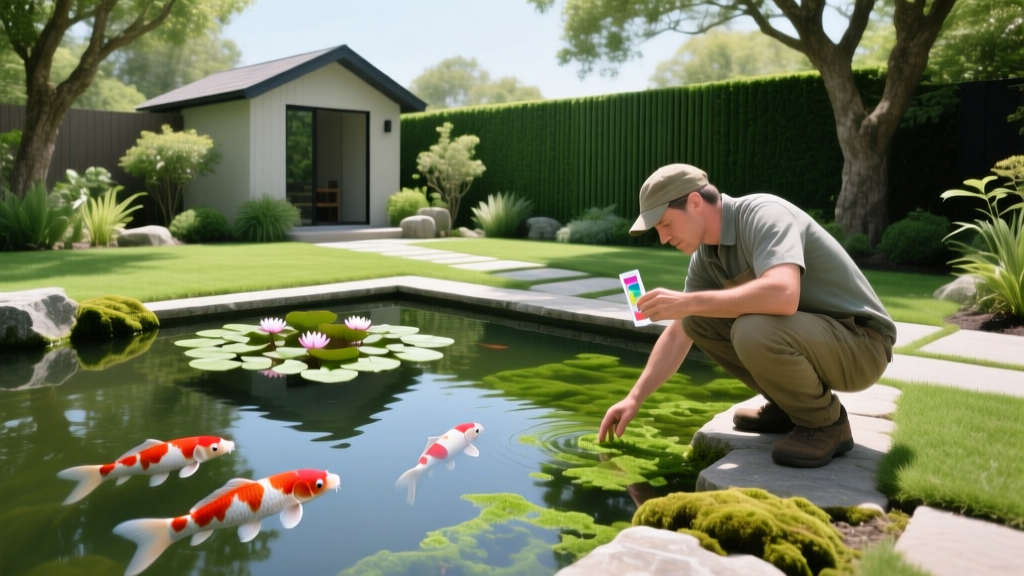
Diagnosing and Fixing Common Coy Fish Pond Water and Health Problems
Homeowners frequently search for 'coy fish pond' troubleshooting when their prized koi (Cyprinus rubrofuscus) exhibit sudden distress or when water quality rapidly degrades. While 'coy fish' is a common phonetic misspelling of koi, the biological and chemical realities of managing these high-bioload ornamental ponds remain identical. A mature backyard pond is a closed aquatic ecosystem where filtration, water chemistry, and structural integrity must remain perfectly balanced. When one variable fails, the resulting cascade can be fatal to your fish within hours.
This diagnostic guide bypasses generic advice to provide exact water parameter thresholds, specific product recommendations, and step-by-step triage protocols for the most critical coy fish pond emergencies.
Emergency Triage: The 5-Minute Response Protocol
If your fish are 'piping' (gasping at the surface) or flashing (scraping against rocks), execute these steps immediately before testing water:
- Aerate: Turn off UV clarifiers and submersible pumps. Point a garden hose directly at the pond surface to create heavy agitation and dissolve atmospheric oxygen.
- Detoxify: Dose a liquid water conditioner containing sodium thiosulfate (e.g., Seachem Prime Pond, approx. $22 per 500ml) to instantly bind free ammonia and neutralize chlorine if a recent top-off triggered the spike.
- Halt Feeding: Stop all feeding for a minimum of 72 hours. Koi can survive weeks without food, but digestion halts in poor water quality, and uneaten food accelerates ammonia production.
Water Chemistry: Decoding the Invisible Killers
Visual inspection of a coy fish pond is useless for detecting ammonia or nitrite toxicity. You must use a liquid drop-based reagent kit. Strip tests degrade rapidly in outdoor humidity and yield false negatives. The industry standard is the API Pond Master Liquid Test Kit (retailing around $28 as of 2026), which accurately measures pH, ammonia, and nitrite.
According to Texas A&M Agrilife Extension, maintaining strict water parameter thresholds is the primary defense against opportunistic bacterial infections. Use the matrix below to diagnose your test results:
| Parameter | Ideal Range | Danger Threshold | Corrective Action |
|---|---|---|---|
| Ammonia (NH3) | 0.0 ppm | > 0.25 ppm | 25% water change; dose ammonia binder. |
| Nitrite (NO2) | 0.0 ppm | > 0.50 ppm | Add 1 tbsp of aquarium salt per 100 gallons to block gill uptake. |
| pH | 7.5 - 8.2 | < 6.8 or > 9.0 | Adjust KH first; never use chemical pH adjusters in outdoor ponds. |
| KH (Carbonate) | 120 - 180 ppm | < 80 ppm | Dissolve 1/2 cup baking soda per 1,000 gallons to raise KH by ~35 ppm. |
The Hidden Danger: pH Crashes and KH Depletion
Many pond owners ignore Carbonate Hardness (KH). The biological filtration process (nitrification) consumes alkalinity at a rate of roughly 7.14 mg of alkalinity for every 1 mg of ammonia oxidized. In heavily stocked coy fish ponds, KH can drop to zero, causing the pH to crash below 6.0 overnight. This stalls the beneficial bacteria, leading to a massive ammonia spike. Test KH bi-weekly and maintain it above 120 ppm using standard sodium bicarbonate (baking soda).
Is It a Leak or Evaporation? The 24-Hour Bucket Test
During peak summer months, a coy fish pond can lose up to 1.5 inches of water per day to evaporation and splashing. Misdiagnosing evaporation as a structural leak leads to unnecessary liner tearing. Perform the 24-hour bucket test to isolate the issue:
- Setup: Fill a clean 5-gallon plastic bucket with pond water to within 2 inches of the rim.
- Placement: Place the bucket on the second or third shelf of the pond so it experiences the exact same ambient temperature and wind exposure as the main body of water.
- Marking: Use a waterproof marker or duct tape to mark the water level on the inside of the bucket and the pond water level on the outside of the bucket.
- Wait: Turn off all waterfalls, fountains, and auto-fill valves for exactly 24 hours.
- Diagnose: If the pond level drops significantly further than the bucket level, you have a physical leak in your 45-mil EPDM liner or a failing plumbing joint.
The Fix: For physical liner tears, drain the immediate area and apply a 45-mil EPDM patch kit (such as the Firestone PondGard repair kit, approx. $35). Clean the area with a specialized EPDM primer before applying the peel-and-stick patch to ensure a permanent vulcanized bond.
Filtration Bottlenecks and UV Clarifier Sizing
If your water parameters are stable but the pond resembles pea soup, your mechanical and biological filtration is undersized, or your UV clarifier is failing. As noted by Oklahoma State University Extension, poor water clarity often masks early signs of parasitic infections like Ich or Flukes, making visual fish health monitoring impossible.
Right-Sizing Your UV Clarifier
UV clarifiers destroy suspended single-celled algae by rupturing their cell walls. However, manufacturers often rate their units for 'light bio-load' garden ponds. A coy fish pond generates massive organic waste. The Golden Rule: Double the manufacturer's recommended wattage for koi ponds. You need roughly 2 watts of UV per 100 gallons of water.
- 1,000-Gallon Pond: Requires a 20W UV unit (e.g., Tetra UV Clarifier, ~$110).
- 2,500-Gallon Pond: Requires a 50W+ UV unit (e.g., Aqua UV Classic 57W, ~$340).
Pro Tip: UV bulbs degrade over time even if they still emit visible purple light. The UVC output drops below the threshold required to clump algae after 12 months. Replace the bulb annually, regardless of visual output.
String Algae vs. Suspended Green Water: A Targeted Approach
Do not confuse suspended green water (phytoplankton) with string algae (filamentous Cladophora). They require entirely different treatment protocols.
| Algae Type | Visual Symptom | Root Cause | Targeted Solution |
|---|---|---|---|
| Suspended Green Water | Opaque, pea-soup water; cannot see fish below 6 inches. | Lack of UV clarification; excess dissolved organics. | Install/upgrade UV clarifier; clean mechanical filter mats. |
| String Algae | Long, hair-like green strands clinging to rocks and waterfalls. | High phosphates; slow water flow in shallow areas. | Manual removal; install Aquascape IonGen 2 electronic ionizer (~$120). |
When using electronic ionizers for string algae, monitor your copper levels. While highly effective at eliminating filamentous algae, copper accumulates in the sediment and can become toxic to aquatic plants like water lilies if the probe degrades too quickly.
Long-Term Maintenance Summary
A healthy coy fish pond relies on proactive monitoring rather than reactive chemical dumping. Test your water weekly during the spring and fall temperature transitions, maintain your KH above 120 ppm, and replace your UV bulb every spring. By mastering these core diagnostic pillars, you will prevent 90% of the catastrophic fish kills and water quality failures that plague novice pond keepers.

