
Landscaping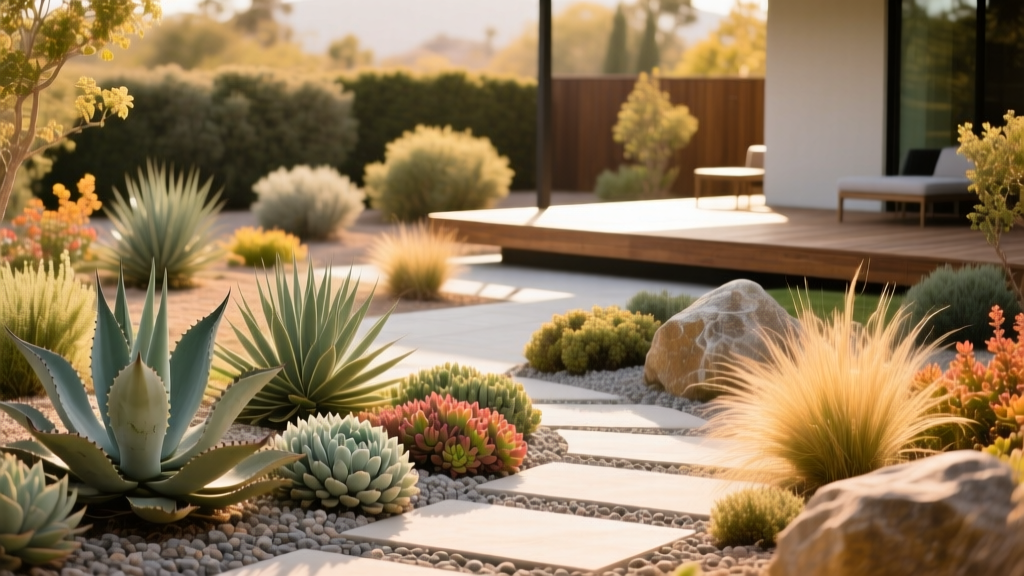
Define Xeriscape: Practical Steps for a Drought-Tolerant Yard
What Does It Mean to Define Xeriscape?
To properly define xeriscape, we must look past the common misconception of barren, rocky "zeroscapes." Coined by Denver Water in 1981, the term derives from the Greek word xeros, meaning dry. Xeriscaping is a comprehensive landscape design philosophy that reduces or eliminates the need for supplemental irrigation by utilizing drought-tolerant plants, strategic hydrozoning, and soil optimization. According to the EPA WaterSense program, outdoor water use accounts for nearly 30% of total household water consumption, making xeriscape transitions one of the most impactful residential conservation projects available today.
Core Concept: Xeriscape does not mean "no water." It means efficient water. A well-designed xeriscape uses up to 60% less water than a traditional turfgrass lawn while maintaining high curb appeal and ecological value.
Step 1: Site Analysis and Hydrozoning
The foundation of any successful xeriscape is hydrozoning—the practice of grouping plants with similar water requirements together. This prevents overwatering drought-tolerant species and underwatering thirsty ones.
- Zone 1 (The Oasis): High-traffic areas near patios or entryways. These zones receive runoff from downspouts and can support moderate-water plants like Hydrangea quercifolia (Oakleaf Hydrangea) or small turf islands.
- Zone 2 (The Transition): Areas visible from the home but rarely walked on. Use low-water plants that require deep, infrequent watering once established. Examples include Salvia greggii (Autumn Sage) and Muhlenbergia rigens (Deergrass).
- Zone 3 (The Minimal Zone): Perimeter edges, parkways, and sloped areas. Rely entirely on native, drought-adapted species that survive on natural rainfall after a one-year establishment period, such as Agave parryi or Yucca rostrata.
Step 2: Soil Preparation and Amendment
Drought-tolerant plants fail most often not from lack of water, but from root rot caused by poor drainage. Native desert and Mediterranean plants require porous, fast-draining soil profiles.
- For Heavy Clay Soils: Incorporate 3 cubic yards of expanded shale or pumice per 1,000 square feet, tilled to a depth of 8 inches. Never add sand to clay, as this creates a concrete-like matrix that suffocates roots.
- For Sandy Soils: Amend with 2 inches of fully decomposed organic compost to increase water retention capacity without compromising drainage.
- Grading: Create subtle swales (shallow depressions) to capture rainwater runoff and direct it toward the root zones of Zone 2 and Zone 3 plants.
Warning: Avoid using heavy, moisture-retaining topsoil mixes labeled for "vegetable gardens" or "flower beds" when planting succulents and agaves. These mixes retain too much moisture and will cause crown rot within the first wet season.
Step 3: Plant Selection Matrix
Selecting the right plant for the right hydrozone is critical. The University of California WUCOLS database remains the gold standard for classifying landscape species by water needs. Below is a practical matrix for 2026 xeriscape installations in USDA Zones 7-9.
| Botanical Name | Common Name | Hydrozone | Mature Size | Est. Cost (2026) |
|---|---|---|---|---|
| Agave parryi | Parry's Agave | Zone 3 (Very Low) | 2' x 3' | $45 - $65 (5 gal) |
| Salvia greggii | Autumn Sage | Zone 2 (Low) | 3' x 3' | $18 - $24 (1 gal) |
| Muhlenbergia rigens | Deergrass | Zone 2 (Low) | 4' x 4' | $25 - $35 (5 gal) |
| Ceanothus 'Concha' | California Lilac | Zone 3 (Very Low) | 6' x 8' | $55 - $85 (15 gal) |
| Aloe striata | Coral Aloe | Zone 1 (Moderate) | 2' x 2' | $20 - $30 (2 gal) |
Step 4: Precision Irrigation and Mulching Execution
Xeriscapes still require irrigation during the first 12 to 18 months of establishment. However, traditional spray heads are highly inefficient due to wind drift and evaporation.
Drip System Specifications
Install sub-surface or point-source drip irrigation. Use Netafim Techline CV tubing with integrated check valves to prevent low-head drainage on slopes. For individual shrubs and agaves, use adjustable button emitters rated at 0.9 to 2.0 Gallons Per Hour (GPH). Connect the system to a smart weather-based controller (such as the Rachio 3 or Hunter Hydrawise) that automatically scales back watering based on local evapotranspiration (ET) data.
Mulching Rules
Mulch is the unsung hero of xeriscaping, reducing soil surface evaporation by up to 70%. However, the type of mulch must match the plant palette:
- Inorganic (Decomposed Granite / Crushed Rock): Apply a 2-to-3-inch layer of 3/4-inch minus DG for succulents, cacti, and Mediterranean herbs. Rock mulch reflects heat and keeps the crowns of rot-prone plants dry.
- Organic (Shredded Cedar / Bark): Apply a 3-to-4-inch layer for native shrubs, ornamental grasses, and Zone 1 oasis plants. Organic mulch breaks down over time, feeding soil microbes.
Critical Detail: Always maintain a 2-inch "mulch-free donut" directly around the base stem (crown) of every plant to prevent fungal collar rot.
Budgeting: 2026 Xeriscape Installation Costs
Transitioning from turf to xeriscape requires upfront capital but yields rapid ROI through reduced water bills and maintenance. Below is an average cost breakdown per square foot for a professional-grade residential conversion in 2026.
| Project Phase | Material Cost (per sq ft) | Labor Cost (per sq ft) | Total Est. Cost |
|---|---|---|---|
| Turf Removal & Disposal | $0.10 | $1.50 - $2.20 | $1.60 - $2.30 |
| Soil Amendment & Grading | $0.40 | $1.20 - $1.80 | $1.60 - $2.20 |
| Drip Irrigation Install | $0.80 | $1.50 - $2.00 | $2.30 - $2.80 |
| Plants & Mulch (DG/Bark) | $2.50 - $4.00 | $2.00 - $3.50 | $4.50 - $7.50 |
| Total Project Average | $3.80 - $5.30 | $6.20 - $9.50 | $10.00 - $14.80 |
Pro Tip: Check with your local water district before breaking ground. Many municipalities offer turf-replacement rebates ranging from $2.00 to $4.00 per square foot of removed grass, which can offset 30% to 50% of your total installation costs.
Frequently Asked Questions
Do xeriscapes require zero maintenance?
No. While they eliminate mowing, edging, and fertilizing, xeriscapes require seasonal maintenance. This includes cutting back ornamental grasses in late winter, deadheading perennials, replenishing organic mulch every 2-3 years, and flushing drip irrigation lines annually to prevent emitter clogging from mineral buildup.
Can I convert my existing lawn to a xeriscape without digging it up?
Yes, using a technique called sheet mulching. Mow the grass as short as possible, lay down overlapping layers of heavy-duty cardboard, wet it thoroughly, and cover it with 4 to 6 inches of wood chip mulch. Wait 3 to 4 months for the turf to decompose naturally before planting. This preserves the existing soil microbiome and avoids the expense of hauling away sod.
How does Denver Water's original definition apply to humid climates?
While Denver Water coined the term for arid regions, the 7 principles of xeriscape apply universally. In humid climates (like the US Southeast), defining xeriscape means selecting deep-rooted, native plants that survive summer droughts without supplemental irrigation, thereby reducing reliance on municipal water during peak heat months.

