
Landscaping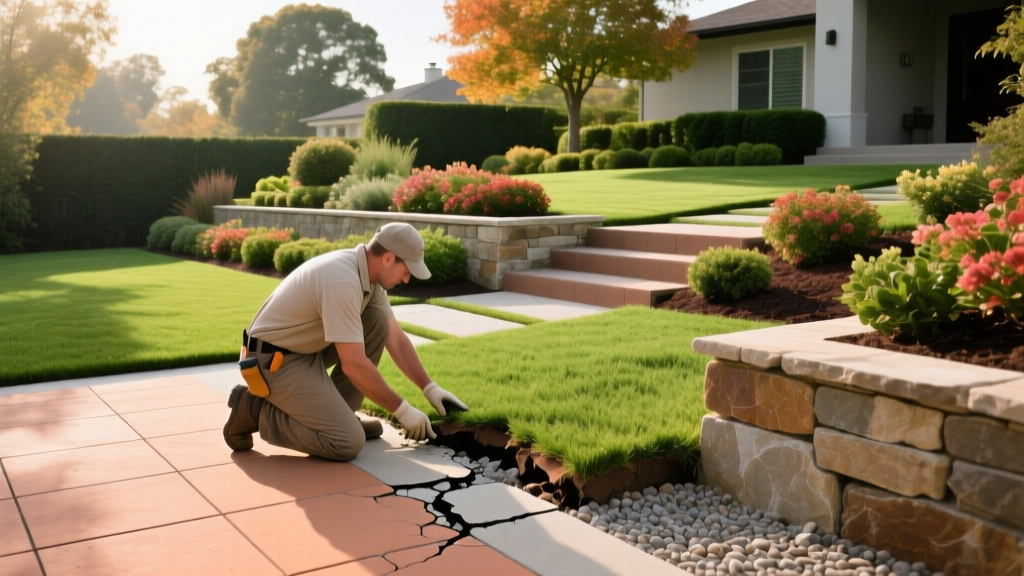
Diagnosing and Fixing Failing Hardscapes in Quality Landscaping
Investing in quality landscaping significantly elevates property value and outdoor livability, but even premium installations degrade when underlying structural or environmental flaws go unaddressed. Homeowners often mistake surface-level wear for normal aging, missing the critical diagnostic signs of base failure, hydrostatic pressure buildup, and soil chemistry imbalances. True quality landscaping relies on rigorous adherence to engineering standards beneath the surface. When patios shift, retaining walls bulge, or adjacent softscapes decline, the root cause is almost always a failure in subsurface preparation or drainage management.
The Hardscape Failure Diagnostic Matrix
Before excavating or applying surface patches, conduct a systematic field assessment. The following matrix isolates the most common structural failures in premium hardscape installations, mapping visual symptoms to their subsurface root causes and required diagnostic tests.
| Visual Symptom | Probable Root Cause | Field Diagnostic Test |
|---|---|---|
| Localized paver subsidence (birdbaths) | Base aggregate washout or poor compaction | Remove 3 pavers; probe base with rebar for soft spots or voids |
| Retaining wall bulging or shear cracking | Hydrostatic pressure exceeding geogrid tensile strength | Check weep holes for flow; inspect behind wall for ASTM #57 stone |
| Polymeric sand washout and weed intrusion | Improper joint depth or premature water activation | Measure sand depth; must be 1/8-inch below paver chamfer |
| Efflorescence (white powdery residue) | Water migrating through porous concrete carrying soluble salts | Trace water source; check adjacent grading and downspout routing |
Retaining Wall Shear and Hydrostatic Failures
Segmental retaining walls (SRWs) are a hallmark of quality landscaping, yet they are highly susceptible to hydrostatic pressure. Water weighs 62.4 pounds per cubic foot. When the soil behind a wall becomes saturated and lacks proper drainage, the lateral pressure can easily exceed the structural capacity of the wall blocks and geogrid reinforcement, resulting in bulging, overturning, or catastrophic shear failure.
According to guidelines from the National Concrete Masonry Association (NCMA), walls taller than 4 feet require engineered geogrid reinforcement. If a wall is failing, diagnose the backfill material. Many failing walls were backfilled with native clay or poorly graded gravel, which retains water. The correct specification is ASTM #57 (3/4-inch clear crushed stone) placed in a 12-inch column directly behind the wall blocks.
Step-by-Step Wall Bulge Repair
- Excavate the Surcharge: Remove soil and hardscape materials from the top of the wall to eliminate the surcharge load.
- Dismantle to the Failure Plane: Remove blocks from the top down until you reach the course where the bulge originates.
- Rebuild the Drainage Column: Excavate 12 inches behind the wall face. Install a 4-inch perforated PVC pipe at the base, sloped at 1/8-inch per foot to daylight, and backfill strictly with ASTM #57 clear stone.
- Re-tension Geogrid: If the existing geogrid (typically ASTM D4439 biaxial or uniaxial polyester) is degraded or pulled from the blocks, replace it, ensuring it extends back into the soil mass at least 60% of the wall's total height.
Paver Subsidence and Base Compaction Standards
Interlocking concrete pavers installed to Interlocking Concrete Pavement Institute (ICPI) standards should not shift or settle. When pavers sink, creating trip hazards and pooling water, the failure lies in the base aggregate. Quality landscaping requires a minimum 6-inch base of crushed angular aggregate (ASTM C33 or similar) for pedestrian traffic, and 8 to 10 inches for vehicular driveways.
The critical failure point is compaction density. The base must be compacted to a minimum 95% Standard Proctor density. If a patio is sinking near the house foundation, it is often due to the "overdig" zone where foundation excavators backfilled with loose soil instead of compacting in 2-inch mechanical lifts. To fix localized subsidence without a full tear-out, pull the affected pavers, add 1 inch of ASTM C33 concrete sand (never use masonry sand, which retains moisture and frost-heaves), screed the bedding layer, and re-compact the base using a reversible plate compactor generating at least 5,000 pounds of centrifugal force.
Softscape Decline: The Hidden Cost of Concrete Leaching
A frequently misdiagnosed problem in quality landscaping is the sudden decline of turf or ornamental plants immediately adjacent to new concrete patios, walkways, or retaining walls. As concrete cures and weathers, it leaches calcium hydroxide (lime) into the adjacent soil, drastically raising the soil pH. Most turfgrasses and ornamentals require a slightly acidic pH of 6.0 to 6.8. When the pH spikes above 7.5, essential micronutrients like iron and manganese become chemically locked, causing severe chlorosis (yellowing) and stunted growth.
Diagnostic Warning: If turf bordering a hardscape is yellowing despite adequate irrigation and nitrogen fertilization, conduct a soil pH test. The Environmental Protection Agency (EPA) notes that soil chemistry alterations from construction materials can persist for years. To correct high pH, apply elemental sulfur at a rate of 1 pound per 100 square feet to lower the pH by approximately 1.0 point. Incorporate it into the top 2 inches of soil and water deeply.
Repair vs. Replace: 2026 Cost Benchmarking
Deciding whether to repair a failing hardscape or completely replace it requires evaluating the extent of the subsurface failure. Use the following 2026 benchmark data to guide your financial decision-making.
| Project Scope | Targeted Repair Cost | Full Replacement Cost | Replacement ROI Threshold |
|---|---|---|---|
| Paver Patio Re-leveling (per sq. ft.) | $4.50 - $7.00 | $18.00 - $28.00 | Repair if failure covers < 25% of total area |
| Retaining Wall Rebuild (per sq. ft. of face) | $45.00 - $65.00 (partial) | $85.00 - $125.00 | Replace if geogrid is missing in > 50% of courses |
| French Drain Installation (per linear ft.) | $22.00 - $35.00 | N/A (New addition) | Mandatory if hydrostatic pressure is causing wall shear |
| Polymeric Sand Re-application (per sq. ft.) | $1.50 - $2.50 | N/A | Repair only; ensure joints are blown completely clean first |
Maintaining the structural integrity of your outdoor spaces requires looking past the surface. By applying rigorous diagnostic testing, adhering to ASTM material specifications, and addressing subsurface hydrostatic and chemical imbalances, you can rescue failing installations and restore the true value of your landscape investment.

