
Landscaping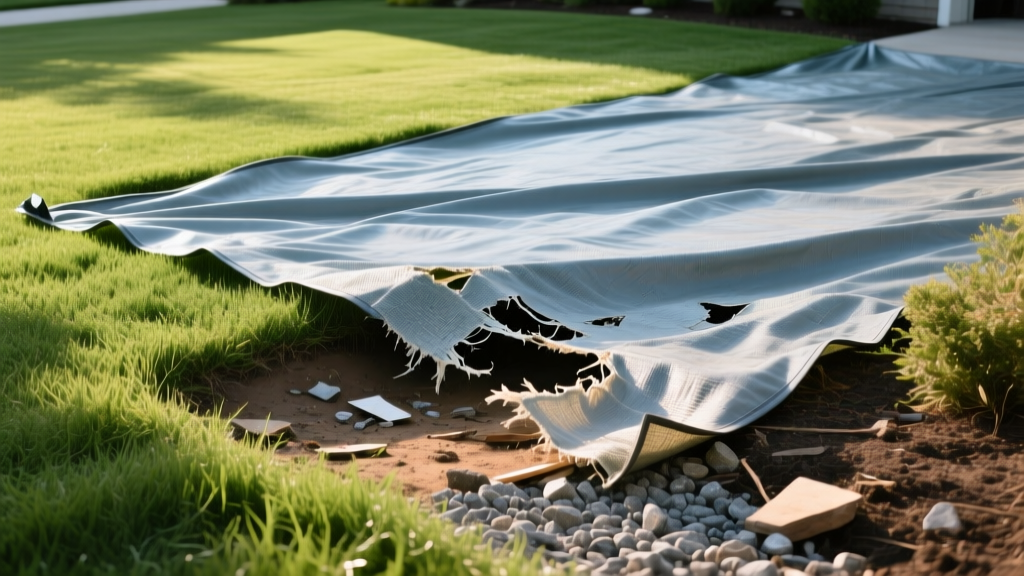
Landscape Tarp Failures: Diagnosing Tears, UV Rot, and Wind Lift
The Hidden Cost of Improper Tarp Selection
A failed landscape tarp does not just expose your materials to the elements; it actively damages your project. When a 5-mil polyethylene tarp disintegrates over a cured concrete patio base, it leaves micro-plastics in the aggregate. When an impermeable tarp traps anaerobic moisture over a newly seeded lawn, it breeds Pythium blight and rots the root zone. Diagnosing the exact failure mode of your tarp is the first step toward selecting a material engineered for your specific environmental stressors.
Diagnostic Warning: If your tarp is flaking white dust or snapping when folded, it has suffered UV polymer chain scission. No amount of patching will restore its tensile strength; the material must be replaced with a UV-stabilized alternative.
Symptom 1: UV Brittleness and Micro-Tearing
The Diagnosis
Standard blue and silver poly tarps (typically 5 to 6 mil thick) are manufactured from low-density polyethylene (LDPE) without adequate UV inhibitors. Under direct summer sunlight, UV radiation breaks the polymer chains. Within 30 to 45 days, the tarp loses its flexibility, becoming brittle and susceptible to tearing from minor abrasions like shifting gravel or dried soil clods.
The Material Fix
For projects requiring extended sun exposure—such as long-term topsoil stockpiling or winterizing hardscape materials—upgrade to woven polyethylene. Woven poly tarps feature a high-density polyethylene (HDPE) mesh core laminated between two LDPE sheets. Look for a minimum thickness of 10 to 12 mil and verify the manufacturer specifies 'UV-stabilized' or 'UV-treated' for a minimum of 12 months. While a standard 10x12 blue poly tarp costs roughly $15, a 10x12 woven poly tarp costs between $35 and $45, but it will outlast the cheap alternative by a factor of four.
Symptom 2: Wind Lift and Grommet Blowout
The Diagnosis
A 10x10 foot solid tarp acting as a sail in a 20 mph wind generates approximately 60 pounds of uplift force. If the tarp features cheap, stamped aluminum grommets spaced 36 inches apart, the concentrated stress will tear the grommets directly through the hem. This failure is exacerbated when homeowners use rigid ropes instead of elastic tie-downs, transferring sudden wind gusts directly to the grommet without shock absorption.
The Material Fix
For high-wind zones or elevated applications (like covering a pergola or roof garden), you must reduce the wind load coefficient. Use wind-vented landscape tarps, which feature integrated mesh panels that allow air to pass through, reducing uplift force by up to 40%. If a solid tarp is required, mandate PVC-coated polyester (18 to 22 mil) with brass or rust-proof steel grommets spaced no more than 18 inches apart.
"Never anchor a heavy-duty tarp with rigid nylon rope. The lack of elasticity creates a shock-load during wind gusts that will rip even reinforced hems. Always use EPDM rubber bungee cords or heavy-duty shock cords to absorb kinetic wind energy."
Wind Uplift vs. Tarp Porosity Matrix
| Tarp Type | Porosity | Uplift Reduction (at 20mph) | Best Application |
|---|---|---|---|
| Solid PVC-Coated | 0% | 0% (Maximum Sail Effect) | Material storage, equipment cover |
| Woven Poly (Standard) | 1-3% | ~5% | Soil mounds, short-term ground cover |
| Shade Cloth (70%) | 30% | ~25% | Plant protection, greenhouse shading |
| Wind-Vented Mesh | 50-60% | ~45% | Scaffolding, pergola roofs, fencing |
Symptom 3: Moisture Trapping and Anaerobic Soil Rot
The Diagnosis
Using a solid, impermeable tarp to smother weeds or winterize a garden bed often results in a foul, sulfur-like odor when removed. This is hydrogen sulfide gas, a byproduct of anaerobic bacteria thriving in the oxygen-deprived, moisture-locked environment beneath the plastic. According to research on soil ecology and landscape fabrics from the University of Minnesota Extension, prolonged use of impermeable plastics degrades soil structure and kills beneficial mycorrhizal fungi.
The Material Fix
If the goal is weed suppression without soil sterilization, abandon solid tarps entirely. Use spunbond polypropylene landscape fabric (minimum 3.2 oz per square yard) which allows water and gas exchange while blocking photosynthesis in weeds. If you must use a tarp for winter frost protection over sensitive shrubs, use micro-perforated polyethylene or traditional burlap, which provides thermal insulation while allowing the plant to respire.
Symptom 4: Chemical Leaching in Edible Beds and Ponds
The Diagnosis
Recycled PVC tarps and cheap polyethylene often contain phthalates (plasticizers), heavy metals (like lead in older pigments), and unreacted monomers. When used to line a backyard koi pond or cover a raised vegetable bed, solar heating accelerates the leaching of these chemicals into the water and soil. The Cornell University Integrated Pest Management program emphasizes the importance of using appropriate, non-toxic barriers in sensitive agricultural and ecological zones.
The Material Fix
For potable water, koi ponds, and direct contact with edible garden soil, you must use food-grade High-Density Polyethylene (HDPE) or EPDM rubber liners (45-mil minimum for ponds). EPDM is highly stable, UV resistant, and completely inert in water, though it costs approximately $0.75 to $1.10 per square foot. Never use a standard hardware store PVC tarp for any application involving standing water or food-producing soil.
The 2026 Landscape Tarp Diagnostic Matrix
Use this matrix to match your specific landscape problem to the exact material specification required for a permanent fix.
| Landscape Problem | Required Material | Min. Thickness | Est. Cost (per sq ft) | Expected Lifespan |
|---|---|---|---|---|
| Soil Solarization (Weed/Pathogen Kill) | Clear LDPE (Anti-drip coated) | 2 to 4 mil | $0.03 - $0.05 | 6-8 weeks (Single use) |
| Long-Term Topsoil/Mulch Stockpiling | Woven HDPE with UV inhibitors | 10 to 12 mil | $0.12 - $0.18 | 2 to 3 years |
| Heavy Equipment / Lumber Covering | PVC-Coated Polyester | 18 to 22 mil | $0.30 - $0.45 | 5 to 7 years |
| Koi Pond / Water Feature Lining | EPDM Rubber (Fish-safe) | 45 mil | $0.85 - $1.20 | 20+ years |
Pro-Tip: The 'Duck Tape and Rebar' Anchor Method for Slopes
When anchoring tarps on graded slopes or retaining wall backfills, standard landscape staples will pull out under the sheer weight of water runoff. Use this heavy-duty anchoring protocol:
- Reinforce the Hem: Apply a 3-inch strip of acrylic-based outdoor mounting tape or heavy-duty duct tape along the entire perimeter hem of the tarp. This distributes the puncture load.
- Create Anchor Loops: Fold the reinforced hem over a 2-inch PVC pipe cap and secure it with a zip-tie, creating a reinforced loop every 3 feet.
- Drive Rebar Pins: Drive 24-inch lengths of 3/8-inch steel rebar into the ground at a 45-degree angle (pointing away from the tarp) through the PVC loops.
- Cap the Rebar: Place bright orange safety caps on the exposed rebar ends to prevent severe puncture wounds during landscape maintenance.
By matching the exact environmental stressor to the correct polymer chemistry and structural design, you eliminate the recurring cycle of replacing degraded tarps and repairing damaged landscape materials.

