
Landscaping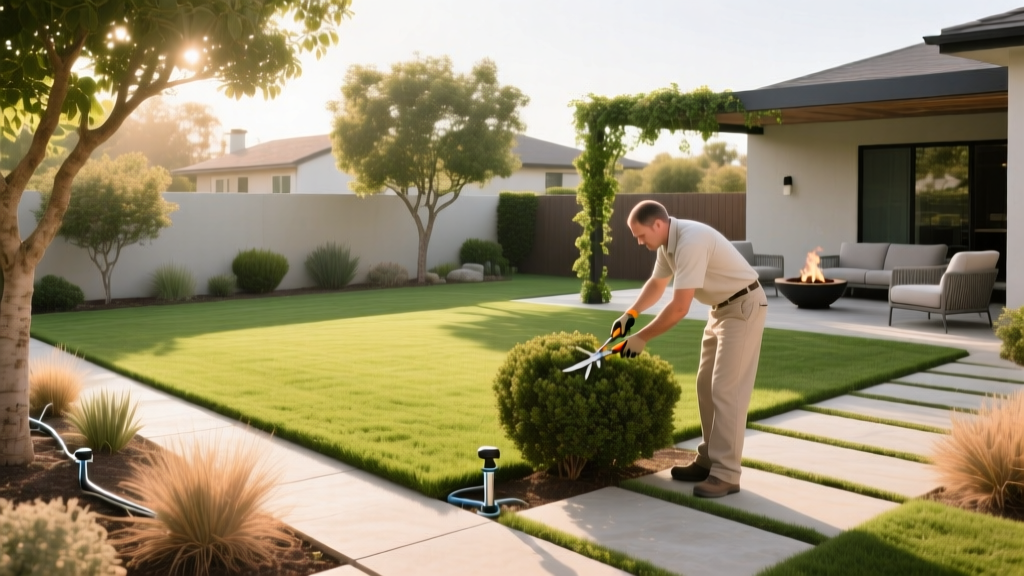
Fixing High-Maintenance Yards: Easy Upkeep Landscaping Solutions
Diagnosing the Root Causes of Landscape Burnout
Most homeowners inherit a landscape designed purely for initial curb appeal, not long-term livability. The result is a weekend trap: 4 to 6 hours a week spent mowing, edging, weeding, and pruning. According to the EPA WaterSense program, outdoor water use accounts for nearly 30% of total household consumption, with a massive portion wasted on high-maintenance, poorly sited turfgrass. Transitioning to easy upkeep landscaping is not about paving over your yard with concrete; it is about diagnosing specific maintenance failures and applying targeted, structural solutions.
Below is a diagnostic framework to identify the exact symptoms draining your time and budget, paired with actionable, professional-grade fixes.
Symptom 1: The Thirsty, Fast-Growing Turf Trap
The Problem
You are mowing Kentucky Bluegrass or Tall Fescue in a climate that requires constant supplemental irrigation, or you are battling invasive warm-season grasses that creep into your flower beds every time you turn your back. Standard turfgrass demands weekly mowing, seasonal aeration, and heavy fertilization.
The Fix: Transition to Low-Input Lawn Alternatives
Replace high-maintenance turf in low-traffic areas with drought-tolerant, slow-growing groundcovers. According to research highlighted by the University of Minnesota Extension, alternative lawns can reduce water usage by up to 75% while eliminating the need for chemical fertilizers.
- For Warm Climates (Zones 8-11): Plant Kurapia (Lippia nodiflora) or UC Verde Buffalograss. Kurapia grows to only 3 inches tall, requires mowing just once a month (or never), and uses 60% less water than traditional fescue.
- For Cool Climates (Zones 3-7): Transition to a fine fescue mix (Creeping Red, Chewings, and Hard fescues). These grasses grow slowly, require minimal nitrogen (1 lb per 1,000 sq ft annually), and can be left unmowed for a natural meadow look or mowed monthly for a clean aesthetic.
Pro Tip for Turf Removal: Do not use chemical herbicides to kill existing grass if you plan to plant immediately. Use soil solarization: mow the grass to 1 inch, water deeply, and cover with 2-mil clear UV-resistant plastic for 4 to 6 weeks during peak summer heat. This cooks the turf and weed seeds to a depth of 6 inches without leaving chemical residue.
Symptom 2: Mulch Beds That Turn Into Weed Farms
The Problem
You lay down cheap shredded hardwood mulch from a big-box store, only to watch it fade to gray, decompose into soil, and sprout aggressive weeds within six months. Worse, you likely put down cheap black plastic weed barrier underneath, which tears, blocks water penetration, and creates a muddy anaerobic mess.
The Fix: Arborist Chips and Woven Geotextiles
The Penn State Extension emphasizes that proper mulch depth and material are critical for weed suppression and soil health. Stop using dyed shredded mulch for large beds.
- The Barrier: Rip out the black plastic. Install a professional-grade woven geotextile fabric (such as DeWitt Pro 5 or GroundCover). Woven fabrics allow water and gas exchange while physically blocking weed emergence. Non-woven (spunbond) fabrics clog with dirt within a year and fail.
- The Mulch: Apply 3 inches of coarse arborist wood chips. Coarse chips interlock, resisting wind and water displacement, and break down slowly over 2 to 3 years. Math check: 1 cubic yard of mulch covers exactly 108 square feet at a 3-inch depth. Do not exceed 4 inches, or you will suffocate shallow tree roots.
Symptom 3: Edge Creep and Heaving Borders
The Problem
Plastic bender board heaves out of the ground every winter due to frost, and aggressive grasses like Bermudagrass or Zoysia send rhizomes right under the barrier, invading your pristine mulch beds. You spend hours every spring re-trenching and hammering in plastic stakes.
The Fix: Steel Edging and Concrete Mow Strips
Bermudagrass rhizomes travel at depths of 2 to 6 inches. Standard 3-inch plastic edging is physically incapable of stopping them. You need rigid, deep-set barriers.
| Edging Material | Cost (Per Linear Ft) | Lifespan | Rhizome Blocking Efficacy |
|---|---|---|---|
| Plastic Bender Board | $1.50 - $2.50 | 3 - 5 Years | Poor (Fails against warm-season grass) |
| 14-Gauge Corten Steel | $4.50 - $6.50 | 25+ Years | Excellent (When driven 4" deep) |
| Extruded Aluminum | $3.50 - $5.00 | 15 - 20 Years | Good (Bends under heavy root pressure) |
| 6" Concrete Mow Strip | $8.00 - $12.00 | 50+ Years | Absolute (Allows mower wheels to glide) |
Warning: The Mow Strip Advantage
If you are pouring new concrete borders, install a 6-inch wide, flush-mounted concrete mow strip. This allows one wheel of your push mower to ride on the concrete while the deck cuts the grass, entirely eliminating the need for a string trimmer along the bed edges. This single upgrade cuts weekly edging time by 90%.
If you are pouring new concrete borders, install a 6-inch wide, flush-mounted concrete mow strip. This allows one wheel of your push mower to ride on the concrete while the deck cuts the grass, entirely eliminating the need for a string trimmer along the bed edges. This single upgrade cuts weekly edging time by 90%.
Symptom 4: The "Shearing" Shrub Exhaustion
The Problem
You planted 5-gallon shrubs that were labeled "fast-growing" without checking their mature dimensions. Now, your Ligustrum or standard Ilex glabra (Inkberry) is pushing 8 to 10 feet tall, blocking windows, and requiring aggressive shearing with hedge trimmers every month to maintain a formal shape.
The Fix: Right-Sizing with Dwarf Cultivars
The golden rule of easy upkeep landscaping is spatial compliance: the plant's mature width must be at least 20% less than the available space. If you have a 5-foot gap between the walkway and the foundation, do not plant a shrub that grows 6 feet wide and expect to prune it forever.
- Swap Standard Inkberry (8 ft tall) for 'Gem Box' or 'Strongbox' cultivars, which naturally max out at 2 to 3 feet in a perfect spherical habit without shearing.
- Swap Standard Junipers for 'Blue Star' or 'Squash' varieties that hug the ground and never require pruning.
- Hydrangea Fix: Replace massive Hydrangea macrophylla that flop over with Hydrangea paniculata 'Bobo' or 'Little Lime', which have woody stems that support their own blooms and only require one structural prune in late winter.
The 80/20 Hardscape Transition Strategy
You do not need to overhaul the entire property at once. Apply the 80/20 rule: identify the 20% of your yard that causes 80% of your maintenance headaches. Usually, this is the "hell strip" (the narrow grass between the sidewalk and street), the shaded area under large trees where grass refuses to grow, or the tight side-yard passage.
Convert these specific zones to permeable hardscaping. Use 3/4-inch crushed angular gravel (not round pea gravel, which rolls underfoot) stabilized with a honeycomb geocell grid system. This creates a firm, weed-free walking surface that drains perfectly and requires zero mowing, watering, or edging.
Diagnostic Action Checklist
Before buying any materials, walk your property with this checklist:
- Map the Water: Identify zones where water pools or where sprinklers overspray onto concrete. Re-route or cap those specific heads.
- Audit the Edges: Physically dig a test hole at your bed borders. If grass roots are deeper than your current edging, schedule a steel or concrete upgrade.
- Measure the Shrubs: Look up the exact botanical name and mature size of every foundation shrub. Mark any that will outgrow their space in the next 3 years for removal and replacement with dwarf cultivars.
- Calculate Mulch Needs: Measure your bed square footage and order bulk arborist chips (usually $30-$45 per cubic yard delivered) rather than buying bagged mulch at $6 per cubic foot.
By shifting your focus from reactive maintenance to proactive structural design, you permanently eliminate the root causes of yard work. Easy upkeep landscaping is an investment in heavy materials and precise planning upfront, yielding hundreds of reclaimed hours every single year.

