
Landscaping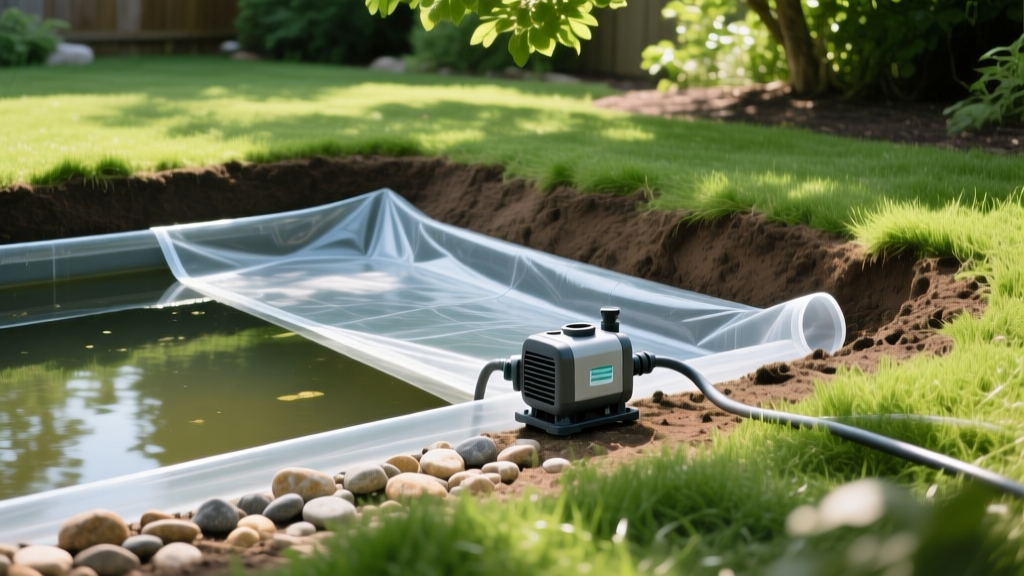
How to Build a Backyard Pond: DIY Liner and Pump Setup Guide
Planning Your Pond: Hydrology, Depth, and Location
Building a water feature is an exercise in balancing structural engineering with aquatic biology. Before breaking ground, you must establish the pond's footprint, depth, and environmental exposure. The ideal location receives 4 to 6 hours of direct sunlight daily—enough to support aquatic plant blooms without triggering aggressive string algae outbreaks. Avoid placing the pond directly beneath deciduous trees; falling autumn leaves will rapidly decompose, spiking ammonia levels and overwhelming your biological filtration.
Climate Depth Rule: If you plan to keep koi or overwinter fish, the pond must have a minimum depth of 24 inches (36 inches in USDA Hardiness Zones 5 and below). This ensures a pocket of unfrozen water at the bottom where fish can enter winter torpor safely.
To calculate your target water volume, use the standard rectangular formula and multiply by 7.48 to convert cubic feet to gallons:
Length (ft) × Width (ft) × Average Depth (ft) × 7.48 = Total Gallons
For example, a 10-foot by 8-foot pond with an average depth of 2 feet holds approximately 1,196 gallons. Always round up your filtration and pump sizing based on this maximum volume.
Material Sizing and Cost Breakdown
Skip preformed plastic shells. They limit your design flexibility and become brittle under UV exposure within a few seasons. A flexible liner system allows for naturalistic contours, terraced plant shelves, and long-term durability. Below is the baseline material list for a 1,000 to 1,500-gallon ecosystem pond.
| Component | Specification | Est. Cost |
|---|---|---|
| Pond Liner | 45-mil EPDM rubber (Fish-safe) | $1.30 / sq ft |
| Underlayment | Non-woven geotextile fabric (8 oz) | $0.45 / sq ft |
| Submersible Pump | Laguna Pressure-Flo 1400 or TetraPond 1200 | $180 - $240 |
| Skimmer Box | Atlantic Water Gardens PS400 Skimmer | $220 - $280 |
| Plumbing | 1.5-inch Schedule 40 PVC and flexible spa hose | $60 - $90 |
Step-by-Step Excavation and Liner Installation
Proper excavation dictates the final aesthetic and biological stability of the pond. Do not dig a simple bowl; incorporate terraced shelves to support marginal plants and provide shallow wading zones.
- Mark the Perimeter: Use a garden hose to outline the pond shape. Spray paint the turf along the hose line.
- Dig the First Shelf: Excavate the entire footprint to a depth of 12 inches. This outer shelf will hold marginal plants like water irises and rushes. Ensure the shelf is perfectly level using a 4-foot carpenter's level.
- Dig the Deep Zone: Mark a smaller inner rectangle and dig down an additional 12 to 24 inches for the deep-water zone. Slope the inner walls at a 20-degree angle to prevent soil collapse.
- Remove Hazards: Extract all sharp stones, roots, and glass. Tamp the soil firmly with a hand tamper to eliminate soft spots that could shift under the weight of 8,000 pounds of water.
- Lay the Underlayment: Roll out the 8 oz non-woven geotextile fabric. Overlap seams by 6 inches. Never use old carpet or newspaper, as these degrade rapidly and fail to protect against root puncture.
- Deploy the EPDM Liner: Unfold the 45-mil EPDM liner loosely over the hole. Do not stretch it. Allow the sun to warm the rubber for 30 minutes, making it pliable. As you fill the pond with a garden hose, gently massage the liner into the corners and shelves.
Liner Sizing Formula: To order the correct liner size, use this exact calculation:
Length: Pond Length + (2 × Max Depth) + 2 feet for overlap.
Width: Pond Width + (2 × Max Depth) + 2 feet for overlap.
Length: Pond Length + (2 × Max Depth) + 2 feet for overlap.
Width: Pond Width + (2 × Max Depth) + 2 feet for overlap.
Plumbing the Pump and Filtration System
Water circulation is the lungs of your pond. Stagnant water breeds mosquitoes and anaerobic bacteria. According to the Environmental Protection Agency (EPA), moving water disrupts the mosquito breeding cycle, making a properly sized pump a critical health and safety component.
Matching Pump GPH to Pond Volume and Head Pressure
Beginners frequently make the mistake of buying a pump based solely on its Gallons Per Hour (GPH) rating at zero head height. If you are pumping water up to a waterfall, you must account for 'head pressure'—the resistance gravity exerts on the water column.
- Base Requirement: Circulate the total pond volume once every two hours. A 1,200-gallon pond requires a minimum flow of 600 GPH at the waterfall's exit.
- Head Height Calculation: Measure the vertical distance from the pond's surface to the top of the waterfall. For every 1 foot of vertical lift, a pump loses approximately 10% to 15% of its advertised flow rate.
- Friction Loss: Add 1 foot of head pressure for every 10 feet of horizontal PVC piping used to connect the pump to the waterfall filter.
For a 1,200-gallon pond with a 3-foot waterfall and 10 feet of piping, your total dynamic head is roughly 4 feet. You will need a pump rated for at least 1,400 GPH at 4 feet of head, such as the Laguna Pressure-Flo 1400, to maintain a vigorous, oxygenating flow.
'Always install a check valve on the discharge side of your submersible pump. When the pump shuts off, water in the plumbing will naturally flow backward into the pond. A check valve prevents this back-siphon, which can drain your waterfall box and flood your pond's perimeter.'
Edging, Aquascaping, and Plant Selection
A successful pond mimics a natural riparian ecosystem. The Texas A&M AgriLife Extension recommends covering 60% to 70% of the pond's surface area with aquatic vegetation to outcompete algae for dissolved nutrients.
The Three Planting Zones
- Marginal Plants (0-6 inches deep): Place these on the 12-inch shelf. Use heavy aquatic planting media (not potting soil, which floats and fouls the water). Excellent choices include Iris pseudacorus (Yellow Flag Iris) and Pontederia cordata (Pickerelweed).
- Deep-Water Plants (12-36 inches deep): Water lilies (Nymphaea) require at least 18 inches of water over their crowns. They provide essential shade, lowering water temperature and denying sunlight to suspended algae.
- Oxygenators (Submerged): Plants like Anacharis (Elodea canadensis) live entirely underwater. They absorb fish waste directly and release oxygen into the water column, supporting beneficial nitrifying bacteria.
For edging, use flat flagstone or slate cantilevered 1 to 2 inches over the water's edge. This hides the EPDM liner, prevents UV degradation, and creates a natural shadow line that deters wading predators.
Common Beginner Mistakes and How to Avoid Them
Even with perfect excavation, biological imbalances can derail a new water feature. Anticipate these three common failure modes:
Predator Vulnerability: Great Blue Herons and raccoons target shallow ponds. If your pond lacks a 2-foot deep central trench where fish can hide, or if the edges slope gently like a beach, predators will wade in easily. Install a motion-activated deterrent or string a heron net during spring and fall migrations.
The 'Pea Soup' Algae Bloom: In the first 4 to 6 weeks, your pond will likely turn green. This is a normal biological phase as the nitrogen cycle establishes. Do not perform massive water changes or dump in chemical algaecides, which will kill your nascent beneficial bacteria. Instead, add beneficial bacteria concentrates (like Microbe-Lift PL), ensure your UV clarifier is properly sized (10 watts per 1,000 gallons), and let the aquatic plants mature.
Overfeeding Fish: If you introduce koi or goldfish, feed them only what they can consume in two minutes. Uneaten food sinks, decays, and converts into phosphates—the primary fuel for hair algae. In water temperatures below 50°F, stop feeding entirely, as the fish's digestive systems shut down.

