
Landscaping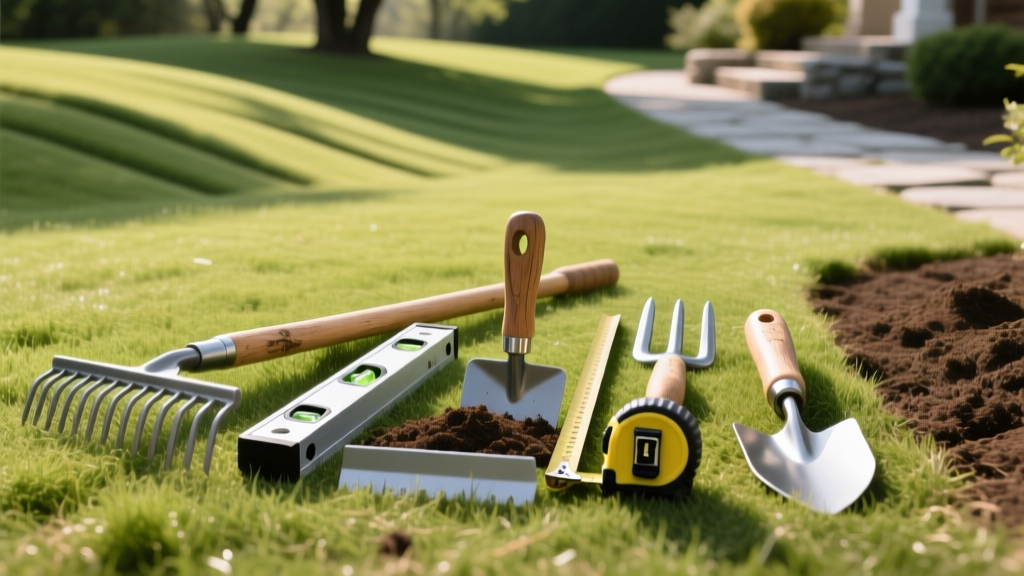
Essential Landscaping Tools List for DIY Hardscape and Grading
Building a Pro-Grade Landscaping Tools List
Executing a complex yard buildout—whether installing a retaining wall, grading a sloped lawn, or laying a flagstone patio—requires more than generic hardware store gear. A specialized landscaping tools list bridges the gap between amateur frustration and professional-grade efficiency. The right tools reduce physical fatigue, ensure structural integrity, and save hundreds of dollars in contractor fees.
This guide breaks down the exact models, material specifications, and pricing for the essential hand tools and power equipment required for heavy-duty hardscape and grading projects. We focus on commercial-grade equipment that withstands high-torque stress and abrasive soil conditions.
Phase 1: Earthmoving, Trenching, and Grading
Before laying base rock or pouring concrete, you must move and grade soil. Standard shovels bend under the lateral torque required for trenching or breaking compacted clay.
The Core Digging and Grading Arsenal
- Rogue HT100 Trenching Hoe ($95): Unlike standard shovels, this heavy-duty hoe features a 4-inch wide, 10-inch long blade forged from high-carbon steel. It is specifically designed for pulling soil out of narrow trenches for irrigation lines or French drains without collapsing the trench walls.
- True Temper 16-Tine Aluminum Grading Rake (Model #1810200, $55): Essential for leveling crushed stone bases and topsoil. The aluminum head prevents rust and reduces weight, while the 16 tines are spaced exactly 1 inch apart to catch debris while letting fine soil pass through.
- Bully Tools 14-Gauge Round Point Shovel ($80): Features a reinforced fiberglass handle and a 14-gauge steel blade. The D-grip design transfers leverage directly to the blade, reducing lower back strain when prying out embedded rocks.
Pro-Tip: Handle Material Selection. Always opt for solid fiberglass or aircraft-grade aluminum handles over traditional ash wood for earthmoving tools. Wood handles absorb moisture, expand, and eventually snap under lateral torque. Fiberglass handles offer a 30% higher yield strength and do not degrade when left in damp soil conditions.
Phase 2: Hardscape and Masonry Essentials
Patios, retaining walls, and walkways require precise mortar application, stone leveling, and joint finishing. Using drywall or standard masonry trowels for hardscape work results in uneven joints and premature structural failure.
Hardscape Tool Comparison Matrix
| Tool Category | Recommended Pro Model | Avg. Price | Primary Application |
|---|---|---|---|
| Brick Trowel | Kraft Tool WL208 (11-inch London Pattern) | $65 | Spreading and shaping mortar for block walls |
| Jointer | Marshalltown 1/2" x 3/4" Sled Runner Jointer | $28 | Compressing and sealing mortar joints against water |
| Paving Mallet | Kraft Tool 3-lb Rubber Paving Mallet | $45 | Seating pavers into sand beds without chipping edges |
| Plate Compactor | Wacker Neuson BP14/45A (Rental) | $85/day | Achieving 95% Proctor density on aggregate base |
According to the National Concrete Masonry Association (NCMA), achieving proper mortar joint compression is critical for retaining wall shear strength. The Marshalltown sled runner jointer compresses the mortar against the concrete block, creating a watertight seal that prevents freeze-thaw spalling in northern climates.
Phase 3: Precision Planting and Bed Preparation
Hardscape transitions into softscape at the mulch beds. Precision cutting and root management require specialized blades that maintain an edge in highly abrasive, silica-heavy soils.
- Nisaku NJP650 Stainless Steel Hori Hori ($35): This Japanese digging knife features a 7-inch dual-edged blade (serrated on one side, straight on the other) with integrated depth measurements stamped into the steel. It is the definitive tool for severing thick perennial roots, dividing hostas, and cutting through compacted clay.
- Felco F-2 Classic Bypass Pruner ($60): The industry standard for clean cuts on branches up to 1 inch in diameter. The hardened steel blade and sap groove prevent the blades from sticking when pruning resinous shrubs like juniper or pine.
- Corona SS 3246 Floral Snips ($22): Essential for deadheading and precise shaping of ornamental grasses where heavy pruners would crush the delicate stems.
Phase 4: Power Equipment Decision Framework
Not every task justifies purchasing heavy machinery. Use this decision matrix to determine when to rent, buy, or rely on manual labor for your landscaping tools list.
Rental vs. Purchase vs. Manual Labor
Scenario: Moving 15 Cubic Yards of Crushed Gravel
- Manual Labor (Wheelbarrow): Requires moving approximately 55 loads. At 3 minutes per load, plus travel time, expect 6-8 hours of grueling labor. High risk of repetitive strain injury. Cost: $0 (if you own the wheelbarrow).
- Rental (Ditch Witch SK350 Mini Skid Steer): Moves 15 yards in under 2 hours. Daily rental rate averages $250-$300, plus $120 for a pallet of base rock. Total cost: ~$370. Verdict: Rent if the budget allows; saves 6 hours of physical toll.
- Purchase (Entry-level Compact Tractor): Costs $12,000+. Only justifiable if you manage over 2 acres or plan multiple large-scale buildouts over the next three years.
Soil Compaction Science
Skipping mechanical compaction is the leading cause of patio settling and retaining wall bulging. The University of Minnesota Extension notes that natural soil settling can take up to seven years to stabilize. A vibratory plate compactor forces aggregate particles into a dense, interlocking matrix, achieving 95% Standard Proctor density in a single afternoon. Hand tampers are only acceptable for small, confined trench backfilling, never for broad patio bases.
Warning: Underground Utilities. Before using the Rogue trenching hoe or renting a mini-excavator, you must call 811 to have local utility lines marked. Striking a buried gas or fiber-optic line can result in catastrophic financial liability and severe injury. Always hand-dig within 24 inches of marked utility lines.
Phase 5: Tool Maintenance and Rust Prevention
High-carbon steel tools will oxidize rapidly if stored damp. Implementing a strict maintenance protocol extends the lifespan of your landscaping tools list investments by decades.
- End-of-Day Cleaning: Use a stiff-bristle wire brush to remove caked clay and mortar. Do not use a pressure washer, as forced water drives moisture into the handle joints and accelerates internal rust.
- Sand-and-Oil Bucket: Fill a 5-gallon bucket with builder's sand and pour in one pint of mineral oil or boiled linseed oil. Plunge the metal heads of your shovels and hoes into the oiled sand 10 times. The sand acts as a mild abrasive to polish the steel, while the oil leaves a micro-thin protective barrier against oxidation.
- Moving Parts: Apply ergonomic-grade dry PTFE lubricant to the pivot bolts of your Felco pruners and loppers. Avoid WD-40, which attracts dust and creates a grinding paste that dulls the blades.
By investing in these specific, commercial-grade models and adhering to strict maintenance protocols, your landscaping tools list will support everything from minor bed edging to full-scale hardscape construction without failure.

