
Landscaping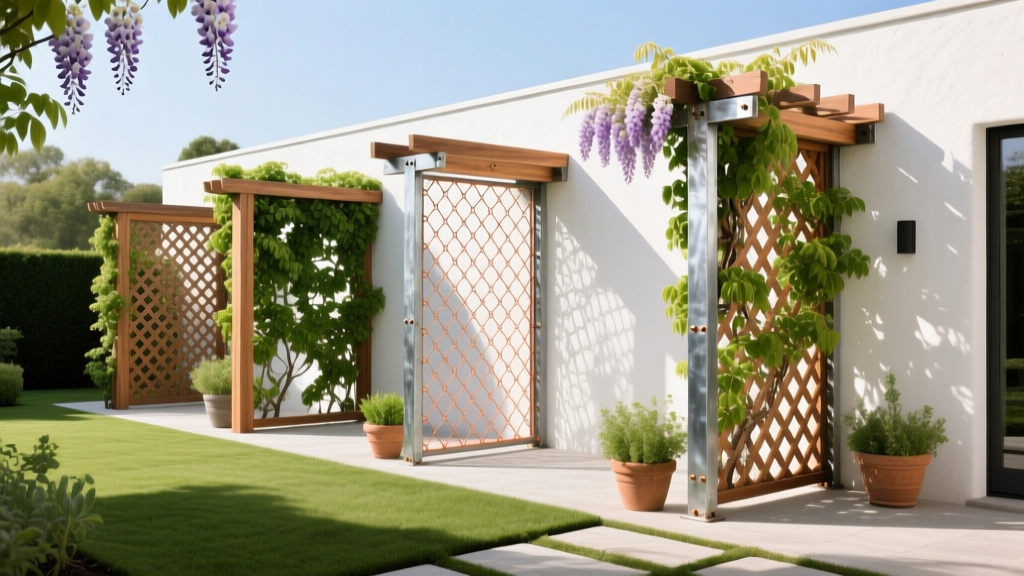
Step-by-Step: 4 Unique Trellis Ideas for Heavy Vines
When searching for unique trellis ideas, most homeowners default to flimsy wooden lattice panels from big-box stores. While adequate for lightweight annuals like sweet peas, standard wood lattice inevitably bows, rots, or snaps under the aggressive weight of perennial climbers like wisteria, climbing hydrangea, or mature jasmine. According to the University of Minnesota Extension, heavy woody vines can easily exceed 200 pounds once fully mature, requiring structural supports that mimic fencing rather than garden decor.
This guide bypasses decorative fluff and provides structural engineering principles, exact material specifications, and step-by-step construction methods for four heavy-duty, architecturally distinct trellis systems. All material costs reflect early 2026 market pricing.
Material Selection Matrix for Heavy Climbers
Before selecting a design, evaluate the structural matrix below. The lifespan and wind-load tolerance of your trellis depend entirely on matching the material to your specific vine's mature weight.
| Material | Est. Cost (4x6 ft) | Lifespan | Max Load Tolerance | Best For |
|---|---|---|---|---|
| 1/2" Type L Copper | $140 - $165 | 50+ Years | 150 lbs (Grid) | Clematis, Honeysuckle, Star Jasmine |
| 16-Ga Cattle Panel | $45 - $60 | 30+ Years | 400+ lbs (Arch) | Wisteria, Kiwi, Grapes, Climbing Roses |
| #5 Rebar & Synth-Hemp | $80 - $110 | 20+ Years | 250 lbs (Suspended) | Trumpet Vine, Virginia Creeper |
| Pressure-Treated Pine | $70 - $90 | 10-15 Years | 200 lbs (Post) | Annuals, Lightweight Perennials |
Project 1: The Copper Pipe & Wire Grid Trellis
Copper offers a striking architectural aesthetic that develops a rich verdigris patina over 3 to 5 years. Unlike PVC or thin aluminum, 1/2-inch Type L copper pipe possesses the rigidity to support dense foliage without sagging, while remaining easy to cut and assemble without specialized welding equipment.
Materials & Tools Required
- 1/2-inch Type L copper pipe (approx. 40 linear feet)
- 1/2-inch copper 90-degree elbows and tee fittings (qty: 16 elbows, 8 tees)
- Oatey lead-free silver solder and flux, or JB Weld SteelStik (for no-heat assembly)
- 14-gauge bare copper wire for internal grid tensioning
- Tube cutter and emery cloth
Assembly Steps
- Cut the Frame: Use a tube cutter to slice the copper pipe into four 6-foot vertical sections and four 4-foot horizontal sections. Deburr the edges with emery cloth to ensure flush fitting joints.
- Dry-Fit the Grid: Assemble the outer rectangle using 90-degree elbows. Insert tee fittings along the vertical posts at 18-inch intervals to accept the horizontal cross-pieces.
- Secure the Joints: If you have a propane torch, flux and solder the joints for permanent rigidity. For a no-heat alternative, knead JB Weld SteelStik epoxy and pack it tightly into the fittings before inserting the pipe. Allow 24 hours to cure.
- Add Internal Tension: Weave 14-gauge copper wire horizontally and vertically through the frame to create a secondary 6-inch grid. This provides the necessary tendril anchors for vines like clematis that cannot wrap around thick 1/2-inch pipes.
- Mounting: Do not bury copper directly in soil, as soil acidity accelerates degradation. Instead, mount the trellis 2 inches off masonry or wood walls using copper standoff brackets, or sleeve the bottom 12 inches in PVC pipe before setting them in concrete footings.
Pro Tip: Copper conducts heat rapidly. In high-sun exposure zones (USDA Zones 8-10), the metal can reach 120°F in mid-July, potentially scorching delicate vine stems. Wrap the lower 18 inches of vertical posts in jute twine to create a thermal buffer where young vines first make contact.
Project 2: The Cor-Ten Steel Cattle Panel Arch
For the heaviest woody vines, such as Wisteria sinensis or actinidia (kiwi), standard garden arches will collapse within three seasons. A 16-gauge galvanized cattle panel, typically used for livestock containment, provides an indestructible, pre-fabricated grid that can be bent into a massive, load-bearing archway.
Materials & Tools Required
- 16-gauge galvanized cattle panel (52 inches wide x 16 feet long)
- Four 8-foot U-channel steel T-posts
- T-post driver and heavy-duty zip ties or 12-gauge galvanized tie wire
- Angle grinder with a metal cutoff wheel (for trimming panel ends)
- Leather heavy-duty work gloves (mandatory)
Construction & Anchoring Protocol
- Prepare the Footings: Drive two 8-foot T-posts into the ground on each side of your desired pathway. Space the posts 48 inches apart laterally, and drive them exactly 24 inches into the soil. The 24-inch depth is critical to resist the lateral wind load of a fully leafed-out canopy.
- Bend the Panel: With a helper, lift the 16-foot cattle panel. Slowly walk toward each other, bending the panel into an arch shape. The 16-gauge steel will resist initially; apply steady, even pressure to avoid kinking the welds.
- Secure to Posts: Slide the arched panel over the T-posts. The bottom 12 inches of the panel should overlap the steel posts. Secure the panel to the T-posts using 12-gauge tie wire twisted tightly with pliers at every intersection point. Do not rely on plastic zip ties, which will degrade under UV exposure and snap under winter ice loads.
- Trim the Overhang: Use an angle grinder to cut off any sharp, protruding wire ends at the base of the arch to prevent lacerations during garden maintenance.
Wind Load Warning: A mature wisteria vine covering a 16-foot arch creates roughly 60 square feet of dense foliage. In a 50 MPH windstorm, this surface area generates over 300 pounds of lateral drag force. If your region experiences frequent high winds, upgrade from standard T-posts to 2.5-inch diameter round steel line posts set in 30-inch deep concrete footings.
Project 3: The Rebar & Synthetic Hemp Suspended Trellis
For modern or brutalist landscape designs, a suspended trellis utilizing exposed masonry anchors and heavy rope creates striking geometric lines. This design relies on structural epoxy and high-tensile synthetic rope rather than rigid frames.
Execution Steps
- Drill Masonry Anchors: Using a hammer drill and a 3/4-inch carbide masonry bit, drill 4-inch deep holes into your stucco or brick exterior wall in a staggered diamond pattern, spaced 24 inches apart.
- Set the Hardware: Inject Simpson Strong-Tie SET-3G epoxy into the holes and insert 1/2-inch threaded rod eye-bolts. The SET-3G epoxy provides over 3,000 PSI of tensile strength in cured concrete, ensuring the anchors will rip the masonry out before the bolt bends.
- String the Grid: Thread 3/8-inch Promanila synthetic hemp rope through the eye-bolts. Do not use natural jute or sisal. Natural fibers absorb moisture and rot internally within 18 to 24 months. Promanila mimics the exact texture and color of natural hemp but is extruded from UV-stabilized polypropylene, guaranteeing a 10+ year lifespan outdoors.
- Tension and Knot: Pull the rope taut and secure it using a bowline knot, which will not slip under the dynamic, oscillating loads caused by wind hitting the vine canopy.
Common Installation Failures & Troubleshooting
Even the most unique trellis ideas will fail if the underlying physics of the landscape are ignored. Review these common failure modes before breaking ground.
- Frost Heave Uplift: In northern climates, soil freezes and expands, pushing shallow-set trellis posts upward. If you are setting wooden or metal posts in concrete, the bottom of the concrete footing must sit below your local frost line (typically 32 to 48 inches in the northern US). Alternatively, use ground screws (helical piles) which anchor deep below the frost layer without requiring concrete.
- Vine Girdling: Vines like wisteria and bittersweet exhibit thigmotropism and will aggressively wrap around trellis members. If the trellis has horizontal joints or tight intersections, the vine's woody stem will eventually expand, crush itself against the joint, and restrict its own vascular cambium. Always design trellises with smooth, continuous vertical lines where possible, or plan to aggressively prune the vine's primary leader every November.
- Masonry Moisture Trapping: Mounting a trellis flush against wood siding or stucco traps moisture and invites carpenter ants or mold. Always use standoff brackets to maintain a minimum 3-inch air gap between the trellis grid and the exterior wall, allowing wind to dry the siding after rain events.
Building a structurally sound, visually striking trellis requires treating the garden structure with the same respect as a load-bearing deck. By selecting the correct metallurgy, anchoring below the frost line, and calculating for mature vine wind-loads, your climbing garden will remain a permanent fixture of your landscape architecture for decades.

