
Landscaping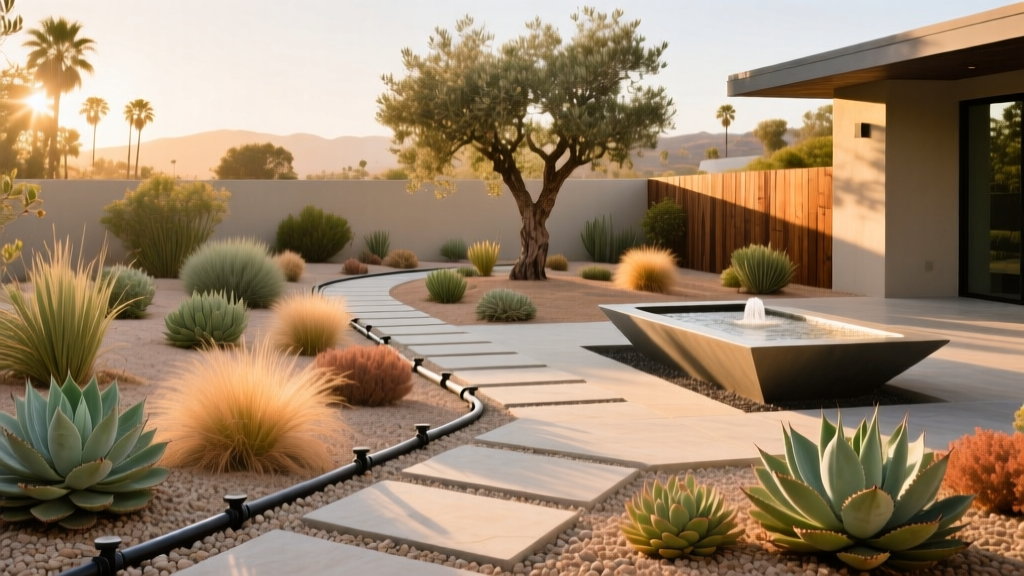
Planning a Drought-Smart Los Angeles Landscape: A How-To Guide
Why Rethink Your Yard in 2026?
Designing a functional, drought-smart Los Angeles landscape is no longer just an ecological preference; it is a financial necessity. With municipal water rates climbing and strict LADWP tier-pricing structures in effect, maintaining traditional cool-season turf like Tall Fescue or Kentucky Bluegrass can cost homeowners upwards of $2,500 annually in irrigation alone for a standard 1,500-square-foot front yard. Transitioning to a climate-adapted, permeable landscape reduces outdoor water use by 60% to 80% while increasing property curb appeal and securing local turf-removal rebates.
This practical guide details the exact construction sequence, material specifications, and botanical selections required to build a resilient, low-water landscape tailored to Southern California's unique Mediterranean microclimates.
Step 1: Map Your Specific LA Microclimate
Los Angeles is not a single climate zone. The Sunset Western Garden Book classifies the basin into distinct microclimates that dictate plant survival and irrigation scheduling. Before purchasing materials, identify your zone:
Zone 24 (Coastal Basin): Includes Santa Monica, Venice, and Long Beach. Characterized by cool, marine-layer summers and mild winters. Frost is rare. Salt spray and heavy clay soils are common.
Zones 18 & 19 (Inland Valleys): Includes Pasadena, Glendale, and the San Fernando Valley. Experiences high summer heat (often exceeding 95°F) and colder winter nights with occasional hard frosts. Soils range from heavy adobe clay to sandy loam.
Zones 18 & 19 (Inland Valleys): Includes Pasadena, Glendale, and the San Fernando Valley. Experiences high summer heat (often exceeding 95°F) and colder winter nights with occasional hard frosts. Soils range from heavy adobe clay to sandy loam.
Step 2: Turf Removal and Soil Preparation
Do not use chemical herbicides or rototillers to remove existing grass. Tilling destroys soil structure, brings dormant weed seeds to the surface, and disrupts the mycorrhizal fungal networks native plants rely on. Instead, use the sheet mulching method to build soil biology while smothering turf.
The Sheet Mulching Protocol
- Mow and Scarify: Mow existing grass as short as possible (under 1 inch). Use a manual dethatching rake to scarify the surface, allowing water penetration.
- Apply Cardboard: Lay down unwaxed, uncoated corrugated cardboard. Overlap all seams by at least 6 inches to prevent weed breakthrough. Remove all tape and staples.
- Saturate: Water the cardboard thoroughly until it is completely saturated and conforms to the soil contour.
- Top with Mulch: Apply a 3-to-4-inch layer of coarse arborist wood chips (not shredded bark, which mats and repels water). Keep mulch 2 inches away from existing tree trunks to prevent root rot.
- Decomposition Period: Allow the area to rest for 8 to 12 weeks. The turf underneath will decompose, adding rich organic matter to the soil profile.
Step 3: Selecting Zone-Specific Native and Adapted Plants
A successful Los Angeles landscape relies on 'hydrozoning'—grouping plants with identical water and sun requirements together. The California Native Plant Society's Calscape database is the definitive tool for matching botanical selections to your specific zip code. Below is a high-performance plant palette engineered for Inland Valley (Zones 18/19) conditions.
| Botanical Name | Common Name | Mature Size | Water Need (Post-Establishment) |
|---|---|---|---|
| Ceanothus 'Concha' | California Lilac | 4-6 ft H x 6-8 ft W | Very Low (Deep soak monthly) |
| Arctostaphylos densiflora 'Howard McMinn' | Manzanita | 5-7 ft H x 5-7 ft W | Low (Tolerates clay and summer heat) |
| Muhlenbergia rigens | Deer Grass | 3-4 ft H x 4-5 ft W | Low (Excellent structural accent) |
| Salvia leucophylla | Purple Sage | 3-5 ft H x 4-6 ft W | Very Low (Attracts native pollinators) |
Step 4: Installing High-Efficiency Subsurface Irrigation
Overhead spray heads lose up to 30% of water to evaporation and wind drift in the LA basin. For drought-tolerant shrubs and groundcovers, subsurface drip irrigation is mandatory for maximum efficiency.
Equipment Specifications
- Tubing: Use Netafim Techline CV (Check Valve) drip tubing. The built-in check valves prevent low-head drainage, ensuring water doesn't pool at the lowest elevation points when the system shuts off.
- Emitter Spacing: Select 12-inch or 18-inch emitter spacing depending on your soil type. Use 12-inch spacing for heavy clay soils (common in the LA basin) to ensure lateral capillary spread, and 18-inch spacing for sandy loam.
- Flow Rate: Specify 0.9 GPH (gallons per hour) emitters to match the slow infiltration rate of unamended clay soils and prevent surface runoff.
Always install a 200-mesh Y-filter and a 30 PSI pressure regulator at the valve manifold. Municipal water pressure in LA often exceeds 70 PSI, which will blow out drip emitter fittings and void manufacturer warranties.
Step 5: Constructing Permeable Decomposed Granite (DG) Hardscape
Replacing turf with impermeable concrete increases stormwater runoff and violates many local municipal grading codes. Decomposed granite (DG) provides a natural, ADA-compliant walking surface that allows rainwater to percolate into the water table.
The Stabilized DG Installation Method
To prevent the DG from turning into mud during winter rains or tracking into your home, it must be mechanically stabilized.
- Excavation: Dig down 5 inches below your desired finish grade.
- Base Layer: Lay 3 inches of 3/4-inch crushed road base. Compact thoroughly with a vibratory plate compactor until it is rock-solid.
- Edging: Install 1/8-inch thick Corten steel landscape edging along all perimeters, securing it with 18-inch steel stakes driven every 2 feet. Steel prevents the DG from migrating into adjacent planting beds.
- Surface Layer: Mix 2 inches of 1/4-inch minus DG with a liquid soil stabilizer (such as TerraKoat or Gator Dust) in a mortar mixer or wheelbarrow according to the manufacturer's dilution ratio.
- Compaction and Curing: Spread the stabilized DG, screed it level, and compact it. Mist lightly with a fine spray nozzle, compact again, and allow it to cure for 48 hours without foot traffic.
2026 Cost Breakdown and Rebate ROI
Converting a yard is a capital investment. Below is an estimated cost matrix for a 1,000-square-foot front yard transformation in the Greater Los Angeles area, reflecting current 2026 labor and material rates.
| Project Phase | Material Cost (per sq ft) | Labor Cost (per sq ft) | Total Estimated Cost |
|---|---|---|---|
| Turf Removal & Sheet Mulching | $0.40 - $0.60 | $0.80 - $1.20 | $1,200 - $1,800 |
| Subsurface Drip Irrigation | $0.75 - $1.00 | $1.25 - $1.75 | $2,000 - $2,750 |
| Native Plant Material (15 gal/5 gal) | $1.50 - $2.50 | $1.00 - $1.50 | $2,500 - $4,000 |
| Stabilized DG Patio (300 sq ft area) | $3.00 - $4.50 | $5.00 - $7.00 | $2,400 - $3,450 |
| Total Project Cost | Pre-Rebate | $8,100 - $12,000 | |
Rebate Information: Through the Metropolitan Water District's Turf Replacement Program, qualifying Los Angeles homeowners can receive up to $2.00 per square foot in rebates for removing live grass and installing water-wise landscaping. For a 1,000 sq ft yard, this yields a $2,000 direct rebate, effectively reducing the payback period on your water savings to under 4 years.
Maintenance and Establishment Timelines
A native Los Angeles landscape is not 'zero maintenance'—it is 'low maintenance.' The first 18 months are the critical establishment phase. During this period, native plants require regular, deep watering to drive roots down into the subsoil. Once established (typically by the second summer), plants like Ceanothus and Manzanita can survive on ambient winter rainfall and require only 1 to 2 deep soakings per month during peak August heat.
Pruning should be minimal and restricted to late fall after the nesting season. Avoid using high-nitrogen synthetic fertilizers, which force weak, leggy growth that attracts aphids and increases the plant's transpiration rate, directly undermining your drought-tolerance goals.

