
Landscaping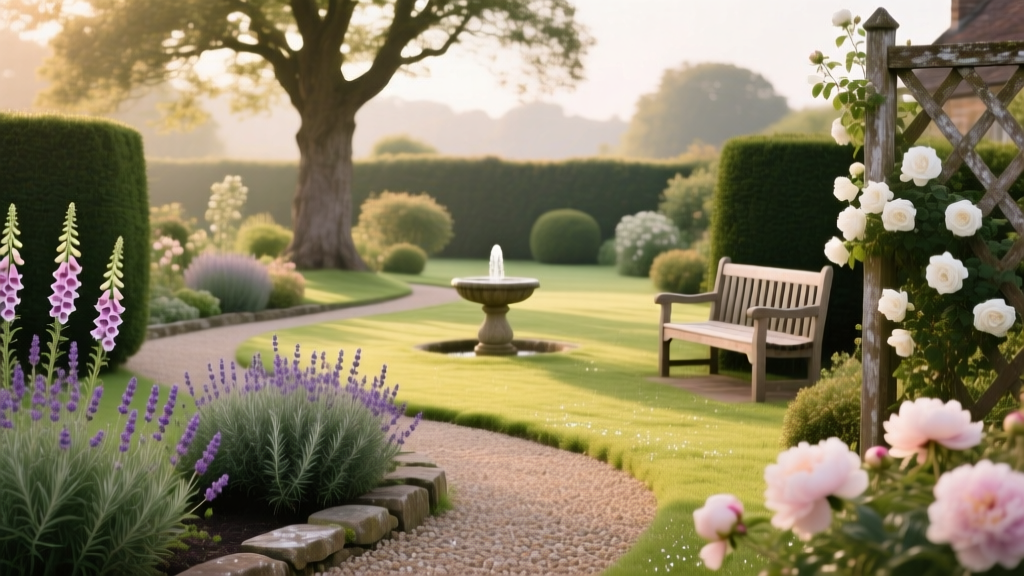
Beginner's Guide to English Garden Design: Layouts & Plant Picks
The Anatomy of an English Garden
True english garden design relies on a paradox: it must look entirely spontaneous while being meticulously planned. For beginners, the most common mistake is interpreting "cottage style" as simply planting random seeds and letting nature take over. In reality, a successful English garden requires a rigid structural skeleton hidden beneath a soft, overflowing herbaceous layer. This guide breaks down the exact hardscape dimensions, plant cultivars, and matrix planting techniques required to achieve this look without creating an unmanageable weed patch.
"The essence of the English garden is the tension between the formal structure of the hardscape and the wild, romantic nature of the planting. One cannot exist without the other."
Hardscape First: Framing the 'Outdoor Rooms'
Before buying a single perennial, you must establish the garden's bones. English gardens are traditionally divided into a series of "outdoor rooms" connected by pathways. This creates a sense of mystery and enclosure, which is critical for the design's success.
Material & Cost Guide for Pathways (2026 Estimates):
- Crushed Gravel (Decomposed Granite): $2–$4 per sq. ft. Best for informal, winding secondary paths. Requires a 4-inch compacted base and steel edging to prevent migration.
- Reclaimed Clay Brick: $12–$18 per sq. ft. (installed). The quintessential English material. Lay in a running bond or herringbone pattern. Ensure bricks are rated for freeze-thaw cycles if you live in USDA Zones 3-7.
- Irregular Flagstone: $25–$35 per sq. ft. (installed). Ideal for formal patios or primary walkways. Use creeping thyme (Thymus serpyllum) in the joints to soften the edges.
For primary walkways, maintain a minimum width of 48 inches to allow two people to walk abreast. Secondary paths can narrow to 30 inches, which forces a slower, more intimate walking pace—a deliberate psychological trick used in traditional estate gardens.
The Planting Matrix: Layering for Continuous Bloom
The secret to the English border is "interlocking" or matrix planting. Instead of spacing plants widely and filling gaps with mulch, plants are placed close together (12 to 18 inches on center) so their root systems and foliage intertwine. This suppresses weeds naturally and creates the signature "spilling" effect. According to Penn State Extension, selecting perennials with staggered bloom times and varying structural habits is essential for maintaining visual interest from late spring through early autumn.
Core Plant Selection Framework
Do not rely on generic garden center tags. Select specific, proven cultivars that resist common diseases like powdery mildew, which thrives in the dense foliage of English borders.
| Plant Role | Specific Cultivar | Dimensions (H x W) | Bloom Window | Approx. Cost (2026) |
|---|---|---|---|---|
| Structural Shrub | Rosa 'Gertrude Jekyll' (David Austin) | 4 ft x 3 ft | June–Sept (Repeat) | $28–$35 (Bare-root) |
| Mid-Level Anchor | Nepeta 'Walker's Low' (Catmint) | 2 ft x 3 ft | May–Sept | $14–$18 (1-Gallon) |
| Vertical Accent | Digitalis 'Dalmatian Purple' (Foxglove) | 4 ft x 2 ft | June–July | $12–$16 (1-Gallon) |
| Ground Spiller | Alchemilla mollis (Lady's Mantle) | 1.5 ft x 2 ft | June–August | $12–$15 (1-Gallon) |
| Evergreen Base | Buxus 'Green Velvet' (Boxwood) | 3 ft x 3 ft | N/A (Foliage) | $25–$40 (2-Gallon) |
Step-by-Step Implementation for Beginners
Phase 1: Soil Preparation (Weeks 1-2)
English gardens demand nutrient-rich, well-draining soil. Test your soil pH; most traditional cottage plants prefer a slightly acidic to neutral range of 6.0 to 6.5. As noted by the Royal Horticultural Society (RHS), adjusting pH before planting is vastly more effective than top-dressing later. Incorporate 2 to 3 inches of organic compost into the top 8 inches of existing soil. Avoid high-nitrogen synthetic fertilizers, which promote weak, floppy growth that ruins the structured look of the border.
- Establish the Evergreen Skeleton: Plant your Buxus 'Green Velvet' or clipped yew (Taxus baccata) first. Space them 6 to 8 feet apart along the back of the border. These will be pruned into tight spheres or cubes in late winter, providing visual weight when herbaceous perennials die back.
- Place the Vertical Anchors: Position your roses and foxgloves in staggered triangles, avoiding straight lines. Plant bare-root roses with the graft union 2 inches below the soil line to encourage own-root growth and improve cold hardiness.
- Fill the Matrix: Interplant the catmint and lady's mantle. Place them just 14 inches apart. They will look sparse the first year, but by year three, they will form a continuous, weed-blocking canopy.
- Add Climbers for Verticality: Train a Clematis ('Rooguchi' or 'Princess Diana') up a 7-foot obelisk placed behind the mid-level perennials. This draws the eye upward and maximizes small garden footprints.
Maintenance Realities: What It Actually Takes
The "low maintenance" myth of the English garden is a frequent point of failure for beginners. While it requires less mowing than a traditional lawn, the pruning and deadheading schedule is rigorous.
Warning: The Flop Factor
If you fail to prune your catmint and hardy geraniums back by one-third immediately after their first summer flush, they will become leggy, split open in the center, and collapse onto your pathways. Furthermore, English roses require specific pruning techniques to maximize repeat blooming. The University of Maryland Extension recommends pruning shrub roses by removing inward-facing canes and cutting back remaining canes to an outward-facing bud in early spring to ensure proper air circulation and prevent black spot fungus.
Seasonal Task Breakdown
- Early Spring (March): Cut back ornamental grasses and remove winter mulch. Apply a 1-inch layer of compost and a slow-release organic granular fertilizer (e.g., Espoma Rose-Tone 4-3-2).
- Early Summer (June): Install peony hoops and Y-stakes around tall perennials like foxgloves and delphiniums before they reach 2 feet in height. Deadhead roses weekly to redirect energy from hip production to new blooms.
- Mid-Summer (July): Perform the "Chelsea Chop" (cutting back late-summer bloomers like sedum and asters by half in late May/early June) to delay flowering and reduce flopping. Shear catmint after the first bloom.
- Late Autumn (November): Leave seed heads of echinacea and rudbeckia intact for winter bird forage and structural interest. Do not cut the entire border down to the ground; this destroys overwintering habitats for beneficial insects.
Frequently Asked Questions
Can I create an English garden in a small urban yard?
Yes. The key is to scale down the hardscape and rely heavily on vertical planting. Use trellises for climbing roses and clematis, and restrict your plant palette to 5 or 6 species rather than 20. A chaotic mix in a 500-square-foot space looks messy; a curated mix looks intentional.
How do I handle deer pressure in an English garden design?
Deer heavily target roses and foxgloves. If deer are prevalent, swap Rosa 'Gertrude Jekyll' for deer-resistant structural shrubs like Viburnum rhytidophyllum or Pieris japonica. Surround vulnerable plants with highly aromatic deterrents like lavender (Lavandula angustifolia 'Hidcote') and Russian sage (Perovskia atriplicifolia), though heavy browsing pressure will eventually require physical fencing.
What is the best irrigation method for dense matrix plantings?
Overhead sprinklers promote fungal diseases like powdery mildew and black spot, which thrive in the dense canopy of an English border. Install a sub-surface drip irrigation system with 0.5 GPH (gallons per hour) emitters spaced every 12 inches along the drip lines. This delivers water directly to the root zone while keeping the foliage completely dry.

