
Landscaping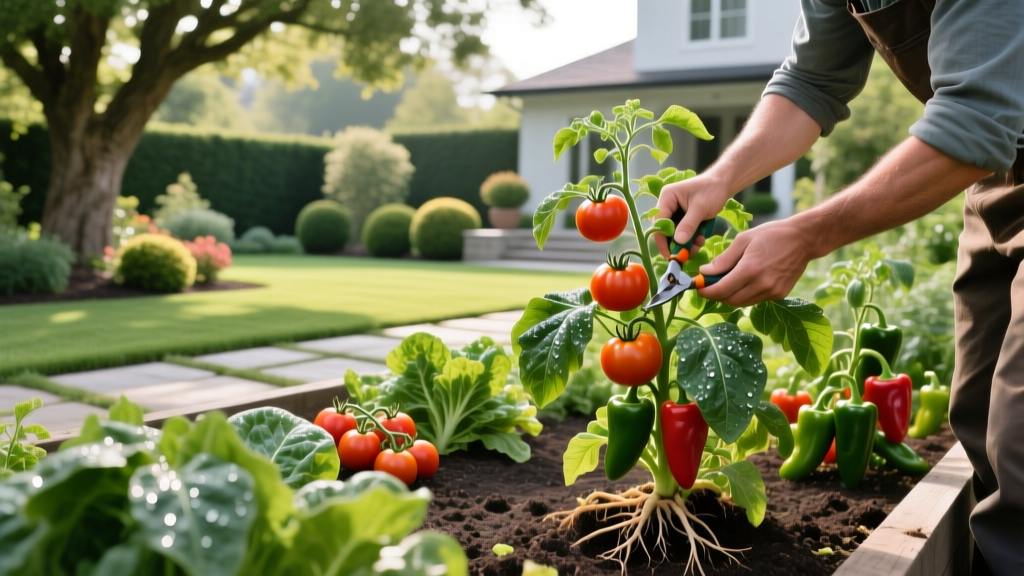
Troubleshooting Backyard Vegetable Gardening: Fix Soil, Pests & Yields
Most backyard vegetable gardening failures stem from three misdiagnosed variables: soil chemistry imbalances, microclimate hardscaping errors, and misunderstood pest life cycles. Rather than applying generic fertilizers or broad-spectrum pesticides, successful yields require precise symptom identification and targeted interventions. This diagnostic framework isolates the exact failure points in your garden and provides specific, measurable solutions.
Symptom 1: Stunted Growth & Interveinal Chlorosis
When plants exhibit stunted growth or yellowing leaves, the immediate assumption is often a nitrogen deficiency. However, interveinal chlorosis (yellowing between green leaf veins) on new growth specifically indicates an iron or manganese lockout, usually caused by high soil pH. Most vegetables require a pH between 6.0 and 6.8 for optimal nutrient bioavailability. If your soil pH exceeds 7.2, essential micronutrients become chemically bound and inaccessible to roots.
Diagnostic Warning: Do not apply chelated iron to alkaline soil without first testing pH. Iron sulfate (FeSO4) will rapidly oxidize and become unavailable in soils with a pH above 7.0.
Targeted Soil Amendments & Costs
- Lowering pH (Alkaline Soil): Apply elemental sulfur at a rate of 1 to 2 lbs per 100 square feet. This process relies on soil bacteria and takes 3 to 6 months to fully react. For a rapid, short-term fix, use aluminum sulfate at 1.5 lbs per 100 sq ft, but avoid this for heavy feeders like tomatoes to prevent aluminum toxicity.
- Raising pH (Acidic Soil): Apply pelletized calcitic lime at 5 to 10 lbs per 100 sq ft. Dolomitic lime should only be used if your soil test also indicates a magnesium deficiency.
- Baseline Nutrition: Use Espoma Organic Garden-tone 3-4-4 ($15-$20 for 4 lbs). Apply 1.5 lbs per 100 sq ft before transplanting, and side-dress with 0.5 lbs per 10 feet of row when plants begin flowering.
Symptom 2: Chewed Foliage, Bore Holes, & Frass
Pest damage in backyard vegetable gardening is frequently misidentified, leading to ineffective chemical applications. Identifying the specific feeding pattern is critical for selecting the correct biological or organic control agent.
| Pest | Damage Signature | Targeted Organic Treatment |
|---|---|---|
| Squash Vine Borer | Sudden wilting of vines; sawdust-like frass at the stem base. | Inject Bt kurstaki directly into stem holes using a syringe; wrap stems with aluminum foil at soil level. |
| Colorado Potato Beetle | Severe skeletonization of nightshade leaves; orange egg clusters on leaf undersides. | Spinosad spray (e.g., Captain Jack's Deadbug Brew, $18/32oz). Apply at dusk to protect foraging bees. |
| Tomato Hornworm | Rapid defoliation; large, dark green droppings on lower leaves and soil. | Hand-pick at night using a UV flashlight (they fluoresce). Apply Monterey B.T. ($14/16oz) for residual control. |
Advanced Biological Controls & Exclusion
According to NC State Extension, exclusion is vastly superior to eradication for vine borers. Install floating row covers (0.9 oz/sq yd agricultural fleece) immediately after planting. Crucially, you must remove the covers once cucurbits begin flowering to allow for pollination, transitioning to weekly applications of Neem Oil (azadirachtin) to deter egg-laying.
Symptom 3: Blossom End Rot & Fruit Cracking
Blossom End Rot (BER) presents as a sunken, leathery black lesion on the distal end of tomatoes, peppers, and squash. Homeowners often mistakenly apply calcium sprays or crush eggshells into the soil. BER is rarely a true calcium deficiency; it is a calcium mobility issue caused by inconsistent soil moisture.
"Calcium moves through the plant's xylem exclusively with water. If the soil dries out, or if there is an excess of competing cations like magnesium or potassium, calcium cannot reach the rapidly expanding fruit tissue, resulting in cellular collapse." — University of Minnesota Extension
The 4-Step Moisture & Calcium Protocol
- Pre-Plant Soil Amendment: If a lab soil test confirms low calcium, incorporate Gypsum (Calcium Sulfate) at 1 to 2 lbs per 100 sq ft before planting. Gypsum adds calcium without altering soil pH.
- Mulching: Apply 2 to 3 inches of seed-free straw or shredded leaves over the root zone. This reduces evaporation rates by up to 70% and prevents the wet-dry soil cycles that trigger BER.
- Irrigation Timing: Implement drip irrigation delivering 1 to 1.5 inches of water per week. Avoid overhead watering, which wets foliage and promotes fungal pathogens like Early Blight.
- Pruning: Do not over-prune tomato suckers. Maintaining adequate leaf canopy shades the soil, keeping root temperatures below 80°F and reducing transpiration stress.
Hardscape & Layout Failures Impacting Microclimates
Landscaping elements directly dictate the success of your backyard vegetable gardening layout. Hardscapes create microclimates that can either extend your growing season or scorch your crops.
- Retaining Wall Thermal Mass: South-facing stone or concrete retaining walls absorb solar radiation and release it at night. Planting heat-loving crops (peppers, eggplants) within 12 to 18 inches of the wall can extend the fall growing season by 2 to 3 weeks. However, the wall creates a "rain shadow," necessitating dedicated drip lines for these specific plants.
- Fence Shade Mapping: A 6-foot privacy fence casts a shadow that moves throughout the season. In June, the shadow may only extend 3 feet north; by September, it can stretch 10 feet. Map your sun exposure using a digital sun path calculator before placing raised beds. Fruiting crops require a minimum of 6 to 8 hours of direct, unfiltered sunlight.
- Raised Bed Material Selection: Untreated cedar or redwood ($$$) lasts 10-15 years but insulates roots well. Corrugated galvanized steel ($) heats up rapidly in July; line the interior with 1-inch rigid foam insulation board to prevent root cooking in shallow (under 12 inches) beds.
Quick Diagnostic Checklist for Low Yields
If your plants look healthy but fail to produce fruit, run through this physiological checklist:
- Excess Nitrogen: Lush, dark green foliage with zero flowers indicates you have over-applied nitrogen. Switch to a high-phosphorus liquid kelp or bone meal fertilizer (e.g., 0-10-0) to force reproductive growth.
- Pollination Failure: If squash or cucumber flowers form but shrivel and drop, you lack pollinators. Hand-pollinate using a soft-bristled brush to transfer pollen from the male flower (straight stem) to the female flower (bulbous base) in the early morning.
- Temperature Extremes: Tomato pollen becomes sterile when nighttime temperatures exceed 75°F or daytime temperatures exceed 92°F. Provide 30% shade cloth during peak August heat waves to protect blossom set.
For comprehensive, region-specific disease identification, always cross-reference your symptoms with Cornell University's Vegetable MD Online database before applying any fungicides.

