
Landscaping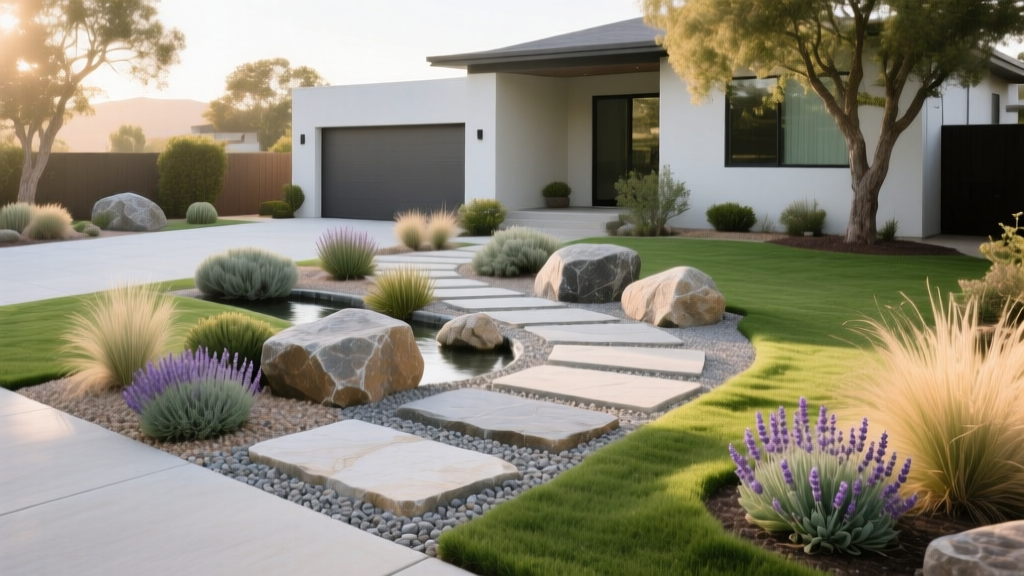
Landscaping Ideas for Front Yard With Rocks: Fixing Common Problems
Diagnosing the Four Fatal Flaws of Rock Landscapes
Rock landscaping is heavily promoted as a low-maintenance alternative to turfgrass, but poorly executed front yard rock installations frequently fail within three to five years. Homeowners often encounter aggressive weed breakthroughs, foundation water damage, baked plant roots, and migrating stones. Implementing effective landscaping ideas for front yard with rocks requires moving beyond simple aesthetic placement and addressing the underlying structural and environmental mechanics of your yard.
1. Weed Invasion Through the Base
The most common complaint with rock yards is weed infiltration. This rarely happens because the rocks themselves contain seeds; it occurs because the underlying barrier fails or was improperly specified.
Warning: Avoid cheap, woven black plastic or lightweight 2 oz. landscape fabrics. Woven plastics degrade under UV exposure if exposed, and they tear easily under the weight of angular rocks, creating gaps for weed rhizomes to penetrate.
The Fix: Excavate the top 3 inches of soil and install a heavy-duty, 4 oz. to 6 oz. non-woven geotextile fabric (such as Typar or Dewitt Pro Series). Non-woven fabrics mimic felt, allowing water permeability while creating a dense, impenetrable matrix against weed roots. According to university extension research, non-woven geotextiles significantly outperform woven plastics in long-term weed suppression when covered by at least 2 inches of inorganic mulch. Overlap all fabric seams by a minimum of 6 inches and secure them with 6-inch landscape staples every 3 feet.
2. Foundation Pooling and Drainage Failure
Rocks do not absorb water. When rain hits a rock bed, it percolates through the stones and hits the fabric. If the soil beneath is compacted or graded incorrectly, water will pool against your home's foundation, leading to basement leaks and structural settling.
The Fix: Before laying fabric, grade the native soil to achieve a 5% slope (a 6-inch drop over the first 10 feet) away from the foundation. For areas where natural grading is impossible, integrate a dry creek bed or a subsurface French drain. Use 3/4-inch washed drainage gravel in the trench, wrap it in the same non-woven geotextile fabric, and top it with decorative 1.5-inch to 3-inch river rock to maintain the aesthetic while channeling water away from the structure. The EPA's green infrastructure guidelines emphasize managing runoff at the source to prevent foundation saturation and municipal sewer overload.
3. The Heat Island Effect and Root Baking
Dark-colored rocks, such as black lava rock or dark basalt, absorb immense amounts of solar radiation. This creates a localized microclimate that can raise soil temperatures by 15°F to 20°F, effectively baking the roots of nearby foundation shrubs and increasing cooling costs for the home.
The Fix: Select high-albedo (light-colored) rocks like Dakota Tan granite, white marble chips, or light limestone for south and west-facing exposures. To protect sensitive foundation plantings, create a 24-inch thermal buffer zone between the rock bed and the plants. Fill this buffer with 3 inches of organic arborist wood chips, which insulate the soil and retain moisture. For existing dark rock beds, introduce strategic shade structures, such as a louvered aluminum pergola or drought-tolerant shade trees like the Desert Willow (Chilopsis linearis), to intercept direct solar radiation.
4. Rock Migration and Surface Sinking
Using round stones, such as Mexican beach pebbles or standard round river rock, on flat surfaces or slopes guarantees migration. Round rocks roll under foot traffic and wash away during heavy downpours. Furthermore, small rocks (like pea gravel) will inevitably sink into the soil base over time, leaving you with a muddy, uneven surface.
The Fix: Always choose angular, crushed rock for high-traffic areas and pathways. The sharp edges of crushed granite or crushed limestone interlock when compacted, creating a semi-solid surface that resists movement. For slopes steeper than a 10% grade, install a geo-grid stabilizer system (like TRUEGRID or NDS GravelPave) beneath the rock to lock the stones into individual cells, preventing downslope washouts.
Material Selection Matrix for Front Yards
Choosing the right rock type is critical for both longevity and visual appeal. Below is a comparison of the most common front yard rock materials, including current pricing estimates and functional best-use cases.
| Rock Type | Best Application | Pros & Cons | Avg. Cost (Per Ton) |
|---|---|---|---|
| 3/4' Crushed Granite | Pathways, driveways, large beds | Interlocks well; drains poorly if fines are present. | $50 - $80 |
| 1.5' River Rock | Dry creek beds, drainage zones | Excellent water flow; rolls underfoot (poor for walking). | $100 - $150 |
| Red/Black Lava Rock | Xeriscaping, desert themes | Lightweight, porous; absorbs heat, fades over time. | $150 - $200 |
| White Marble Chips | Accents, shaded foundation beds | High heat reflection; raises soil pH (alkaline). | $120 - $160 |
The 5-Step Base Preparation Protocol
To ensure your front yard rock landscaping survives decades without sinking or weed breakthroughs, follow this exact installation sequence:
- Excavation and Trenching: Dig down 4 to 5 inches across the entire bed area. Dig a 6-inch deep trench along the perimeter to install metal or heavy-duty poly edging.
- Soil Compaction and Grading: Use a plate compactor to firm the native soil. Verify the 5% slope away from the house using a laser level.
- Edging Installation: Install 4-inch to 6-inch steel landscape edging, securing it with steel stakes driven at a 45-degree angle. This prevents the rocks from creeping into adjacent lawn areas.
- Fabric Deployment: Roll out the 4 oz. non-woven geotextile fabric. Overlap seams by 6 inches and pin every 3 feet. Cut X-shaped slits only where existing plants need to pass through, folding the fabric flaps tightly around the plant stem.
- Rock Distribution: Apply a minimum 2-inch to 3-inch layer of your chosen surface rock. Do not apply less than 2 inches, or the fabric will become exposed to UV rays and degrade.
Long-Term Maintenance Framework
While rock yards eliminate mowing, they are not entirely maintenance-free. Implement this seasonal checklist to preserve the installation:
- Spring Debris Clearing: Use a leaf blower on a low setting or a flexible lawn rake to remove fallen leaves and organic debris. If organic matter decomposes on top of the fabric, it creates a soil layer that will harbor weed seeds.
- Bi-Annual Pre-Emergent Application: Apply a granular pre-emergent herbicide (such as prodiamine) in early spring and late fall. This prevents wind-blown seeds from germinating in the microscopic dust that accumulates between the rocks.
- Rock Rinsing: Every two to three years, use a pressure washer on a wide-fan tip to blast dust, pollen, and algae off the surface rocks, restoring their original color and preventing the surface from becoming compacted and impermeable.
Addressing drainage, thermal dynamics, and base stabilization transforms a failing rock yard into a permanent, high-functioning landscape. For more insights on managing water runoff, consult the Department of Energy's guidelines on mitigating urban heat islands through strategic hardscape and landscape material selection.

