
Landscaping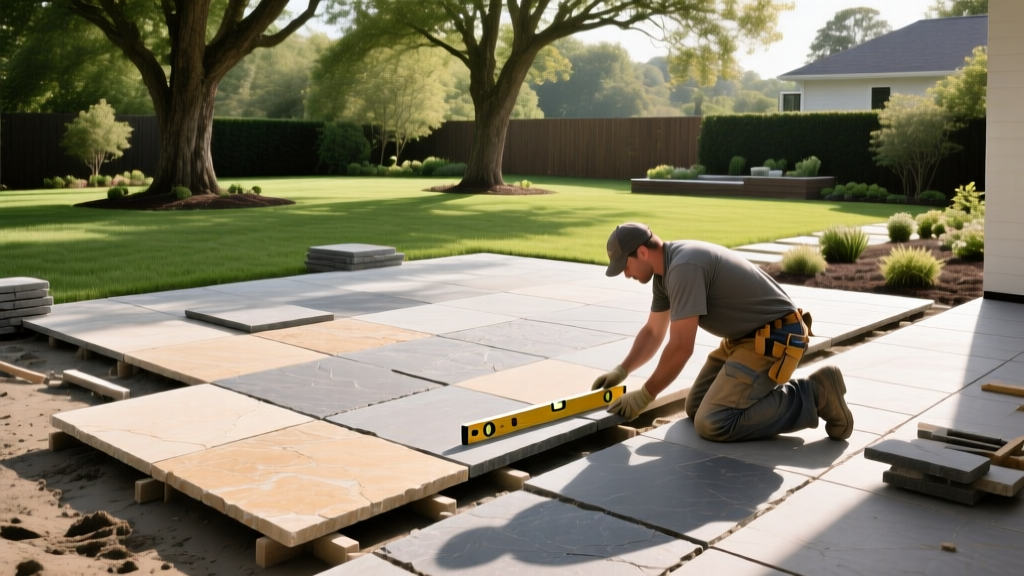
Cost to Install Flagstone Patio: 2026 Pricing Guide
Baseline Estimates: The True Cost to Install Flagstone Patio
When homeowners research the cost to install flagstone patio, they are often met with vague estimates that fail to account for site preparation, stone thickness, and jointing materials. As of 2026, the national average cost to install flagstone patio ranges from $18 to $38 per square foot, with most 300-square-foot projects landing between $5,400 and $11,400. According to industry data tracked by Forbes Home, natural stone patios consistently rank among the highest ROI hardscape investments, but the upfront capital requires precise budgeting.
The final price is dictated by three primary variables: the specific geological type of flagstone selected, the depth and composition of the structural base, and the complexity of the layout (e.g., curved edges vs. straight cuts). Below is a comprehensive breakdown of where your money actually goes.
Quick Cost Snapshot (300 Sq. Ft. Patio):
- Economy (Basic Arizona stone, dry-laid): $5,400 - $6,900
- Mid-Range (PA Bluestone, polymeric sand joints): $7,500 - $9,600
- Premium (Thick Quartzite, mortared over concrete slab): $10,200 - $12,500+
Component Breakdown: Material vs. Labor vs. Base
To accurately forecast your budget, you must separate the stone cost from the installation labor and subgrade materials. HomeGuide notes that labor often eclipses material costs in high-end masonry work due to the sheer weight and precision required for natural stone.
| Cost Component | Price Per Sq. Ft. | Percentage of Total Budget |
|---|---|---|
| Flagstone Material (1" - 1.5" thick) | $4.00 - $18.00 | 35% - 45% |
| Base Materials (Gravel, Sand, Fabric) | $2.50 - $5.00 | 15% - 20% |
| Professional Labor & Equipment | $10.00 - $20.00 | 40% - 50% |
| Jointing (Polymeric Sand / Mortar) | $1.50 - $3.00 | 5% - 10% |
Flagstone Material Types & Coverage Rates
Flagstone is not a single product; it is a generic term for flat sedimentary or metamorphic stones split into layers. The geological origin dramatically impacts both the price and the coverage rate. Stone is typically sold by the ton or by the pallet. As a rule of thumb, one ton of 1-inch thick flagstone covers approximately 120 to 140 square feet.
Pennsylvania Bluestone
The gold standard for East Coast and Midwestern patios. Bluestone is incredibly dense, frost-resistant, and naturally slip-resistant. Cost: $8 to $15 per sq. ft. (material only). Thermal-treated bluestone (heated for a smooth, uniform surface) costs roughly 20% more than natural cleft (the rough, natural split).
Arizona Flagstone
Known for its warm rust, pink, and brown hues, Arizona stone is a sandstone that is slightly more porous than bluestone. It is lighter and easier to cut, making it a favorite for DIYers and budget-conscious projects. Cost: $4 to $9 per sq. ft. However, it requires a high-quality penetrating sealer in freeze-thaw climates to prevent spalling.
Oklahoma Limestone & Quartzite
Quartzite offers extreme durability and striking crystalline textures but is notoriously difficult to cut due to its hardness, driving up labor costs. Cost: $10 to $18 per sq. ft.
The Hidden Costs: Base Preparation & Excavation
The most common reason flagstone patios fail—sinking, heaving, or pooling water—is an inadequate base. You are not just paying for stone; you are paying for earthmoving and structural engineering.
Warning: Do Not Skimp on the Subgrade
A proper dry-laid flagstone patio requires excavating 8 to 10 inches of topsoil. This must be filled with 4 to 6 inches of compacted 3/4-inch crushed angular gravel (not round pea gravel, which shifts), topped with 1 to 2 inches of coarse concrete sand. If your contractor quotes you significantly under $18 per square foot, verify their base preparation specifications.
Excavation & Haul-away: Removing 10 inches of soil over a 300 sq. ft. area generates roughly 9 cubic yards of dirt. At $150 to $250 per truckload for hauling, site prep alone can add $400 to $800 to the project before a single stone is laid.
Geotextile Fabric: Laying a non-woven geotextile fabric between the native soil and the gravel base prevents weed growth and stops the gravel from sinking into clay soils over time. This adds roughly $0.50 to $0.80 per square foot but is non-negotiable for longevity.
Jointing Methods: Dry-Set vs. Wet-Set
How the gaps between the stones are filled dictates both the aesthetic and the structural cost.
- Dry-Set with Polymeric Sand (Most Common): Stones are placed on a sand bed, and joints are swept with polymeric sand (like Gator Dust or Techniseal). When misted with water, the polymers bind the sand, preventing weeds and ant infiltration. Material cost: $40 to $65 per 50lb bag (covers ~15-20 sq. ft. depending on joint width).
- Wet-Set (Mortared): Stones are mortared onto a poured concrete slab. This eliminates shifting entirely and is required for driveways or areas with heavy vehicular traffic. However, pouring a 4-inch reinforced concrete slab beneath the stone adds $8 to $12 per square foot to the total cost to install flagstone patio, plus the masonry labor for grouting the joints.
Layout Complexity and Labor Multipliers
Labor rates for hardscape masons typically range from $65 to $110 per hour in 2026. However, most contractors bid by the square foot, applying multipliers based on the design's complexity.
"A straight-line patio with minimal cutting is a baseline bid. The moment you introduce curved borders, integrated fire pits, or step-downs into a sloped yard, you are paying for the mason's time on the wet saw and the wasted off-cuts of expensive stone." — Senior Hardscape Foreman, NALP Certified
The Curve Premium: Cutting natural stone to fit a radius or curved edge generates up to 15% material waste and increases cutting labor by 20%. Expect to pay a 15% to 25% premium on labor for heavily curved designs compared to rectilinear layouts.
Site Accessibility: If a skid steer or mini-excavator cannot access the backyard due to narrow side gates (under 36 inches wide), all excavation and gravel must be done by hand or wheelbarrow. This 'hand-dig' penalty can increase labor costs by 30% to 40%.
Permits, Drainage, and Final Budgeting
Before breaking ground, check local municipal codes. Many jurisdictions require a grading or hardscape permit for impermeable surfaces exceeding 200 to 400 square feet to manage stormwater runoff. Permit fees typically range from $75 to $250.
Furthermore, integrating hidden drainage solutions—such as a French drain or a channel drain disguised beneath the patio edge—will add $1,500 to $3,000 to the project. Proper slope (a minimum 1/4-inch drop per linear foot away from the home's foundation) is critical; failing to engineer this slope will result in water intrusion into your basement or crawlspace, turning a $10,000 patio into a $30,000 foundation repair nightmare.
By understanding these granular details, you can accurately evaluate contractor bids and ensure your investment in a natural stone outdoor living space is built to survive the elements for decades.

