
Landscaping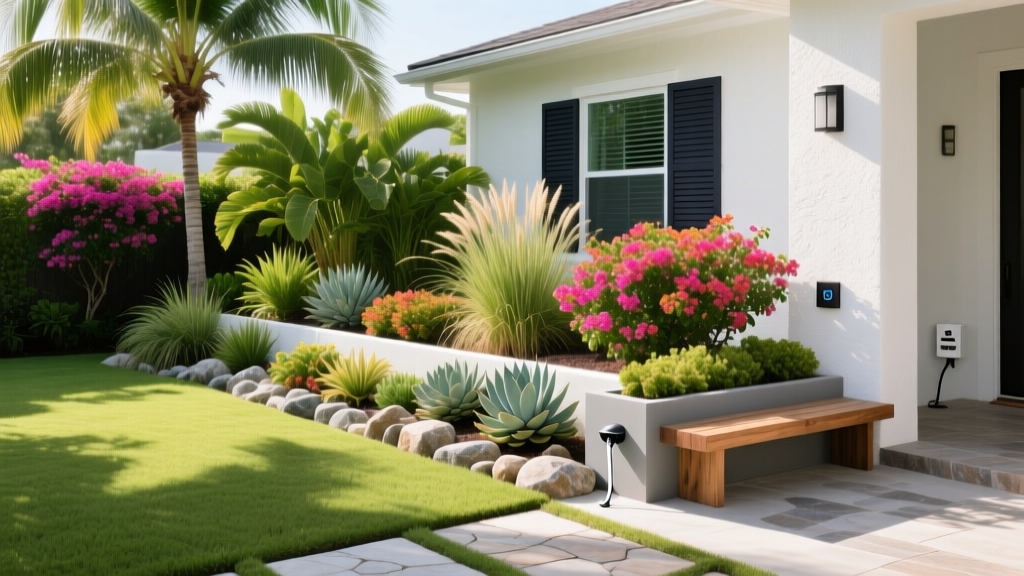
Florida Landscaping Ideas for Front of House: Seasonal Planting Guide
The Florida Front Yard Climate Divide
Designing a front yard in Florida requires abandoning the traditional four-season mindset. Instead, Florida operates on a dual-season calendar: the Wet Season (June through October) and the Dry Season (November through May). When sourcing Florida landscaping ideas for front of house curb appeal, homeowners must align their planting schedules, irrigation adjustments, and plant selections with these distinct hydrological cycles. Furthermore, the state spans USDA Hardiness Zones 8b (Panhandle) to 11a (Florida Keys), meaning a foundation shrub that thrives in Jacksonville will suffer severe heat stress in Miami.
Zone Quick-Check for Front Yard Foundations:
• North FL (Zones 8b-9a): Plant woody shrubs and trees between November and February to establish roots before summer heat.
• Central FL (Zone 9b): Optimal planting window is October through March.
• South FL (Zones 10-11): Year-round planting is viable, but avoid transplanting during peak August heat to prevent fatal wilting.
• North FL (Zones 8b-9a): Plant woody shrubs and trees between November and February to establish roots before summer heat.
• Central FL (Zone 9b): Optimal planting window is October through March.
• South FL (Zones 10-11): Year-round planting is viable, but avoid transplanting during peak August heat to prevent fatal wilting.
Month-by-Month Front Yard Landscaping Calendar
To maintain year-round curb appeal without exhausting your irrigation budget, follow this regional timing matrix. This schedule prioritizes native and Florida-Friendly™ species that tolerate the state's sandy, nutrient-poor soils.
| Season / Months | Primary Front Yard Action | Recommended Species | Est. Material Cost |
|---|---|---|---|
| Spring (Mar–May) | Install new foundation plants; apply slow-release fertilizer. | Muhly Grass, Coontie, Simpson’s Stopper | $15–$45 per plant |
| Summer (Jun–Aug) | Hurricane prep; prune for airflow; monitor for fungal rot. | Avoid new planting; maintain existing Crotons and Bromeliads. | Fungicide: $25–$40 |
| Fall (Sep–Nov) | Plant winter annuals; reduce irrigation as rains taper off. | Pentas, Salvias, Firebush | $4–$8 per flat tray |
| Winter (Dec–Feb) | Hardscape installation; lay sod; install low-voltage lighting. | Zoysia grass, Limestone pavers, Brass LED path lights | $1.50–$3.00/sq ft (sod) |
Top Drought-Tolerant & Hurricane-Resistant Front Yard Plants
When executing Florida landscaping ideas for front of house layouts, prioritize plants with deep taproots or flexible branching structures. These survive both the severe dry spells of May and the 100+ mph wind gusts of September.
1. Coontie (Zamia integrifolia)
Florida’s only native cycad. It features deep green, fern-like fronds that grow 2 to 3 feet tall, making it perfect for bordering front walkways. It requires zero fertilizer once established and thrives in both deep shade and full sun. Spacing: 3 feet apart. Cost: $18–$25 for a 3-gallon nursery pot.
2. Simpson’s Stopper (Myrcianthes fragrans)
An excellent multi-trunk understory tree for front yard focal points. It produces fragrant white spring flowers and bright red berries that attract cardinals. Its smooth, exfoliating bark provides winter visual interest when other plants are dormant. Mature Size: 15–20 feet. Cost: $85–$140 for a 15-gallon specimen.
3. Pink Muhly Grass (Muhlenbergia capillaris)
Plant in sweeping drifts along the front property line. While it remains a modest 2-foot green clump most of the year, it erupts into a massive cloud of pink plumes from October through December. It is highly salt-tolerant, making it ideal for coastal front yards. Cost: $12–$16 per 1-gallon container.
Wet Season Survival & Hurricane Prep (June–October)
The wet season brings 50+ inches of rain and high humidity, creating a breeding ground for root rot and powdery mildew in densely packed front yard beds.
- Canopy Thinning: By May 15th, thin the canopy of front yard shade trees (like Live Oaks or Gumbo Limbos) by 15-20%. This allows wind to pass through during tropical storms, reducing uprooting risk.
- Mulch Securing: Replace lightweight pine bark near the street with heavier 3/4-inch river rock or crushed coquina shell. Lightweight mulch washes into storm drains during July afternoon deluges, violating local municipal codes.
- Fungicide Timing: Apply a preventative copper-based fungicide to susceptible foundation plants (like Hibiscus and Plumbago) in early June before the daily afternoon rains begin.
Dry Season Color Rotation (November–May)
During the dry season, rainfall drops to less than 2 inches per month. Relying on thirsty annuals like petunias or impatiens will spike your water bill and violate local watering restrictions. According to the Florida-Friendly Landscaping™ program, right-plant-right-place principles dictate using drought-hardy perennials for winter color.
Expert Insight: "Homeowners often overwater in the dry season out of fear. Most established native front yard shrubs, like Beautyberry and Firebush, require zero supplemental irrigation between December and April unless the state enters a declared severe drought." – UF/IFAS Extension Guidelines
For high-visibility areas near the front door, use Pentas and Tropical Salvia. These provide continuous blooms from November to April, require watering only once a week, and cost roughly $6 per 6-inch pot at local nurseries.
Soil Amendment & Irrigation Timing
Florida’s native soil is predominantly Entisols—essentially white quartz sand that drains instantly and holds zero nutrients. To support lush front yard landscaping, you must amend the soil during installation.
The 30% Compost Rule
When digging planting holes for front yard foundation shrubs, mix the excavated native sand with 30% composted cow manure or municipal leaf compost by volume. Do not use peat moss; it dries out and becomes hydrophobic in Florida's heat, repelling water away from the root ball. As of 2026, bulk compost delivery averages $40–$55 per cubic yard.
For irrigation, transition front yard beds from spray heads to drip lines. The St. Johns River Water Management District strictly limits spray irrigation to 1-2 days per week, but drip irrigation is often exempt from these time-of-day restrictions because it eliminates wind evaporation. Install 1/2-inch drip tubing with 1 GPH (gallon per hour) emitters placed directly at the base of each shrub.
Frequently Asked Questions
When is the best time to lay St. Augustine or Zoysia sod in a Florida front yard?
The ideal window is March through May. Laying sod during the summer wet season risks fungal diseases like brown patch, while laying it in the winter dry season slows root establishment, leaving the sod vulnerable to frost damage in North and Central Florida.
How should I adjust my front yard landscape lighting timers throughout the year?
Florida’s daylight shifts from nearly 14 hours in June to about 10.5 hours in December. Use an astronomical timer (like the Cast Lighting MACRO or a smart hub) that automatically adjusts to local sunset times. Set path lights to a warm 2700K color temperature to avoid harsh glare against the front of the house.
Are there restrictions on planting trees near the front property line?
Yes. Most Florida municipalities require a minimum 10-foot setback from the sidewalk or property line for canopy trees to prevent root damage to public infrastructure. Always check with your county’s zoning office and review the UF/IFAS Plant Directory for mature root spread data before planting species like Ficus or Jacaranda.

