
Landscaping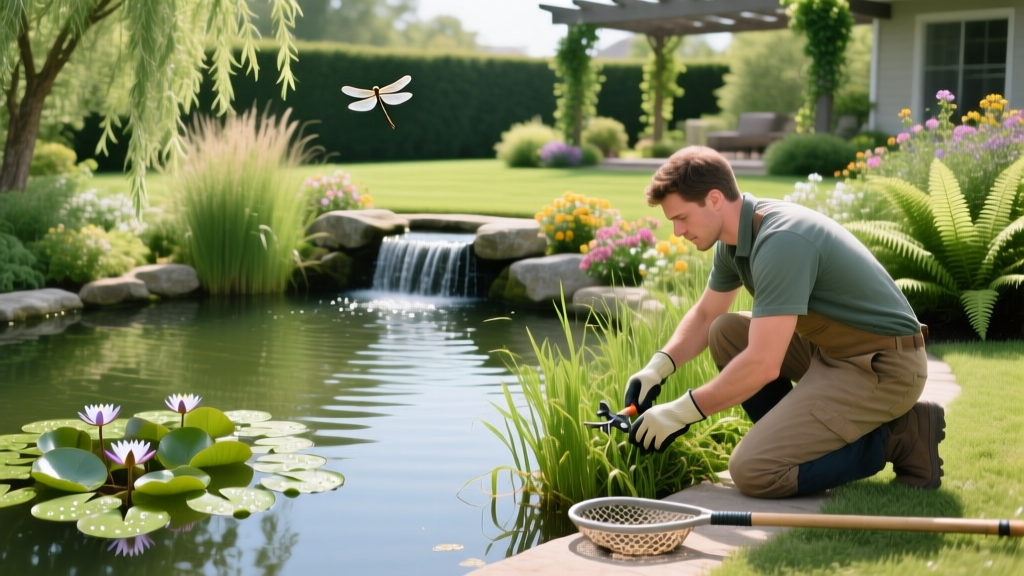
Complete Seasonal Pond Maintenance Guide for Backyard Water Gardens
The Core Water Chemistry Matrix
Effective pond maintenance begins with understanding that a water garden is a closed biological system. Unlike swimming pools, you cannot simply shock a pond with chlorine when water quality degrades. According to University of Minnesota Extension, maintaining stable water chemistry is the single most critical factor in preventing fish kills and catastrophic algae blooms. Before executing any seasonal cleaning, you must establish a baseline using a liquid reagent test kit (such as the API Freshwater Master Test Kit), as paper test strips lack the precision required for biological filtration monitoring.
| Parameter | Ideal Range | Critical Failure Threshold | Corrective Action |
|---|---|---|---|
| pH | 7.2 - 7.6 | < 6.8 or > 8.2 | Add crushed coral to skimmer box to buffer low pH gradually. |
| Ammonia (NH3) | 0.0 ppm | > 0.25 ppm | Immediate 25% water change; dose nitrifying bacteria. |
| Nitrite (NO2) | 0.0 ppm | > 0.25 ppm | Add 1 tsp of aquarium salt per 10 gallons to block gill absorption. |
| Nitrate (NO3) | 20 - 40 ppm | > 80 ppm | Perform partial water changes; increase aquatic plant biomass. |
| KH (Carbonate Hardness) | 120 - 150 ppm | < 90 ppm | Dissolve sodium bicarbonate (baking soda) at 1 tsp per 10 gallons. |
Spring Startup Protocol: Waking the Ecosystem
Spring pond maintenance should commence when water temperatures consistently reach 50°F (10°C). The biological filter has been dormant all winter, and the nitrogen cycle must be carefully re-established before feeding fish or introducing new livestock.
- Debris Extraction: Use a long-handled pond net to remove sunken leaves and decaying organic matter from the pond floor. Leaving this sludge will trigger a massive heterotrophic bacteria bloom, resulting in milky, oxygen-depleted water.
- Pump and Plumbing Priming: Inspect the impeller on your submersible pump (e.g., Aquascape AquaForce series) for debris. Reconnect the check valve and ensure the UV clarifier quartz sleeve is wiped clean of calcium scale before turning the system on.
- Filter Media Inoculation: Rinse mechanical filter mats (like Matala Japanese matting) using dechlorinated pond water only. Never use municipal tap water, as the chlorine will instantly kill dormant nitrifying bacteria. Follow this by dosing a cold-water beneficial bacteria blend (such as Microbe-Lift PL) at 2 oz per 1,000 gallons.
- Gradual Feeding: Do not feed koi until the water is strictly above 55°F. Begin with a highly digestible wheat-germ food (under 32% protein) to prevent undigested food from rotting in the fish's intestinal tract.
Pro Tip: When performing your spring 25% water change, always dose a liquid dechlorinator (like Tetra Pond AquaSafe) directly into the pond before adding the new municipal water. Municipalities often increase chloramine levels in the spring, which standard conditioners struggle to neutralize if added after the fact.
Summer Algae and Filtration Management
Summer heat accelerates fish metabolism and biological activity, making summer pond maintenance heavily focused on oxygenation and algae suppression. The USGS Water Science School notes that warm water holds significantly less dissolved oxygen than cold water, creating a high-risk environment for fish asphyxiation during July and August.
Sizing and Maintaining UV Clarifiers
If you are battling suspended single-cell green water algae, a UV clarifier is mandatory. The industry standard sizing rule is 8 to 10 watts of UV output per 1,000 gallons of pond volume. For a 3,000-gallon pond, a 30-watt UV unit is required. The water flow rate through the UV chamber must not exceed the manufacturer's maximum GPH (gallons per hour) rating; if water moves too quickly, the UV exposure time is insufficient to rupture the algae cell walls. Replace the UV bulb every 12 months, even if it still illuminates, as the specific 254-nanometer wavelength degrades over time.
Mechanical vs. Biological Cleaning Frequencies
- Mechanical Skimmer Mats: Clean weekly. These capture large physical debris and should be hosed off thoroughly to prevent water bypassing the filter.
- Biological Filter Media (Bio-balls, Ceramic Rings, K1 Micro): Clean never, or at most once per year. Agitating biological media destroys the biofilm where Nitrosomonas and Nitrobacter bacteria convert toxic ammonia into nitrate. If flow is restricted, gently swish the media in a bucket of pond water.
Autumn Leaf Netting and Winterizing
Fall pond maintenance is about prevention. A single layer of decomposing autumn leaves can release enough tannins and phosphates to ruin water quality for the entire winter.
Deploy a heavy-duty, 1/2-inch mesh pond net over the entire surface area before local trees begin to drop leaves. Secure the perimeter with landscape staples or heavy stones to prevent wind from lifting the edges. Once the leaves have fallen, remove the net along with the trapped debris. Leaving a net on the pond during freezing winter months is a critical error; snow accumulation will collapse the net into the water, trapping toxic gases and suffocating the ecosystem.
Critical Winter Warning: Never break surface ice with a hammer or heavy object. The acoustic shockwaves travel through the water and can rupture the swim bladders of koi and goldfish resting at the bottom. Instead, use a dedicated pond de-icer or gently melt a hole using a pot of boiling water.
Winter De-icer Sizing
To maintain a gas exchange hole in the ice, select a thermostatically controlled pond de-icer. For ponds up to 1,000 gallons, a 300-watt unit is sufficient. For ponds between 1,000 and 3,000 gallons, upgrade to a 500-watt or 750-watt floating de-icer. Ensure the unit is plugged into a GFCI-protected outdoor outlet with a weatherproof cover.
Troubleshooting Common Failure Modes
Even with rigorous seasonal routines, biological imbalances occur. Use this diagnostic framework to identify and resolve sudden water quality crashes.
| Visual Symptom | Probable Cause | Immediate Resolution |
|---|---|---|
| Thick, white foam on waterfalls | Dissolved organic compounds (DOC) buildup; fish spawning activity | Perform a 20% water change; add a protein skimmer or foam-reducing enzyme. |
| Fish gasping at the surface | Hypoxia (low dissolved oxygen) or Nitrite toxicity | Add an emergency air stone; test for Nitrite; dose sodium chloride (salt) at 0.1% concentration. |
| String algae on rocks/waterfalls | Excess phosphates and nitrates; inadequate plant competition | Manually pull algae; install an ion generator (e.g., Aquascape IonGen) releasing copper/silver/zinc ions. |
| Sudden milky, cloudy water | Heterotrophic bacteria bloom due to overfeeding or dead fish | Stop feeding immediately; increase aeration; clean mechanical filter mats daily until clear. |
Consistent pond maintenance relies on observing the ecosystem daily rather than reacting to catastrophic failures. By adhering to strict water chemistry parameters, sizing filtration equipment correctly to your pond's specific volume, and respecting the biological dormancy periods of winter, your water garden will remain a stable, thriving landscape feature year after year.

