
Landscaping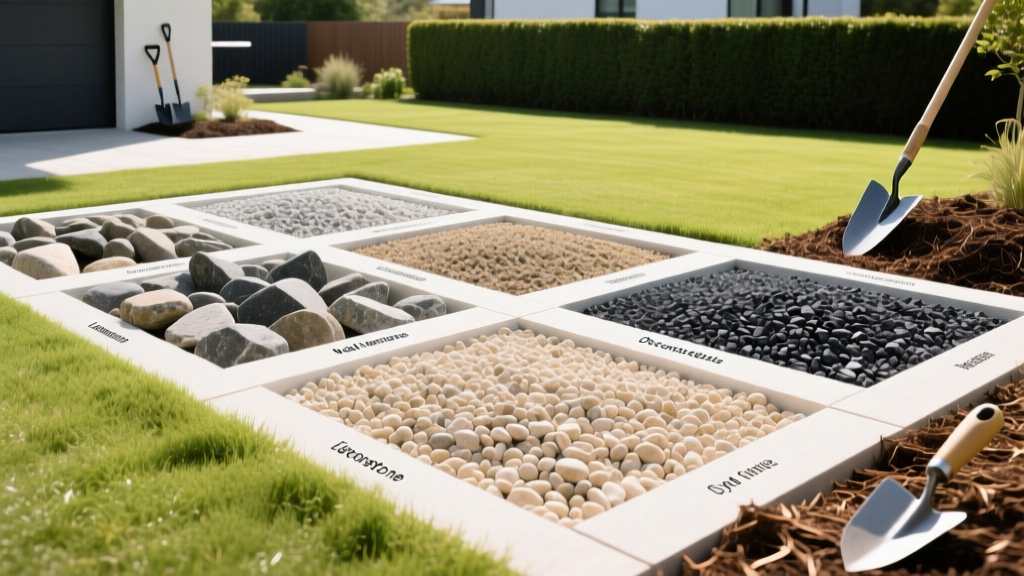
2026 Gravel Cost Guide: Coverage, Tonnage & Pricing by Type
The True Gravel Cost Breakdown by Material Type
Estimating a landscaping budget requires moving beyond generic per-yard averages. The final gravel cost for your project is dictated by the specific aggregate type, its geological origin, and the freight distance from the quarry. According to the U.S. Geological Survey (USGS), crushed stone and gravel prices have seen steady annual increases due to rising diesel and extraction costs, making precise 2026 material selection more critical than ever.
Below is a comprehensive pricing matrix for the most common landscape aggregates. Prices reflect bulk delivery within a 15-mile radius of the quarry; bagged materials from big-box retailers will cost 300% to 500% more per ton.
| Gravel Type | Cost Per Ton (2026) | Cost Per Cubic Yard | Best Application | Compaction Rating |
|---|---|---|---|---|
| Crushed Stone #57 (3/4") | $35 - $55 | $50 - $80 | Driveway base, French drains, concrete sub-base | Excellent (Angular) |
| Pea Gravel (1/4" - 3/8") | $40 - $65 | $60 - $95 | Decorative beds, playgrounds, patio joints | Poor (Rounded) |
| Decomposed Granite (DG) | $50 - $85 | $75 - $125 | Flagstone joints, natural walkways, xeriscaping | Good (Fines included) |
| River Rock (1" - 3") | $90 - $160 | $135 - $240 | Dry creek beds, decorative borders, erosion control | None (Too large) |
| Crushed Stone #3 (1" - 2") | $30 - $50 | $45 - $75 | Heavy-duty driveway sub-base, septic systems | Excellent (Angular) |
The Coverage Formula: Calculating Tonnage and Cubic Yards
The most frequent mistake homeowners make is ordering by the cubic yard without converting to tonnage, which is how quarries weigh and bill for bulk freight. Because gravel density varies based on moisture content and stone type, a cubic yard of dry pea gravel weighs roughly 1.3 tons, while a cubic yard of wet, dense crushed basalt can weigh up to 1.6 tons.
The Universal Gravel Coverage Formula
Step 1: Calculate Volume in Cubic Feet: Length (ft) × Width (ft) × Depth (ft) = Total Cubic Feet.
Step 2: Convert to Cubic Yards: Total Cubic Feet ÷ 27 = Cubic Yards.
Step 3: Convert to Tons: Cubic Yards × 1.4 (Standard Density Multiplier) = Estimated Tons.
Step 4: Add Wastage: Estimated Tons × 1.10 (10% compaction/spillage buffer) = Final Order Tonnage.
Standard Depth Requirements by Application
Applying gravel too thinly leads to weed intrusion and rutting; applying it too deeply wastes material and creates unstable, shifting surfaces.
- Decorative Mulch Replacement: 2 to 3 inches. (Requires 4 oz non-woven geotextile fabric underneath).
- Pedestrian Walkways (DG or Pea Gravel): 3 to 4 inches. (Requires a 4-inch compacted #57 base layer underneath).
- Residential Driveways (Crushed Angular Stone): 8 to 12 inches total, applied in three distinct lifts (layers) of 3-4 inches each, compacted with a vibratory plate compactor.
- French Drains & Subsurface Drainage: Fill the trench completely, leaving 2 inches from the surface grade to allow for topsoil and sod recovery.
Hidden Costs That Inflate Your Final Invoice
The per-ton price of the stone is often less than half of the total installed gravel cost. Failing to budget for the following variables will result in severe project overruns.
1. Freight and Delivery Surcharges
Gravel is heavy, and moving it is expensive. Quarries typically charge a flat delivery fee for a standard 20-ton tandem-axle dump truck, ranging from $150 to $350 within a 15-mile radius. If your property requires a smaller 5-ton single-axle truck due to narrow gates, overhead wires, or soft ground, expect the per-ton delivery surcharge to double. According to the National Stone, Sand & Gravel Association (NSSGA), transportation accounts for up to 60% of the final delivered cost of aggregates.
2. Sub-Base Preparation and Geotextiles
Dumping gravel directly onto native soil guarantees failure. Clay soils will heave and swallow the gravel within two seasons. You must budget for:
- Excavation & Grading: $2.50 - $4.00 per square foot to remove topsoil and establish a 2% slope for runoff.
- Geotextile Fabric: $0.60 - $1.20 per square foot for heavy-duty woven stabilization fabric (minimum 5 oz/sq yd). Do not use cheap non-woven weed barrier from hardware stores under driveways; it will tear under the shear force of vehicle tires.
- Plastic or Steel Edging: $4.00 - $8.00 per linear foot to contain loose aggregates like pea gravel and DG.
3. Spreading and Compaction Labor
Professional grading and spreading costs between $1.50 and $3.00 per square foot. For driveways, renting a 5,000 lb vibratory roller or plate compactor adds $80 to $150 per day to the equipment budget.
Project Decision Matrix: Matching Gravel to Application
Use this framework to select the correct material based on your project's structural and aesthetic demands.
Expert Insight: When designing permeable surfaces to manage stormwater runoff, the EPA's Green Infrastructure guidelines recommend using uniformly graded, washed angular stones (like #57 or #8) without fines. The absence of stone dust allows water to percolate directly into the subgrade rather than pooling on the surface.
- Scenario A: High-Traffic Driveway. Requirement: Load-bearing, interlocking surface. Selection: Crushed Stone #57 or Quarry Process (QP). Why: Angular edges lock together under vehicular weight, preventing the rutting common with rounded stones.
- Scenario B: Barefoot-Friendly Patio or Play Area. Requirement: Smooth texture, high drainage. Selection: Pea Gravel or washed River Rock (3/8"). Why: Rounded edges are comfortable on skin, though they require rigid perimeter edging to prevent migration.
- Scenario C: ADA-Compliant Wheelchair Pathway. Requirement: Firm, stable, slip-resistant surface. Selection: Stabilized Decomposed Granite (DG mixed with a polymeric binder). Why: Standard loose gravel fails ADA compliance; stabilized DG cures to a hard, permeable surface resembling asphalt.
- Scenario D: Foundation Drainage & Downspout Runoff. Requirement: Maximum void space for rapid water evacuation. Selection: Clean, washed #3 or #57 crushed stone. Why: Washed stone lacks 'fines' (stone dust) that would otherwise clog the voids and impede water flow.
Sourcing Strategies to Reduce Freight and Material Markups
To optimize your gravel cost, bypass retail landscaping supply yards and source directly from local aggregate producers. Call local quarries and ask for their 'FOB plant' price (Free On Board), which tells you the exact cost of the material before trucking. You can then hire an independent local dump truck owner-operator (often found on local agricultural or construction boards) to haul it for a negotiated hourly rate. This two-step method routinely saves 20% to 35% on large orders exceeding 15 tons.
Frequently Asked Questions
Does wet gravel weigh more, and will I pay for the water weight?
Yes, gravel can retain up to 5% to 8% moisture by weight after heavy rain. Because quarries weigh trucks on certified scales before and after dumping, you are technically paying for the water weight if the stockpile is saturated. To mitigate this, schedule deliveries during dry spells or ask the quarry dispatcher about the current moisture content of the specific pile being loaded.
How long does a cubic yard of gravel take to spread by hand?
An experienced laborer with a wheelbarrow and steel landscaping rake can spread and roughly grade one cubic yard of #57 gravel in about 45 to 60 minutes over a prepared base. However, hand-raking does not provide the necessary interlocking compaction for driveways; mechanical tamping is still required.
Can I lay new gravel directly over old, weedy gravel?
While physically possible, it is highly discouraged. The existing weeds will eventually push through the new layer, and the old, uncompacted base will continue to settle unevenly. The only cost-effective exception is if the existing gravel is structurally sound, heavily compacted, and you are merely applying a 1-inch 'top dressing' of decorative stone to refresh the color.

