
Landscaping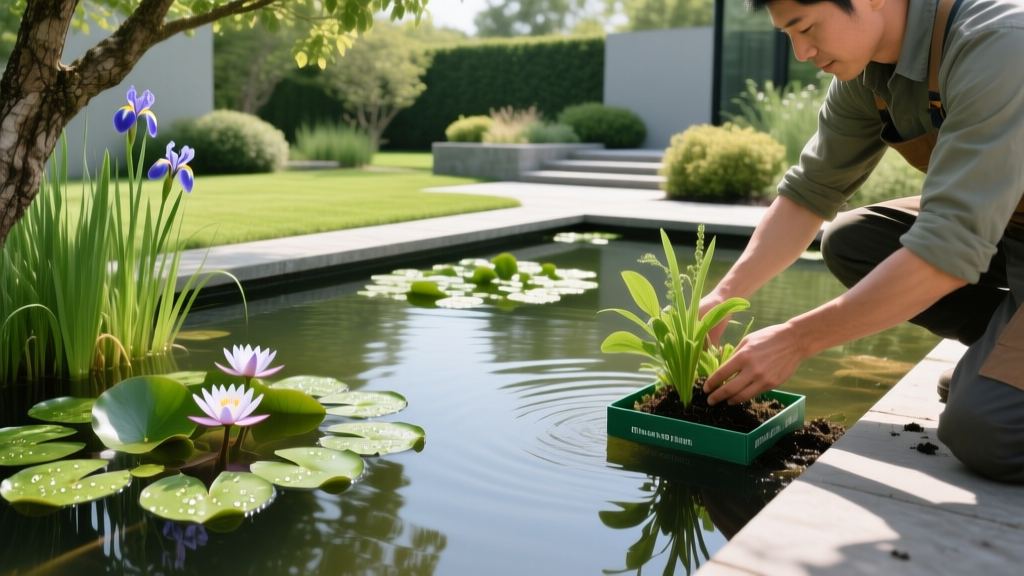
How to Grow Plants in Pond Water: A Step-by-Step Installation Guide
Establishing a thriving aquatic ecosystem requires more than just dropping greenery into a backyard water feature. When you grow plants in pond water, you are balancing biological filtration, fish safety, and nutrient uptake. The most common failure point for new water gardens is using terrestrial gardening techniques in an aquatic environment, which leads to catastrophic algae blooms and root rot. This guide provides exact measurements, material specifications, and installation protocols to ensure your aquatic plants establish quickly and filter your water effectively.
Understanding the Four Aquatic Planting Zones
According to the University of Minnesota Extension, aquatic plants are categorized by their preferred water depth and light exposure. Placing a marginal plant in deep water will drown it, while submerging a deep-water lily in shallow water will scorch its leaves.
- Deep Water (18 to 36 inches): Hardy and tropical water lilies (Nymphaea spp.) and lotus (Nelumbo spp.). These plants root in submerged baskets but send leaves and flowers to the surface.
- Submerged / Oxygenators (12 to 24 inches): Anacharis (Elodea canadensis) and Hornwort (Ceratophyllum demersum). These grow entirely underwater, pulling dissolved nutrients directly from the water column and outcompeting algae.
- Floating (Surface): Water lettuce (Pistia stratiotes) and frogbit (Hydrocharis morsus-ranae). They require no soil, absorbing excess nitrates and phosphates directly through their dangling root systems.
- Marginal / Bog (0 to 6 inches): Pickerelweed (Pontederia cordata) and Sweet Flag (Acorus calamus). These sit on the shallow shelves of the pond, with their crowns just above or barely below the water line.
Selecting Aquatic Planting Media (Never Use Potting Soil)
The single most critical decision when installing plants in pond water is the growing medium. Standard potting soil contains perlite (which floats to the surface and creates a mess) and water-soluble fertilizers that leach into the pond, triggering explosive cyanobacteria and string algae blooms. You must use heavy, low-organic, nutrient-poor media.
| Media Type | Best Use Case | Cost Estimate (2026) | Pros & Cons |
|---|---|---|---|
| Heavy Clay Topsoil | Large pond installations, budget builds | $5 - $10 per 40lb bag | Pros: Cheap, heavy, anchors large lotus. Cons: Clouds water if disturbed, hard to source clean clay. |
| Commercial Aquatic Media (e.g., API) | Water lilies, marginal plants in mesh baskets | $22 - $28 per 20lb bag | Pros: Pre-washed, optimal cation exchange capacity (CEC). Cons: More expensive, requires gravel cap for koi ponds. |
| Calcined Clay (e.g., Profile Porous Ceramic) | High-end koi ponds, sensitive ecosystems | $35 - $45 per 50lb bag | Pros: Will not cloud water, highly porous for root aeration. Cons: Lightweight, requires heavy river rock caps to prevent fish from digging it up. |
Step-by-Step Installation: Potting and Submerging
Proper potting technique prevents crown rot and protects the media from foraging fish. Follow this exact sequence for basket-planted aquatics.
Step 1: Prepare the Basket and Liner
Use a specialized aquatic planting basket with fine mesh slots. Line the inside with a woven geotextile fabric or a burlap liner. This prevents fine calcined clay or topsoil from washing out into the pond water while still allowing water flow to the roots.
Step 2: Position the Plant Crown
Fill the basket two-thirds full with your chosen aquatic media. For water lilies and lotus, position the tuber at a 45-degree angle with the growing tip (the "eye") pointing upward and slightly outward toward the edge of the basket. Critical Rule: The crown of marginal plants and the growing tip of lilies must remain completely exposed above the soil line. Burying the crown guarantees rot within 14 days.
Step 3: Insert Fertilizer Tabs
Aquatic media is intentionally nutrient-poor. Push 2 to 3 slow-release aquatic fertilizer tabs (such as API Root Tabs or Flora Pride) deep into the soil, near the outer edges of the basket where the feeder roots will develop. Do not place tabs directly against the main rhizome, as the concentrated salts will burn the tissue.
Step 4: Apply the Gravel Cap
Fill the remaining inch of the basket with 1/4-inch to 1/2-inch pea gravel or smooth river rock. This cap locks the soil in place and prevents koi and goldfish from excavating the roots. Pack the gravel tightly around the exposed crown without burying it.
Step 5: Acclimate and Lower
Do not drop the basket directly into the deep zone. Lower it slowly, pausing at 6-inch intervals to allow the water temperature inside the basket to equalize with the pond water. Thermal shock can cause immediate leaf drop in tropical water lilies.
Fertilization Protocol for Thriving Water Gardens
Unlike terrestrial gardens, you cannot use liquid water-soluble fertilizers in a pond without feeding the algae. According to the University of Florida IFAS Aquatic Plant Database, targeted root-zone feeding is the only sustainable method for heavy feeders like lilies and lotus.
Expert Tip: The Push-and-Pull Method
Use solid fertilizer tabs for heavy feeders (lilies, lotus, pickerelweed) every 4 to 6 weeks during the growing season. For submerged oxygenators and floating plants, rely on the natural nitrates produced by fish waste. If your submerged plants are yellowing, it indicates a severe nutrient deficit in the water column; in this case, dose a chelated iron liquid specifically formulated for ponds at 1ml per 50 gallons.
Use solid fertilizer tabs for heavy feeders (lilies, lotus, pickerelweed) every 4 to 6 weeks during the growing season. For submerged oxygenators and floating plants, rely on the natural nitrates produced by fish waste. If your submerged plants are yellowing, it indicates a severe nutrient deficit in the water column; in this case, dose a chelated iron liquid specifically formulated for ponds at 1ml per 50 gallons.
Troubleshooting: Why Your Pond Plants Are Failing
Even with perfect installation, environmental factors can derail your aquatic garden. Use this diagnostic matrix to identify and correct issues rapidly.
| Symptom | Primary Cause | Actionable Fix |
|---|---|---|
| Leaves turning yellow with brown, crispy edges | Potassium or Iron deficiency; water pH above 8.0 locking out nutrients. | Test pond water pH. If high, use a pH down buffer. Insert iron-rich aquatic tabs directly into the root zone. |
| Plant uprooted, gravel scattered on pond floor | Koi or large goldfish foraging for benthic invertebrates in the soil. | Replace pea gravel caps with 2-inch to 3-inch smooth river rocks that are too heavy for the fish to move. |
| Leaves rotting at the base, foul smell from basket | Crown rot caused by burying the rhizome too deep or using anaerobic, compacted mud. | Remove plant immediately. Trim dead tissue with sterilized shears. Replant in porous calcined clay, keeping the crown 100% exposed. |
| Massive string algae bloom immediately after planting | Terrestrial potting soil used; excess phosphates leaching into the water column. | Remove the offending baskets. Perform a 30% water change. Replant using washed calcined clay and add floating frogbit to absorb residual phosphates. |
Successfully growing plants in pond water requires respecting the biological limits of the aquatic environment. By utilizing low-organic media, capping baskets to protect against fish predation, and deploying targeted root-zone fertilization, you will establish a resilient, self-filtering water garden that remains clear and vibrant throughout the season.

